Experience report: Heat pump in an old terraced house with radiators (indoor installation)
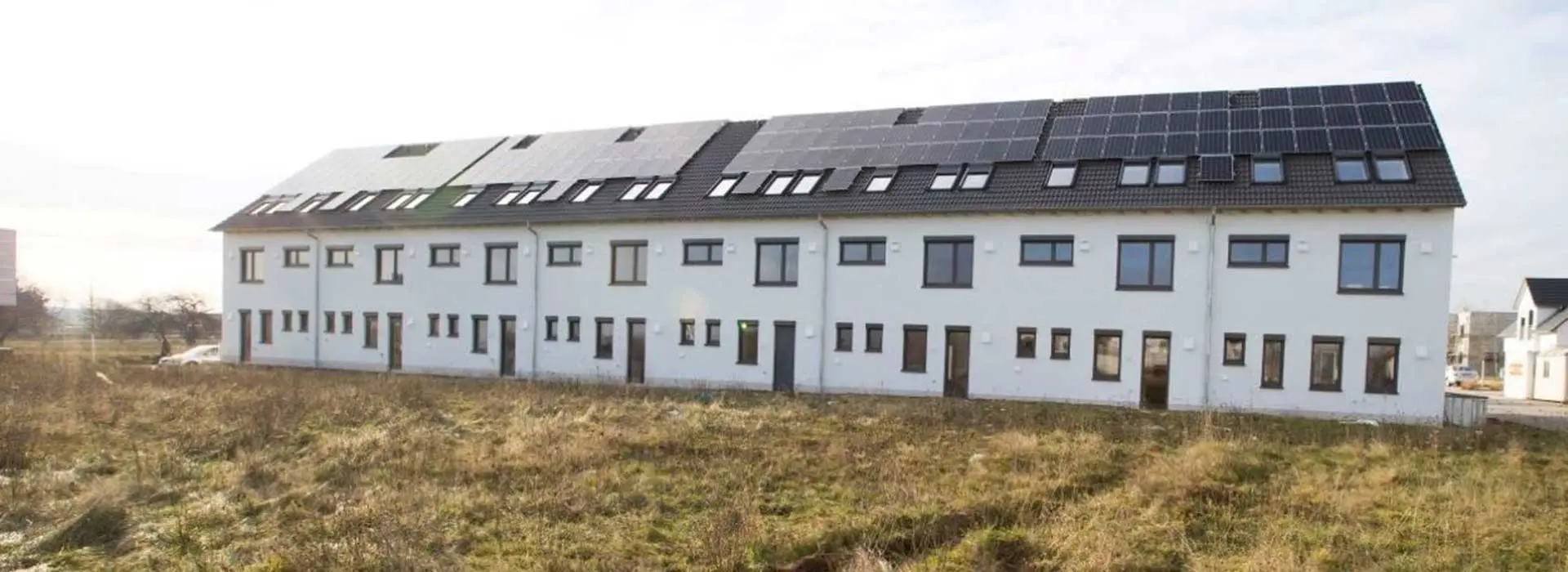
Wolfgang Andrä lives in a densely built-up row house development in Weimar. Space for a classic heat pump in the garden? No chance. Underfloor heating? Not available. And the heating engineers he asked were rather skeptical about a heat pump.
Nevertheless, he wanted to break free from his dependence on gas – and took the plunge. Today, he is certain: “The decision was absolutely the right one.”
In his experience report, Wolfgang explains how the switch worked, why an indoor heat pump was the perfect solution, and how he was able to reduce his energy consumption by around 85 percent.
Key facts about the project
Category | Details |
Building type | Terraced house |
Year of construction | 1996 |
Living space | 120 m² |
Previous heating system | Gas heating |
Heating load | approx. 4,7 kW |
Heating surfaces | Radiators, no underfloor heating |
Heat pump type | Air/Water-Heat Pump Paros (Indoor installation) |
Previous energy consumption | 9.000 kWh Gas + 2.900 kWh electricity |
Current energy consumption | 1.800 kWh total electricity consumption |
Location | Weimar |
Specialist company |

WOLFANG WAS SKEPTICAL AT FIRST...
“We wanted to move away from fossil fuels—but I didn't know if that was realistic in a terraced house.”
- Wolfang Andrä
Why did you want to replace your gas heating in the first place?
I simply didn't want to use gas anymore—both for political and environmental reasons. My wife and I wanted to reduce our energy consumption and become more independent.
At the same time, however, I really didn't know whether a heat pump could work in a terraced house. We only have radiators, no underfloor heating, and the houses are incredibly close together. I was afraid that we would freeze afterwards or that the system would be too loud.
So I was all the more surprised at how well the solution worked in the end.

What worried you most at the beginning?
Definitely the space situation. In our residential area, there is a house entrance every five meters. There is simply no space for an outdoor unit. I thought long and hard about how an air source heat pump could be installed here—and most heating engineers immediately said, “It's not possible.”
Then there was the issue of the radiators. Many people believe that underfloor heating is essential.
I was afraid that the heat pump wouldn't be powerful enough in winter – or that the electricity costs would skyrocket. Looking back, that fear was unfounded, but of course I didn't know that at the time.
Infobox: CHALLENGES FOR HEAT PUMPS IN TERRACED HOUSES
- Limited space in the garden or front yard for the outdoor unit
- Challenging insulation standards in older terraced houses
- Permits and distance regulations can delay installation
- Complex pipe routes between indoor and outdoor units
- Sound insulation and narrow boundary distances to neighboring properties
How did you finally become aware of alpha innotec's Paros?
It was a lucky coincidence. My installer, Stefan Schellenberg, met alpha innotec at a trade fair and came away with the idea of using the Paros 4, an indoor air/water heat pump.
It doesn't need an outdoor unit because it draws in outside air through ducts and blows it out again.
For the first time, I had the feeling that this could really work.
THE HEAT PUMP USED:
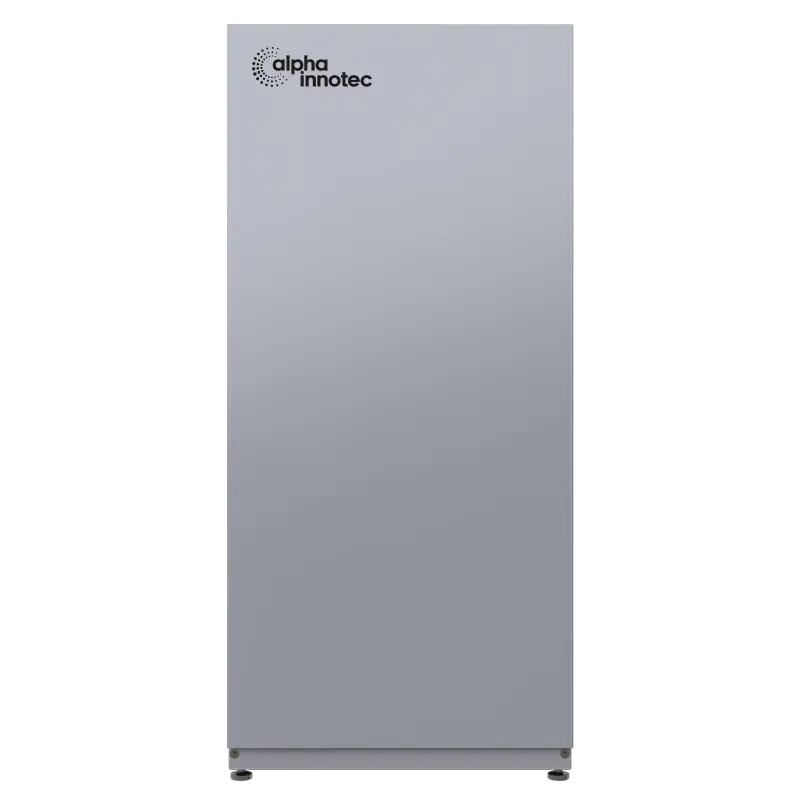
Paros Heat Pump
Erlebe maximale Flexibilität in der Aufstellung der Wärmepumpe
Did that really work with the radiators?
Yes, and better than I had expected.
At first, we weren't sure whether the radiators would provide enough surface area. But Stefan Schellenberg set the heating curve correctly and we let the heat pump run continuously—without lowering the temperature at night.
Since then, we've had constant warmth and the system runs in long, quiet cycles.
This is important because heat pumps should ideally run evenly and not constantly switch on and off.
We didn't have to replace a single radiator. That was a huge relief.
Infobox: HEAT PUMP WITH RADIATORS
Heat pump + radiators = possible if:
- The heating curve is optimized
- No nighttime temperature reduction is used
- More on the topic of “Heat pumps with radiators”
- The radiators are sufficiently dimensioned (in Wolfgang's case: yes)
- The heat pump has long running times
How much has your energy consumption changed?
The difference is enormous.
I used to need around 9,000 kWh of gas and an additional 3,000 kWh of electricity.
Today, I only need 1,800 kWh of electricity in total – for heating, hot water, and household use.
With the photovoltaic system that we installed at the same time, we cover a large part of our needs ourselves. I never would have thought that I would be able to reduce my energy consumption by more than 80%.
How satisfied are you with the noise level of the heat pump?
Very. I can hardly hear it at all.
And that's worth its weight in gold in a terraced housing estate.
An outdoor unit would always have been a risk here—too loud, too close to the neighbors.
The indoor installation is ideal for this. You hardly notice the heat pump in the basement.
How did the installation go—and were there any surprises?
The installation went smoothly. Two or three tradesmen were on site, and everything was done neatly and thoughtfully.
The biggest surprise actually came before that:
how many heating engineers simply said that it wouldn't work.
Without the experienced installer, I would probably have given up at some point.
I was particularly pleased that our neighbors—who live right next door—had the same system installed.
And they are just as enthusiastic.

Would you choose a heat pump again?
Absolutely.
We now have a quiet, efficient heating system, hardly any running costs, and we are independent of gas.
And above all, I now have a solution that fits our terraced house perfectly—even though I thought it would be impossible at the beginning.
What 5 tips would you give to other townhouse owners?
- Don't let yourself be unsettled. There are many myths about heat pumps—especially that they don't work in existing buildings or with radiators. My project proves the opposite.
- Find an installer who has experience with indoor installations. That was the decisive factor for me. Many companies refused, even though it was possible. Only the right specialist company showed me the right solution.
- Pay attention to the heating curve setting. An optimized heating curve is essential. It determines efficiency, comfort, and power consumption. Since it has been optimally adjusted, the system runs quietly and continuously – exactly as it should.
- Let the heat pump run constantly. No night-time reduction. Heat pumps work best when they run in long, steady cycles. This saves energy and extends their service life.
- Check whether a photovoltaic system is possible. The combination of a heat pump and PV is unbeatable. I cover a large part of my consumption myself – this keeps operating costs extremely low.

Summary: The advantages of a heat pump in a terraced house
Advantage in terraced houses | Why? |
Perfect for dense development | Modern heat pumps are compact and require little space – ideal for properties with narrow outdoor areas or small gardens. |
Very quiet operation | Thanks to modern technology and sound-optimized construction, heat pumps are ideal for neighborhoods with sensitive neighbors. |
Low space requirements indoors | The necessary technology usually fits easily into basements, utility rooms, or adjoining rooms – without major renovations. |
Very good compatibility with photovoltaics | Reihenhäuser verfügen häufig über gut ausgerichtete Dachflächen. Wärmepumpen nutzen den PV-Strom optimal für Heiz- und Warmwasserbetrieb. |
Wertsteigerung der Immobilie | Row houses often have well-aligned roof surfaces. Heat pumps make optimal use of PV electricity for heating and hot water. Increase in property value Terraced houses with modern heating systems have better energy efficiency ratings and are more attractive to sell or rent. |
Can be retrofitted without major intervention | Many terraced houses can be converted to heat pumps without extensive renovation – even with existing radiators. |
Conclusion
Wolfgang demonstrates very impressively:
- Even terraced houses can be heated excellently with a heat pump.
- Radiators are not an obstacle.
- Indoor installation solves all noise and space problems.
- Energy consumption can be drastically reduced.
And: The system even works in the neighboring house right next door.
“We are incredibly grateful that we took this step.”
- Wolfang Andrä