Cooling with a heat pump — does it really work?
The short answer is yes! Modern heat pumps can not only heat efficiently, but also ensure pleasant temperatures in summer. This makes them a climate-friendly alternative to traditional air conditioning systems—especially when combined with photovoltaics.
Why this is important: Climate change is already leading to increasingly frequent heat waves. According to the German Weather Service, the number of hot days above 30 °C in Germany has tripled since 1950 – and forecasts show that we can expect this number to double again by 2050.

The most important facts in 10 seconds
- Heat pumps can heat and cool using reversible technology.
- There are active (more powerful, slightly higher power consumption) and passive (natural, particularly efficient) cooling systems.
- Temperature reduction: 2–4 °C active, 3–8 °C passive.
- Requirements: Surface heating or fan coil unit, good insulation, dew point control.
- Costs: Retrofitting from €1,000–3,000, operating costs €50–600 per year.
- Combining with photovoltaics makes cooling almost climate-neutral.
Can a heat pump be used as an air conditioner?
One of the most common questions we get asked at alpha innotec is: “Can my heat pump replace an air conditioner?”
The answer is: yes, to a certain extent. A heat pump works on a similar principle to an air conditioner—it extracts heat from the air in the room. However, while split air conditioners can cool specific areas very quickly, a heat pump provides even, gentle, and energy-efficient cooling via surface heating systems such as underfloor or wall heating.
Heat pump vs. air conditioner - a comparison
Criterion | Heat pump | Air conditioning |
Cooling capacity | Moderate cooling (2–8 °C depending on the system) | Strong cooling (up to 12 °C) |
Energy efficiency | Very high, as environmental energy is used | Low, high electricity consumption |
Comfort | Even, no drafts | Fast cooling, often drafts |
Operating costs | 50–600 €/year | Significantly higher, several hundred euros per season |
Environmental impact | Climate-friendly, almost CO₂-neutral with PV | Higher CO₂ emissions |
Acquisition costs | Eligible for subsidies, from approx. 10,000€ (incl. heating & cooling) | Often lower, but only cooling function |
How does cooling with a heat pump work?
How much electricity do you save compared to an air conditioner?
A whole lot, in any case. Alexander Sperr, technical expert at the German Heat Pump Association (Bundesverband Wärmepumpe e.V.), writes:
"Compared to traditional cooling using split air conditioning units, chillers, or VRF systems, cooling using heat pumps is relatively inexpensive. Passive cooling of an office building can save up to 80% of cooling costs, and active cooling can still save around 20%."
If you generate the electricity required for the heat pump with your own photovoltaic system on the roof, you can cool your rooms practically for free. Especially in summer, solar systems often produce more energy than you can consume.
Which heat pumps can be used for cooling?
Not every heat pump is automatically suitable for cooling. The decisive criterion here is the design.
Air-to-water-heat pump
- Mostly reversible devices → can actively heat and cool
- Good solution for new buildings and renovations
- Slightly higher power consumption in cooling mode
Ground Source heat pump
- Enables active and passive cooling
- Uses constant ground temperature of approx. 10 °C
- Very efficient, low operating costs
- Popular for new buildings with geothermal probes
Hot water Heat pump
- Used exclusively for hot water preparation
- Not suitable for cooling
💡alpha innotec advice: When making your selection, check whether your heat pump is reversible or whether a retrofit kit is available.
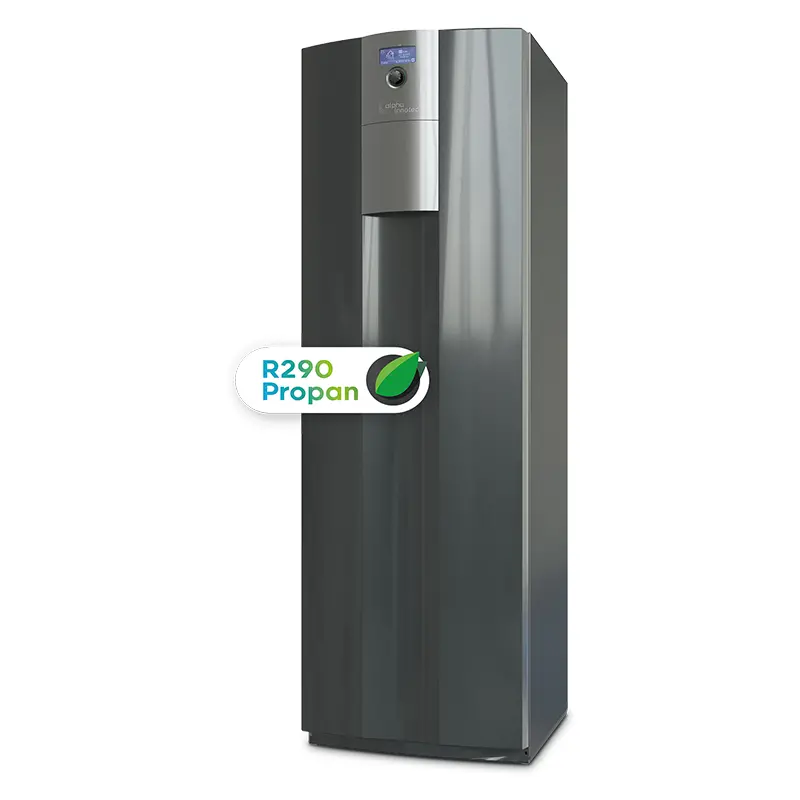
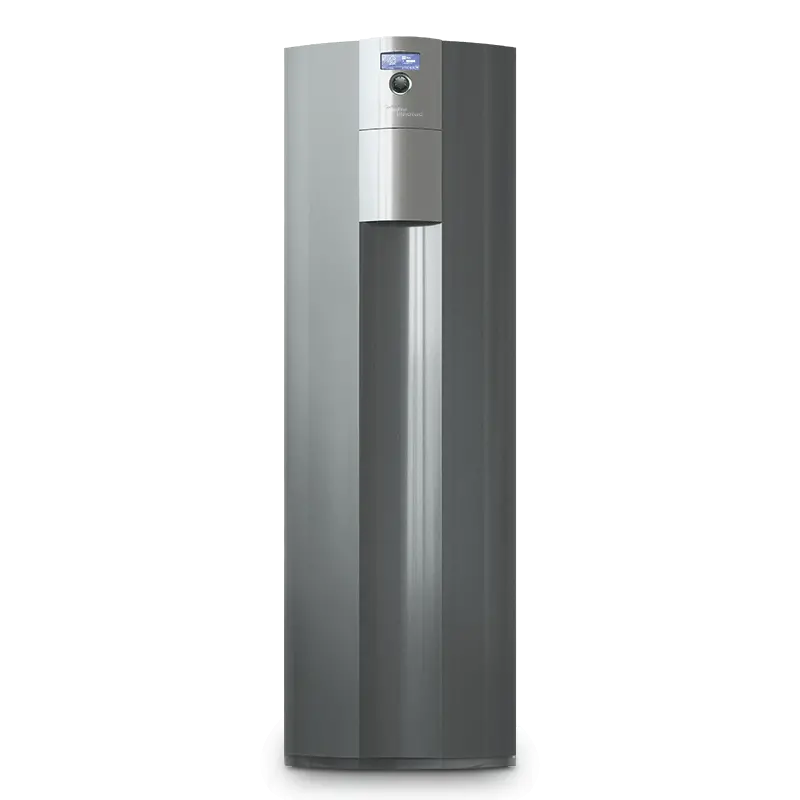
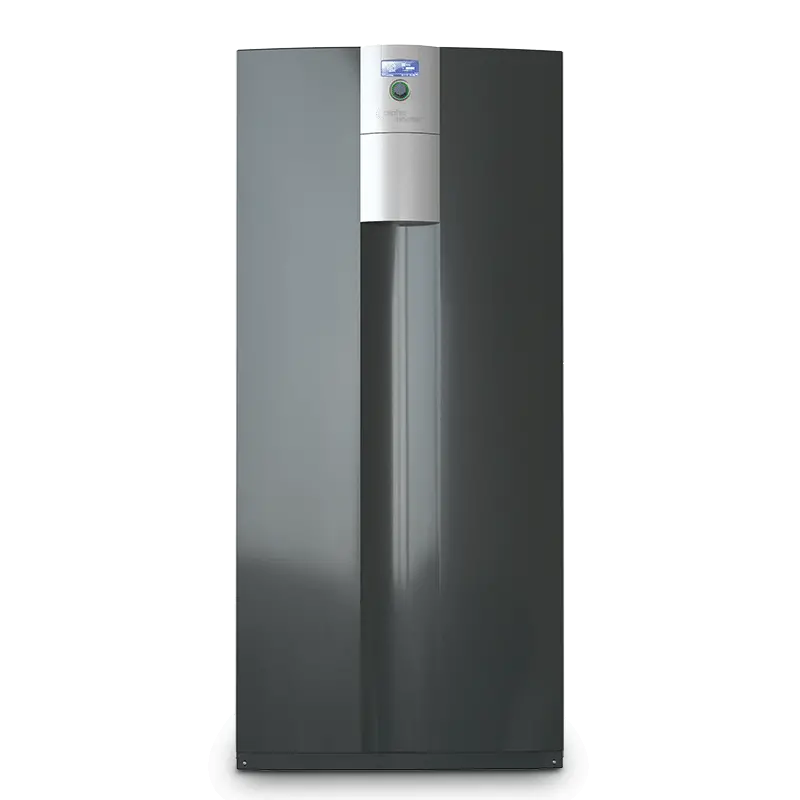
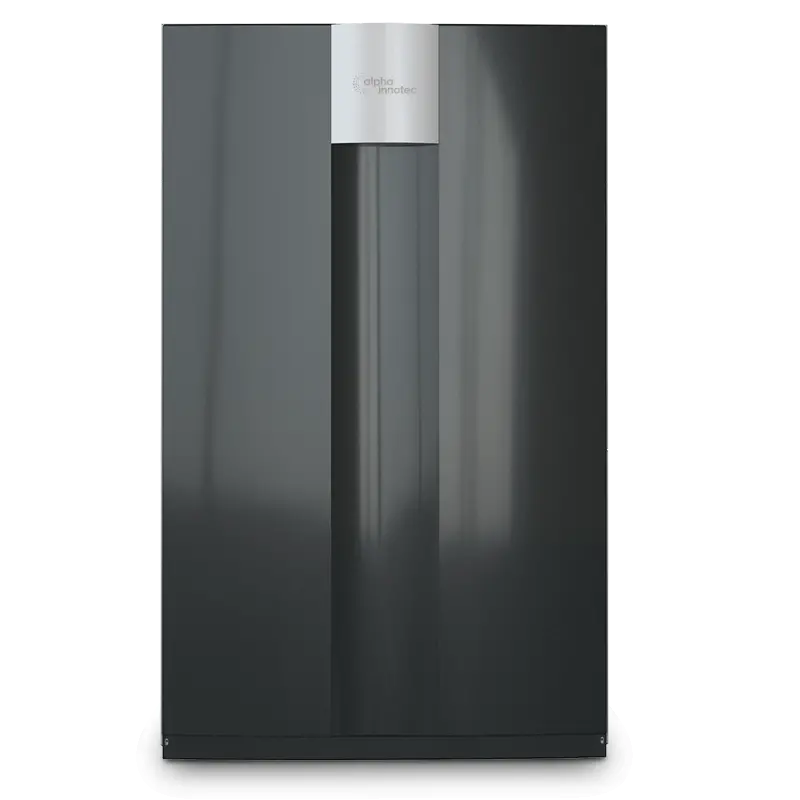
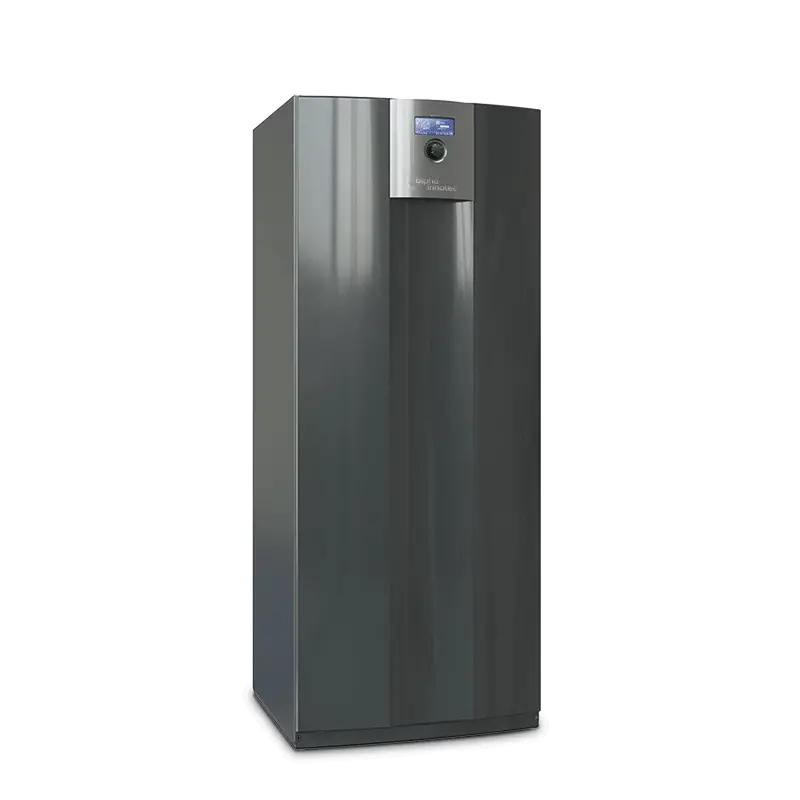
These heat pumps can cool:


Active vs. passive cooling: differences and areas of application
When it comes to cooling with a heat pump, a basic distinction is made between active and passive cooling. Both variants work on a similar principle—heat is transported from the house to the outside—but differ greatly in terms of technology, performance, and energy consumption.
Active cooling
In active cooling, the heat pump basically works like a reverse air conditioner. The compressor is switched on, the refrigerant runs through the entire cycle, and the heat is actively transported from the living spaces to the outside. This enables a noticeable drop in temperature, which in many cases is between 2 and 4 degrees Celsius.
The advantage: Even on very hot days, you can ensure pleasant temperatures.
The disadvantage: Operation requires more electricity – depending on the size of the building and usage, around 300 to 600 euros per year.
Where does it make sense? Especially where an air-to-water heat pump or a system with reversible technology is installed.
Passive cooling
Passive cooling is the most natural and efficient way to cool rooms with a heat pump. Here, the compressor remains switched off. Instead, the system uses the naturally cool temperatures of the ground or groundwater.
The advantage: extremely low operating costs (usually only $50–100 per year) and very quiet operation without disturbing noises.
The disadvantage: the cooling capacity is limited. Rooms can be cooled by a noticeable 3–8 °C, but rapid cooling as with an air conditioner is not possible.
Where does it make sense? Passive cooling is particularly worthwhile in well-insulated new buildings with surface heating (floor, wall, or ceiling). There, the gentle reduction is completely sufficient to create a pleasant indoor climate even on hot days. The system is particularly economical if a geothermal heat pump or groundwater heat pump is installed.
How powerful is a heat pump's cooling capacity?
The answer depends largely on the type of cooling (active or passive), the condition of the building, and the type of heating surfaces.
Active cooling: Here, the heat pump works in a similar way to an air conditioner. Typically, temperature reductions of 2–4 °C can be achieved. In a living space with a temperature of 28 °C, a comfortable level of around 24–26 °C can be achieved.
Passive cooling: Uses the natural coldness of the ground or groundwater. In well-insulated buildings with panel heating, reductions of 3–8 °C are possible. This is sufficient to create a comfortable indoor climate even during heat waves.
Many people underestimate the cooling capacity of heat pumps. In combination with good insulation and external sun protection, a moderate reduction is sufficient to significantly improve the quality of living in summer.
Patrick Pohl, Sales Team Leader North/West, alpha innotec Heat Pumps
Cooling with a heat pump: pros and cons
✅ Advantages | ❌ Disadvantages |
Climate-friendly, as it uses environmental energy | Only moderate cooling, no “icy air” effect |
Low operating costs (€50–600/year) | Retrofitting not possible for all models |
even cooling without drafts | less suitable for rapid spot cooling |
subsidies and government grants available | adjustments to heating surfaces often necessary in older buildings |
combination with PV makes cooling cost-efficient | investment costs higher than for conventional air conditioners |
Conclusion: Heat pumps are ideal for homeowners who value sustainability and comfort. However, those who live in poorly insulated buildings and require very powerful cooling should carefully check with specialist companies before installing one.
What are the requirements for cooling with a heat pump?
Certain conditions must be met for the cooling function of a heat pump to work efficiently.
Heating surfaces
- Underfloor heating: Ideal, as it covers a large area, provides even cooling, and causes hardly any drafts.
- Wall heating/ceiling heating: Also suitable, with comparable efficiency.
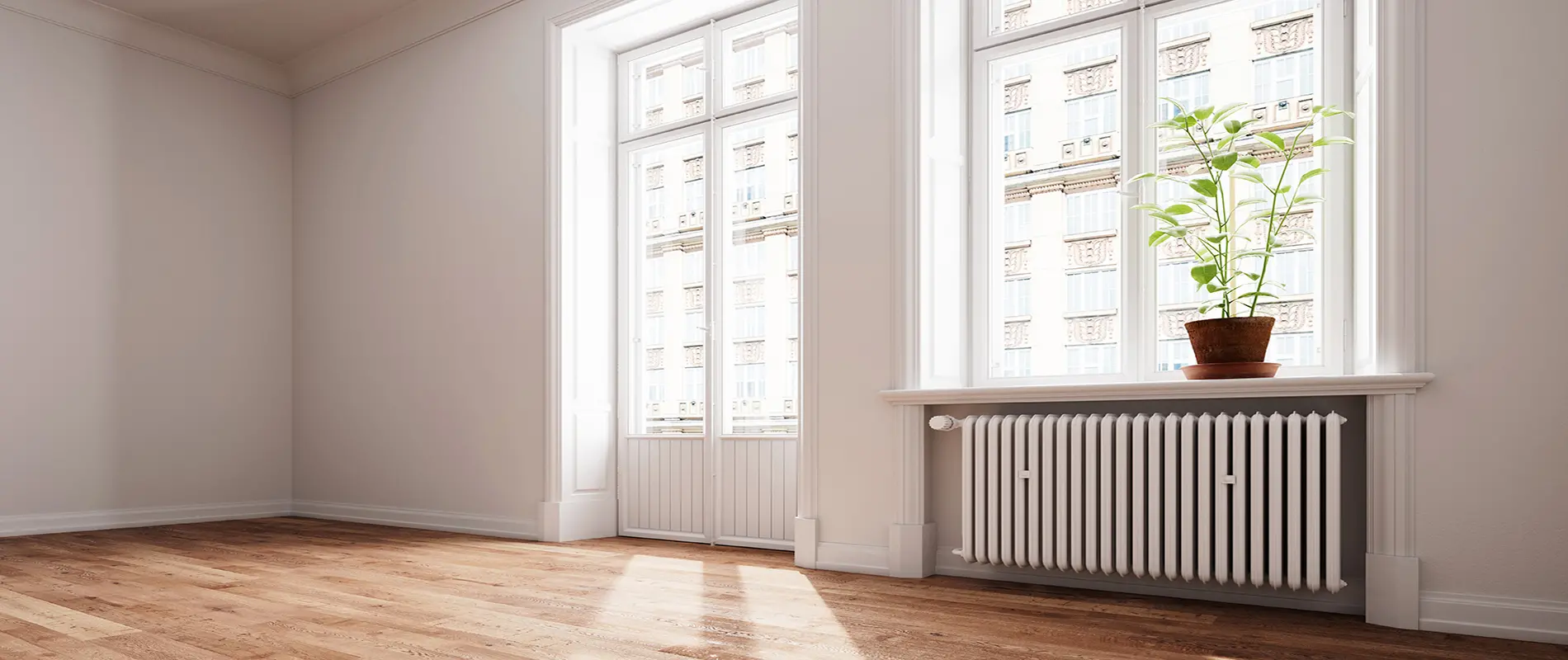
- Fan coil units: A good solution, especially in older buildings where there is no surface heating. They can both heat and cool and react quickly.
- Classic radiators: Not really suitable for cooling due to their small surface area.
Building standard
- Good insulation of the roof, walls, and windows is crucial. It keeps the heat out in summer and supports the efficiency of the cooling system.
- External sun protection (roller shutters, awnings) also prevents rooms from heating up.
Control & technology
- Dew point control: Important for preventing condensation on cold surfaces.
- Adequately dimensioned pipes: This is the only way to reliably transport the cooling quantities.
- Smart-Home-Systems: Control cooling efficiently and according to demand.
Cooling with a heat pump in new buildings
Many existing buildings are still equipped with traditional radiators, which are unsuitable for cooling. If you want to use a heat pump for cooling in these buildings, you will usually have to invest in heating surfaces. It is also important to consider the building envelope: without improved insulation, the house loses a lot of heat in winter and absorbs too much heat in summer. In such cases, the heat pump alone cannot provide the desired indoor climate.
In older buildings in particular, it is worth not only modernizing the heat pump, but also investing in insulation and heating surfaces at the same time. Only then can the cooling function really show its strengths.
Marion Kirchner, Master plumber and heating engineer; Sales Manager at alpha innotec Bavaria
Cooling with a heat pump in new builds
In a new building, the conditions for cooling with a heat pump are usually ideal. Nowadays, underfloor heating or another surface heating system is almost always installed, which is ideal for dissipating cooling energy. In addition, new buildings have good insulation due to current standards and are often equipped with external sun protection.
Which heaters are suitable for cooling with a heat pumpt?
✅ Floor, wall, and ceiling heating → most suitable
✅ Fan coil units → flexible, can also be retrofitted in existing buildings
❌ Classic radiators → hardly suitable, as the surface area is too small
How much does it cost to cool with a heat pump?
The total costs consist of investment (purchase or retrofitting) and ongoing operation.
Cost overview for heat pumps with cooling function
Cost type | Typical range | Details |
Purchase of heat pump (new, incl. cooling function) | 15.000 – 30.000€ | Total cost for heat pump, heating surfaces, installation. Cooling function usually only a small additional charge. |
Retrofitting cooling function | 1.000 – 3.000€ | Installation of 4-way valve, expansion valve, control adjustment. Depends on model and effort. |
Operating costs – passive cooling | 50 – 100 €/year | Only the circulation pump runs. Very low electricity costs. |
Operating costs – active cooling | 300 – 600 €/year | Compressor runs. Higher energy consumption, but still cheaper than air conditioning. |
Practical example
A family in a new building decides to install an environmentally friendly geothermal heat pump that can provide passive cooling.
Investment: €22,000 (including cooling function)
Subsidy: €7,000 via the BEG (only in Germany)
Effective costs: €15,000
Operating costs for cooling: approx. €80 per year
Compared to a conventional air conditioning system, which would cost around €400 per year in electricity for a similar house, the family saves significantly in the long term – and cools in an almost CO₂-neutral way.
Can the cooling function be retrofitted?
Yes, in many cases, the cooling function can be retrofitted to a heat pump. However, this depends heavily on the type and model of heat pump. Not every system is reversible, and some devices lack the technical basis for this. Therefore, the first step is always to have the system checked by a specialist company or the manufacturer.
Basically, retrofitting requires a few technical adjustments: a 4-way valve ensures that the refrigeration cycle can be reversed, an additional expansion valve regulates the pressure, and the control system must also be adjusted accordingly. This work should definitely be carried out by a specialist company to ensure warranty and safety.

Tips for efficient cooling and use of photovoltaics
The cooling function of a heat pump only reaches its full potential when it is used intelligently and the building is prepared for operation. By following a few simple rules, you can significantly increase efficiency and noticeably reduce electricity costs.
Correct behavior in summer
- Close roller shutters or blinds during the day: This keeps direct sunlight out and reduces the load on the heat pump.
- Ventilate at night: When it is cooler outside than inside, night ventilation helps to remove excess heat from the rooms.
- Adjust the heating curve: A flat heating or cooling curve ensures even temperatures without unnecessary energy consumption.
Combine photovoltaics with heat pump
It is particularly worthwhile to combine the heat pump with a photovoltaic system. This is because the PV system produces a particularly large amount of electricity when the cooling demand is greatest in summer. The excess energy that is not used directly during the day can flow directly into the cooling system.
- A 5 kWp system can easily cover most cooling requirements in summer.
- In conjunction with an electricity storage system, the excess energy can be temporarily stored and also used for cooling in the evening.
- This reduces the electricity costs for cooling to almost zero euros.
Heat pumps with cooling function—experiences

Luxurious architect-designed house with heat pump
Builder Wolfgang Doemens uses the cooling function in summer.

Energy storage house with geothermal energy
The HerzoBase project offers cool living comfort for eight families
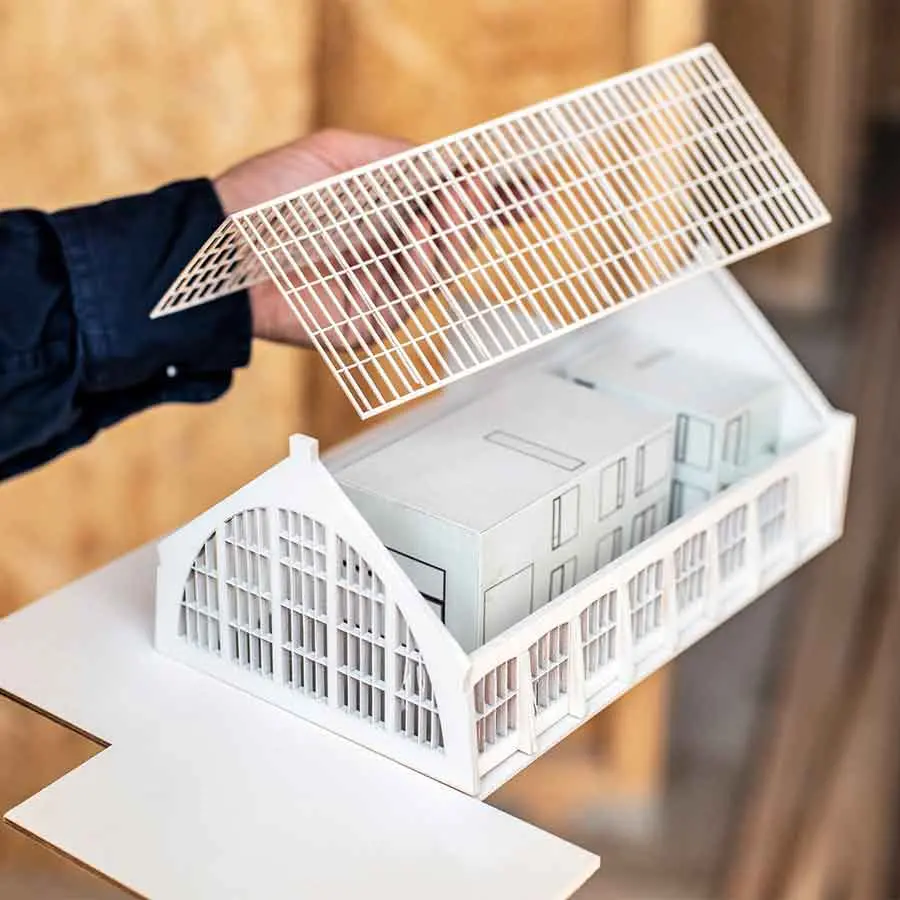
The idea of a house within a house
Heating in winter, cooling in summer in the glass Art Nouveau building.
Conclusion
The heat pump has long been more than just a heating system—it is a comprehensive solution for modern, climate-friendly living. In addition to providing efficient heat in winter, it offers a reliable and sustainable cooling option in summer.