Heat pump with underfloor heating: The ideal combination for efficient heating
In our consultations, we are repeatedly asked the following question: “Does a heat pump with underfloor heating make sense?” Yes — that's exactly what heat pumps are made for. The large heating surfaces of underfloor heating allow for low flow temperatures and thus high efficiency, comfort, and low operating costs. Subsidies make the switch even more attractive.
The most important facts in 10 seconds
- Heat pump + underfloor heating = ideal combination
- Low flow temperatures ensure high efficiency
- Ideal for new buildings, also feasible in old buildings undergoing renovatio
Advantages of underfloor heating with a heat pump
The combination of a heat pump and underfloor heating is considered particularly efficient and comfortable. Due to the large-area heat emission via the floor, even low flow temperatures are sufficient to heat rooms comfortably. This not only ensures a comfortable living environment, but also low energy costs and a sustainable heating solution.
Energy efficiency
Underfloor heating operates at significantly lower flow temperatures than conventional radiators. This means less work for the heat pump, as it does not have to heat the heating water as much. This increases the annual performance factor and reduces electricity consumption, making the system particularly efficient.
Comfort
The heat from underfloor heating is distributed evenly throughout the room, creating a cozy living environment. Cold feet and drafts from radiators are a thing of the past. In addition, the radiant heat feels pleasantly natural and creates an even climate that is perceived as very comfortable
Operating costs
As the heat pump requires less energy due to the low temperatures, running heating costs are significantly reduced. A photovoltaic system with a heat pump can further reduce electricity costs, making the investment worthwhile in the long term.
Health and indoor climate
Underfloor heating stirs up less dust than conventional radiators. This is particularly beneficial for allergy sufferers. In addition, the large-area heat distribution ensures a pleasant indoor climate with even temperatures, which has a positive effect on well-being.
Environmental friendliness
The efficient use of renewable environmental energy and the option of operating the heat pump with your own solar power significantly reduce CO₂ emissions. Homeowners thus make an important contribution to climate protection and future-proof their heating system.
How do heat pumps and underfloor heating work together?
The heat pump extracts heat from the environment and raises it to a usable temperature level. This heating water is pumped through the pipes of the underfloor heating system, which distributes the energy over a large area. Since the entire floor serves as a heating surface, even a low water temperature is sufficient to keep the rooms warm.
Why heat pumps + underfloor heating are so efficient
- Large heating surface = low flow temperature sufficient
- The lower the temperature difference, the more efficiently the heat pump works
- Uniform radiant heat ensures a comfortable indoor climate
- Less cycling of the heat pump → longer service life
- Optional cooling via surface heating possible
Which heat pump is best suited for underfloor heating?
In principle, almost all common types of heat pumps can be combined with underfloor heating. The decisive factors are how high the heat demand of the house is and which energy source is available.
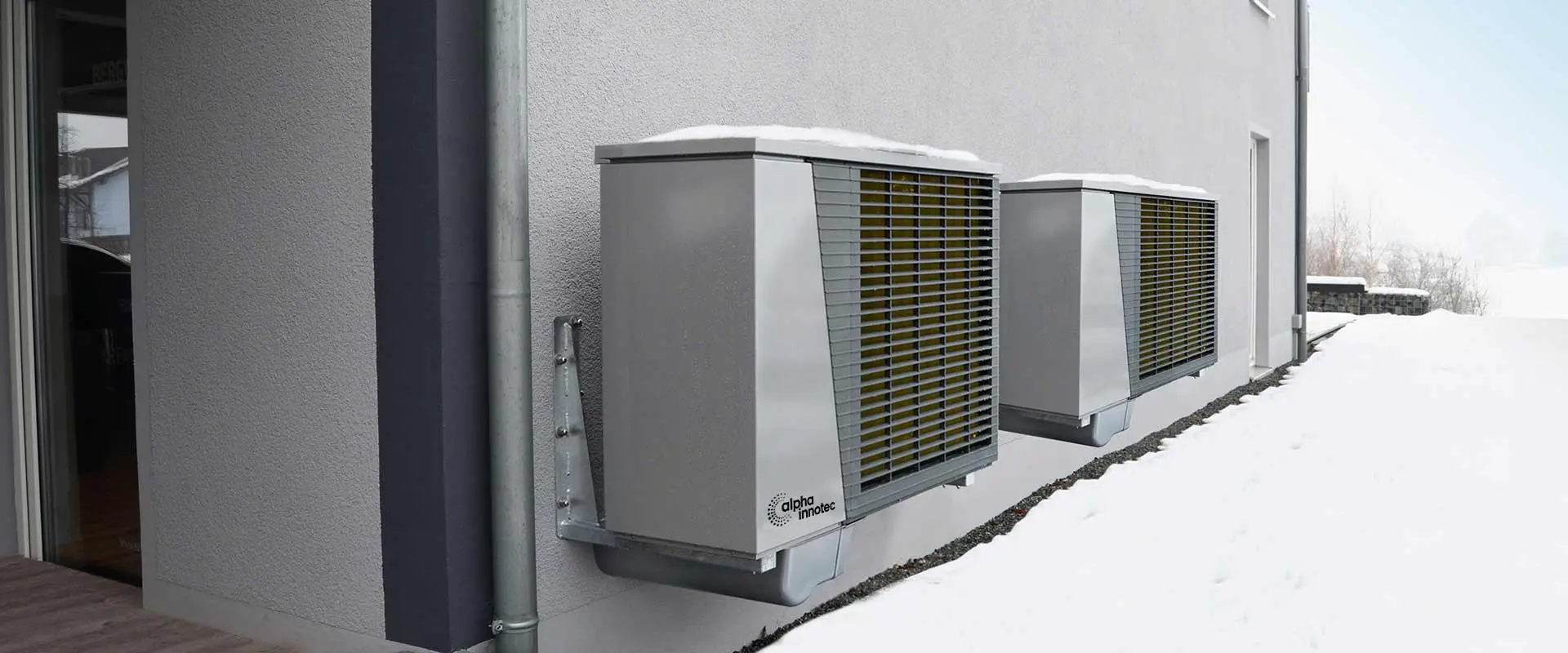
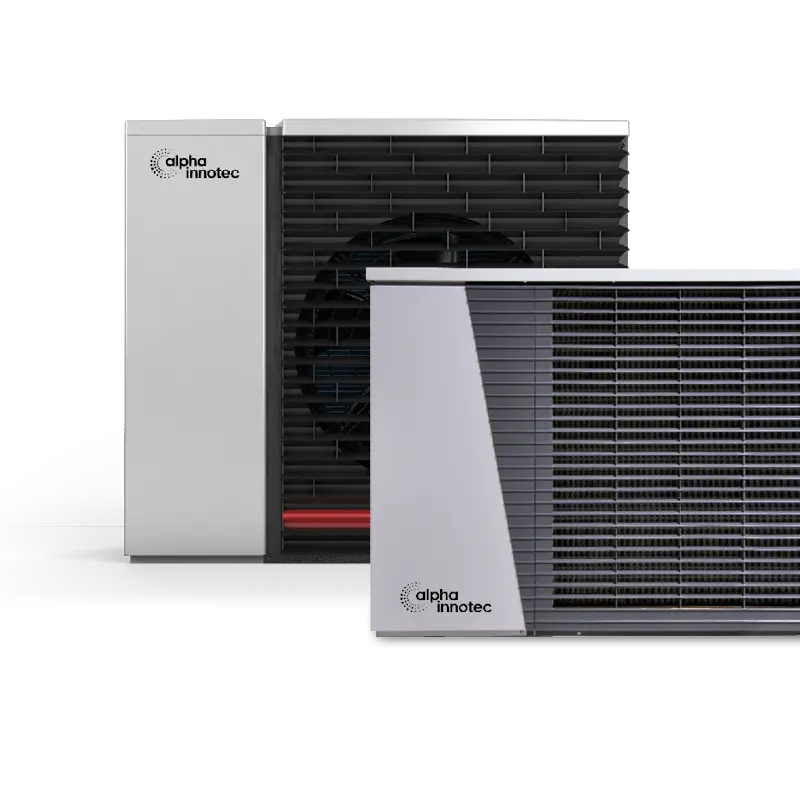
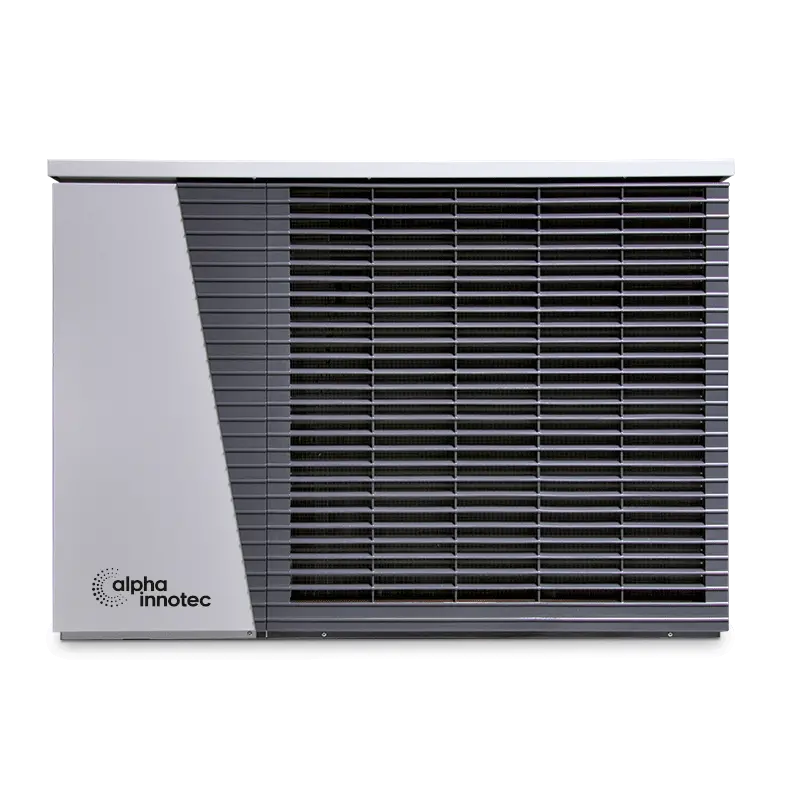
This is the most commonly used type, as it is relatively simple and inexpensive to install. It works very efficiently in combination with underfloor heating, as this requires low flow temperatures. Air heat pumps are suitable for both new buildings and renovated old buildings.
Brine-water or geothermal heat pump:
This variant uses the constant heat of the ground. Due to the consistent source temperature, it achieves particularly high seasonal performance factors. In combination with underfloor heating, efficiency is optimal, as the heat pump can operate very evenly throughout the year.
This is used exclusively for drinking water preparation and is not a complete heating solution. Combining it with underfloor heating is therefore not advisable. However, it can be used as a supplement if another heat source provides space heating.

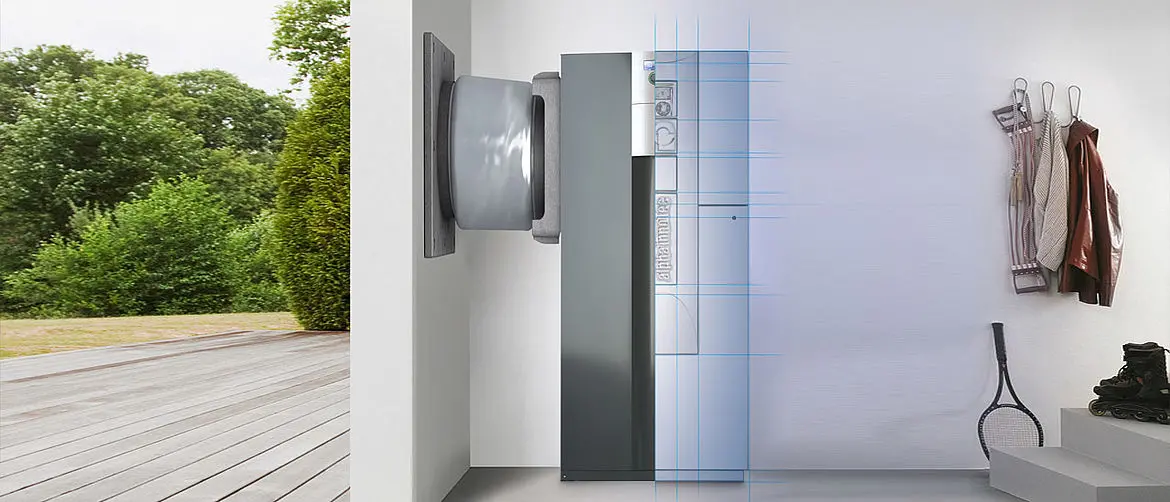
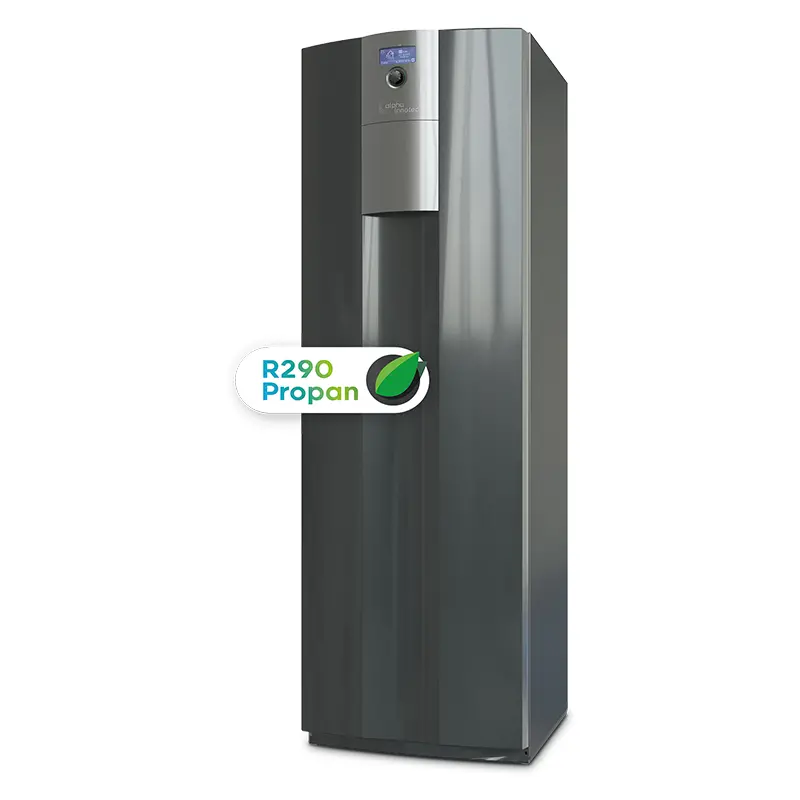
Example of air-to-water heat pump indoor installation
Hybrox Series
• Inverter heat pump
• Refrigerant R290
• Building heating load: 5–16 kW
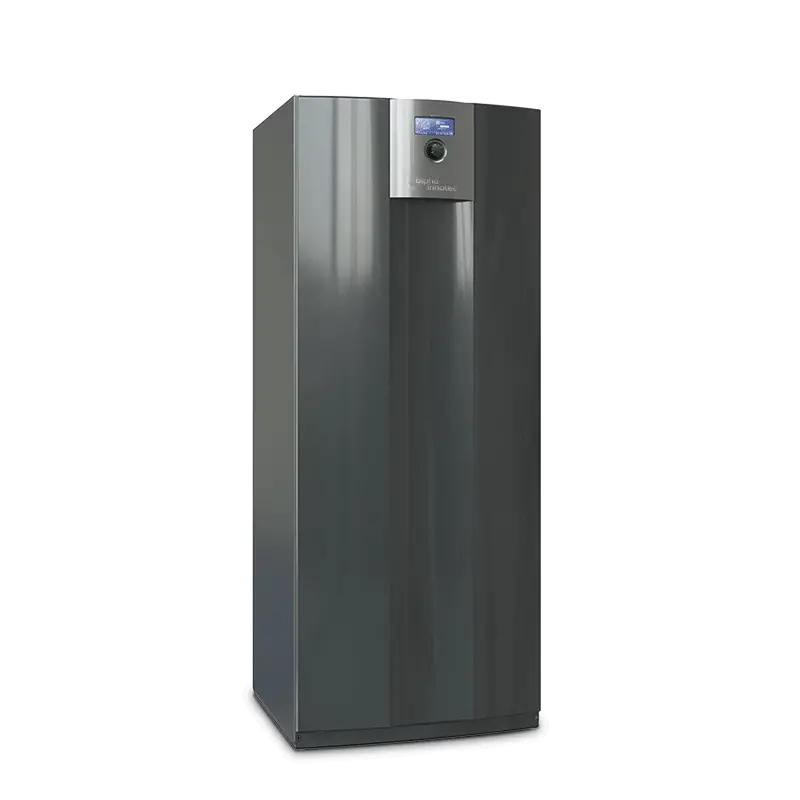
LWDV
• Inverter heat pump
• Refrigerant R290
• Building heating load: 6–11 kW
WZSV 63
• Inverter heat pump
• Refrigerant R290
• Building heating load: 7–12 kW
Setting up your underfloor heating and heat pump correctly
Optimal efficiency is achieved by correctly coordinating the flow temperature, heating curve, and insulation standard.
- Heating curve: This determines how much the flow temperature changes depending on the outside temperature. A flat heating curve ensures low temperatures and low costs.
- Flow temperature: The lower, the better. Modern underfloor heating systems rarely require more than 35 degrees.
- Insulation: A good building envelope prevents heat loss and keeps the flow temperature low.
- Hydraulic balancing: This ensures that all heating circuits are supplied with heat evenly – a must for efficiency.
- Self-regulating effect: If the room is heated by sunlight or body heat, the underfloor heating automatically reduces its output.
The buffer tank for heat pumps for underfloor heating
A buffer storage tank is not absolutely necessary, but can be useful in certain situations:
- to avoid frequent switching on and off of the heat pump,
- as an energy storage device for defrosting processes,
- or if electricity suppliers impose temporary restrictions.
Heat pump with underfloor heating in new buildings
This combination is now standard in new buildings. Underfloor heating systems are designed from the outset with low flow temperatures, allowingheat pumps to reach their full potential. Combined with photovoltaics and anoptional cooling function, this creates a state-of-the-art, efficient overall system.
Does a heat pump work with underfloor heating in older buildings?
Yes, but the conditions for a heat pump in older buildings must be right. Unlike in new buildings, where this combination is practically standard, several factors play a role in existing buildings.
Requirements in older buildings
Building insulation: Uninsulated facades, roofs, or windows increase the heat demand. Renovation ensures that the heat pump is not overloaded and runs efficiently.
Heating load calculation: The heating load should be determined before starting the conversion. This allows the heat pump to be correctly dimensioned and the necessary flow temperature to be estimated.
Hydraulic balancing: Especially in older buildings, it is crucial that the heat is distributed evenly. Balancing prevents individual rooms from being over- or undersupplied.
Retrofit systems: For existing buildings, there are special systems in which the heating pipes are milled into the existing screed or applied to the floor. This makes installation possible even without completely rebuilding the floor.
Role of renovation
It is often worthwhile to combine the retrofitting of a heat pump with an energy- efficient renovation. Even small measures such as replacing old windows or insulating the top floor ceiling significantly reduce heating requirements. This allows the heat pump to be smaller, which saves costs and increases efficiency.
Our alpha innotec expert assessment
“Even in older buildings, the combination of a heat pump and underfloor heating is a successful model—provided the building is well prepared. Those who invest in insulation and optimize the heating surfaces can also heat efficiently and comfortably with a heat pump in existing buildings.”
– Werner Thiem, Produktmanager, alpha innotec

Does a heat pump also work without underfloor heating?
Yes, that is possible. A heat pump with radiators can also work efficiently if the flow temperatures are low enough. Modern low-temperature radiators or fan coil units further improve efficiency. However, the larger the heating surface, the better the heat pump works. That is why underfloor heating is the ideal complement.
How much does a heat pump with underfloor heating cost?
The costs depend heavily on the building situation.
Individual costs
Cost | Typical range |
Heat pump including installation | 11.000 – 30.000 € |
Underfloor heating in new buildings | 40 – 70 €/m² |
Underfloor heating retrofit | 60 – 120 €/m² |
Total costs
● New construction: € 20,000–30,000
● Retrofitting in older buildings: € 25,000–45,000
The investment is higher than for gas or oil heating, but is offset by low operating costs and attractive subsidies.
Can I also cool with a heat pump and underfloor heating?
Yes, that is possible. Many heat pumps can reverse the cycle in summer and gently cool via the underfloor heating. This does not produce an icy cold like an air conditioner, but rather a pleasant reduction in room temperature by a few degrees. This works particularly efficiently with geothermal heat pumps, which utilize the constant coolness of the ground. It is important to have dew point control so that no condensation forms on the floor.
Conclusion
The combination of a heat pump and underfloor heating is a future-proof investment. It combines maximum living comfort with low operating costs and a clear benefit for the environment.