Is propane (R290) really a safe and sustainable refrigerant for heat pumps? The clear answer is yes—propane is one of the most climate-friendly and efficient refrigerants available today.
The most important facts in 10 seconds
- Climate-friendly & future-proof: With a GWP of just 0.02, propane (R290) is practically climate-neutral and not affected by F-gas bans.
- Efficient & versatile: High seasonal performance factors and flow temperatures of up to 75 °C make propane heat pumps suitable for both new and old buildings.
- Safe to operate: Hermetically sealed systems, low fill quantities (150–1,200 g), and clear installation rules ensure high operational safety.
- Economical and eligible for subsidies: Purchase costs are the same as for conventional models, but up to 70% government subsidies are available, including a 5% bonus for natural refrigerants.
With a global warming potential (GWP) of just 0.02, it is virtually climate-neutral, meets all the requirements of the F-Gas Regulation, and ensures that heat pumps can continue to be operated without restrictions in the future.
What's more, propane enables high flow temperatures, is versatile in its application, and is subsidized by the government.
What is R290 (propane) in the heat pump?
When first encountering the topic, many people ask themselves: Is R290 just another word for propane? Actually, yes. R290 is the international designation for propane when it is used as a refrigerant. It is a natural hydrocarbon that is abundant, has extremely low climate impact (GWP 0.02), and has been used in heat pumps and refrigerators for years.
A propane heat pump uses this natural refrigerant in its refrigeration cycle. This means that it extracts energy from the environment (air, earth, or water), transfers it using R290, and makes it usable as heating or hot water in the building.
Natural vs. synthetic refrigerants
Natural refrigerants (e.g., R290 propane, CO₂, ammonia)
- Low or almost no greenhouse effect (very low GWP)
- No or minimal ozone depletion
- Tried and tested in industry and household appliances
- Future-proof, as not restricted by EU bans
Synthetic refrigerants (e.g., R32, R410A, R134a)
- Medium to high GWP (some > 1,000)
- Impact on climate and environment when released
- Energy-intensive production
- Gradual restriction due to EU F-gas Regulation
Legal regulations concerning refrigerants and global warming potential (GWP)
With the F-Gas Regulation (2024), the EU has established clear rules to gradually reduce the use of climate-damaging fluorinated refrigerants. The decisive factor here is the so-called global warming potential (GWP).
What does GWP stand for?
- GWP = Global Warming Potential → Maßzahl für die Klimawirkung eines Gases im Vergleich zu CO₂.
- CO₂ = Referenzwert 1 → alle anderen Gase werden damit verglichen.
- Zeitraum (meist 100 Jahre): gibt an, wie stark ein Gas in diesem Zeitraum zur Erderwärmung beiträgt.
Beispiel: 1 kg R410A (GWP 2.088) erwärmt die Atmosphäre in 100 Jahren so stark wie 2.088 kg CO₂.
While synthetic refrigerants such as R32 or R410A will soon be restricted or banned, propane (R290) has a GWP of only 0.02, which is well below all limits, and is considered virtually climate-neutral.
Comparison of the most important refrigerants
Refrigerant | Type | GWP (100 years) | Status according to F-Gas Regulation |
R290 (propane) | Natural | 0,02 | Future-proof, eligible for subsidies |
R32 | Synthetic (HFC) | 675 | Gradually restricted from 2027/2032 |
R410A | Synthetic (HFC) | 2.088 | Discontinued model, banned in future |
What are the advantages and disadvantages of propane heat pumps?
Advantages | Disadvantages |
Very low GWP (0.02) → practically climate neutral | Combustible (safety concept required) |
Future-proof thanks to F-Gas Regulation | Outdoor installation often recommended |
High efficiency and flow temperatures up to 75 °C | Indoor installation only with restrictions |
Suitable for old and new buildings | Partially higher acquisition costs |
Subsidy bonus +5% for natural refrigerants in Germany | – |

Which heat pumps run on propane?
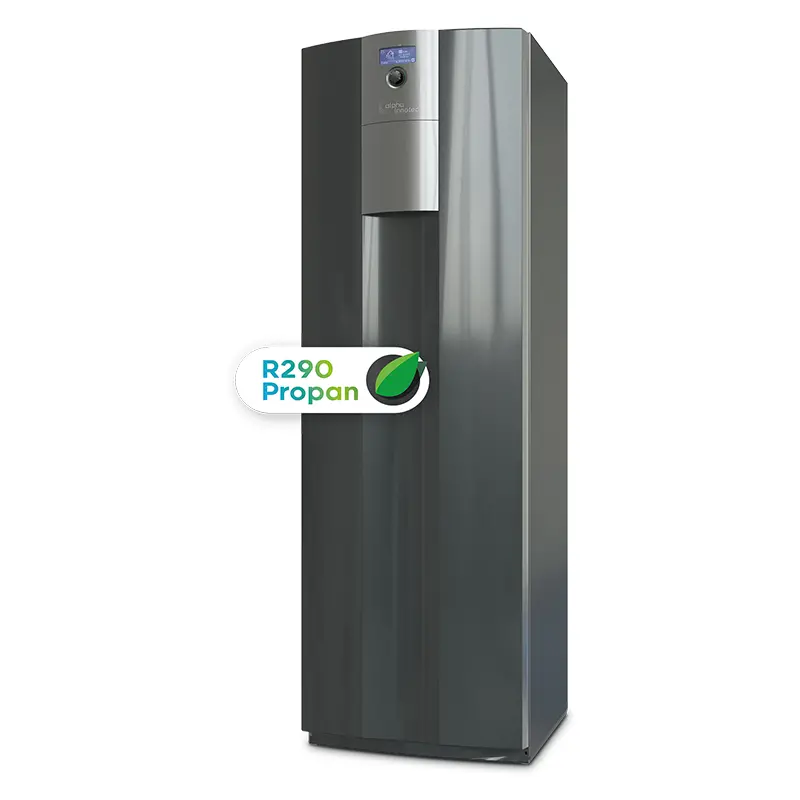
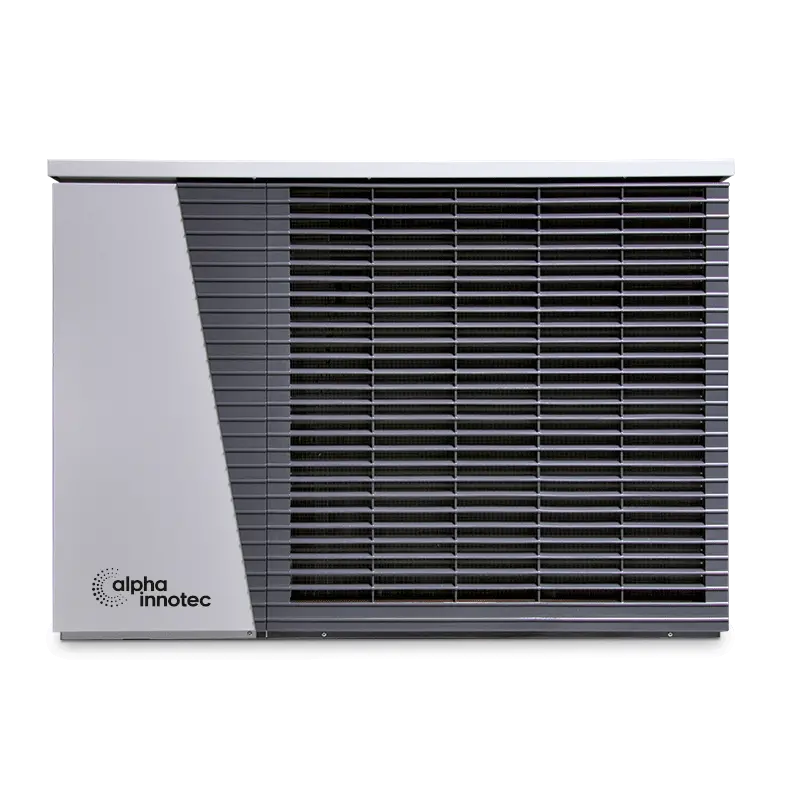
Propane is now used as a refrigerant in a wide range of heat pumps and is no longer limited to individual niche models. It is most commonly found in air-to-water heat pumps for single-family and two-family homes, but brine-to-water heat pumps are also increasingly using propane as a refrigerant because it offers excellent thermodynamic properties and, in combination with geothermal probes, achieves stable performance throughout the year.
For larger properties such as apartment buildings or commercial real estate, there are also powerful high capacity heat pumps that can deliver flow temperatures of up to 75 °C with propane – an advantage if classic radiators are still in use.
Our propane heat pumps:


Where can I install propane heat pumps?
Heat pumps with R290 are safe to operate, but certain regulations apply during installation because propane is flammable. The filling quantities, the design of the heat pump, and compliance with safety distances are crucial.
Outdoor installation
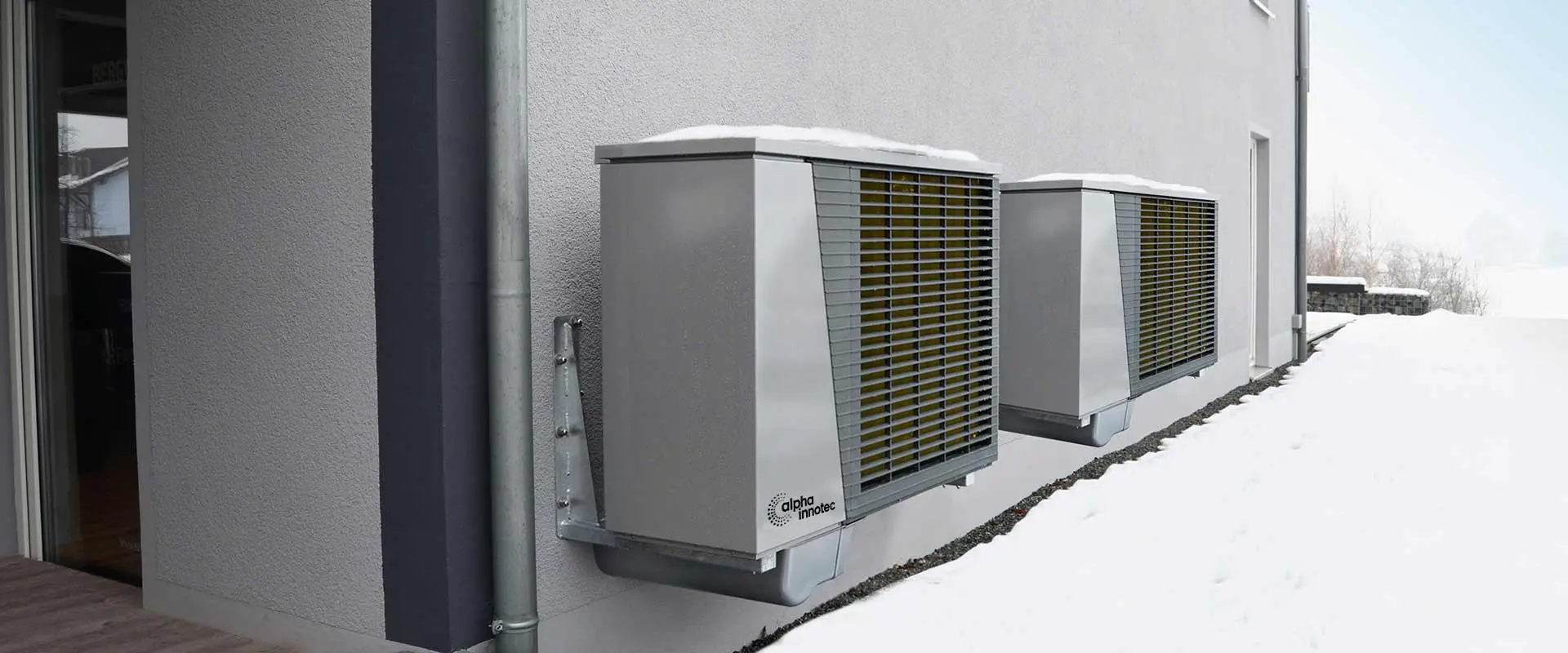
Outdoor installation is the most common solution for air-to-water heat pumps with propane. It offers a high level of safety, as any leaks would immediately escape into the ambient air.
Checklist for outdoor installation:
✔ Solid, vibration-free surface (e.g., concrete foundation)
✔ Maintain distance from windows, doors, and ventilation openings
✔ No ignition sources in the immediate vicinity
✔ Sufficient space for maintenance and air supply
Indoor installation
Indoor installation is possible for special propane heat pumps that operate with very low refrigerant charges and have special safety mechanisms. However, strict technical requirements must be observed here.
Checklist for indoor installation:
✔ Only devices with approved refrigerant charge (<150 g)
✔ Room must be well ventilated
✔ Observe safety areas and fire protection requirements
✔ Installation only by a specialist company
Basement installation
Installation in the basement is only permitted in exceptional cases and only if the heat pump is certified for this purpose. Since propane is heavier than air, the risk of gas accumulation must be ruled out.
Checklist for basement installation:
✔ Only permitted for approved models
✔ Additional ventilation or emergency exhaust required
✔ Avoid floor openings, shafts, or depressions
✔ Strict compliance with all standards (e.g., VDE, DIN EN 378)
Is a propane heat pump dangerous?
The discussion about the flammability of propane is often dramatized. In practice, propane heat pumps are completely safe thanks to closed systems, low fill quantities, and clear safety requirements. Anyone using a heat pump with R290 today is no more at risk than with a conventional refrigerator in their kitchen.
Werner Thiem, Product Manager for Heat Pumps and Ventilation; ait-deutschland GmbH
How much propane is inside a heat pump?
- Small air-to-water heat pump: approx. 150–300 g
- Medium-sized units for single-family homes: approx. 500–700 g
- Large heat pumps: up to approx. 1,200 g
How much does an environmentally friendly propane heat pump cost?
Before purchasing, many people ask themselves not only about the safety of propane heat pumps, but also: Does the R290 refrigerant make the heat pump more expensive? The clear answer is no. The investment is in the same range as for conventional models. Thanks to high efficiency and subsidy bonuses, the purchase can even pay for itself more quickly.
Cost factor | Reference value (2025) | Notes on economic efficiency |
Equipment costs (air-water, R290) | Approx. 10.000 – 14.000€ | Excluding installation and connection |
Total investment (including installation) | Approx. 15.000 – 30.000€ | Depending on output and building type |
Operating costs p.a. (electricity consumption) | Approx. 700 – 1.300€ | Thanks to high efficiency and, where applicable, use of own electricity |
Propane (R290) offers excellent thermodynamic properties that ensure particularly high efficiency. Modern devices achieve annual performance factors (APF) of over 4.0 in new buildings. This means that one kilowatt hour of electricity generates more than four kilowatt hours of heating energy. As a result, running costs are significantly lower than for gas or oil heating systems. By combining photovoltaics with a heat pump (link, if page exists), homeowners can further reduce their heating costs and accelerate the payback period.
Conclusion
A heat pump with the natural refrigerant propane (R290) combines the best of both worlds: maximum climate friendliness and maximum efficiency. With a GWP of just 0.02, R290 is practically climate-neutral, future-proof, and fully eligible for subsidies. Thanks to high flow temperatures, propane heat pumps are ideal not only for new buildings, but also for renovations and older buildings.