What types of heat pumps are available?
Heat pumps are no longer a niche topic, but are considered the heart of the heating transition. However, with so many types of heat pumps available, many people are asking themselves: Which type of heat pump is right for my home?
The most important facts in 10 seconds
- There are four main types of heat pumps: air-to-water, brine-to-water, water-to-water, and large heat pumps
- Each type of heat pump has its own advantages and disadvantages, depending on the building and the environment
- Almost all systems can be installed in new buildings – in older buildings, insulation and heating systems are crucial
- Subsidies of up to 70% make the switch to renewable energies particularly attractive
- Most heat pumps can not only heat but also cool – via the heating circuit or via passive cooling
A quick overview of heat pump types
Heat pumps use various energy sources from the environment (water, air, or geothermal energy) to efficiently supply your building with renewable and environmentally friendly energy. Depending on the system, they differ in terms of technology, installation location, noise level, efficiency, and licensing requirements.
Heat pump type | Energy source | Installation location | Brief information |
air-to-water heat pump | ambient air | outside or inside | inexpensive to purchase, most flexible in use, somewhat noisy |
brine-water heat pump | geothermal energy (ground source) | indoor | Very efficient, quiet, requires collectors or geothermal probes |
water-water heat pump | groundwater | indoor | Highest efficiency, but subject to approval |
high-capacity heat pumps | depending on the system | Technical room / outside | Suitable for apartment buildings, neighborhoods, or industrial areas |
Domestic hot water heat pump | Ambient air (indoor) | mostly inside | For hot water only, compact & easy to retrofit |
Every heat pump—in this article, we will limit ourselves to compression heat pumps—works according to the same operating principle. It extracts thermal energy from its environment, “pumps” it to a higher temperature level, and then transfers it to the heating system. A rule of thumb says that the heat pump needs 75 percent environmental heat and 25 percent electricity to generate thermal energy.
The main difference lies in the heat medium. Nature stores the sun's free energy in the air, ground, and water—and it is precisely these renewable heat sources that feed the three most common types of heat pumps: air-to-water, water-to-water, and brine-to-water. For the sake of completeness, it should be mentioned that in practice, other heat sources such as wastewater, exhaust air, and solar ice storage are also used.

The air-water heat pump
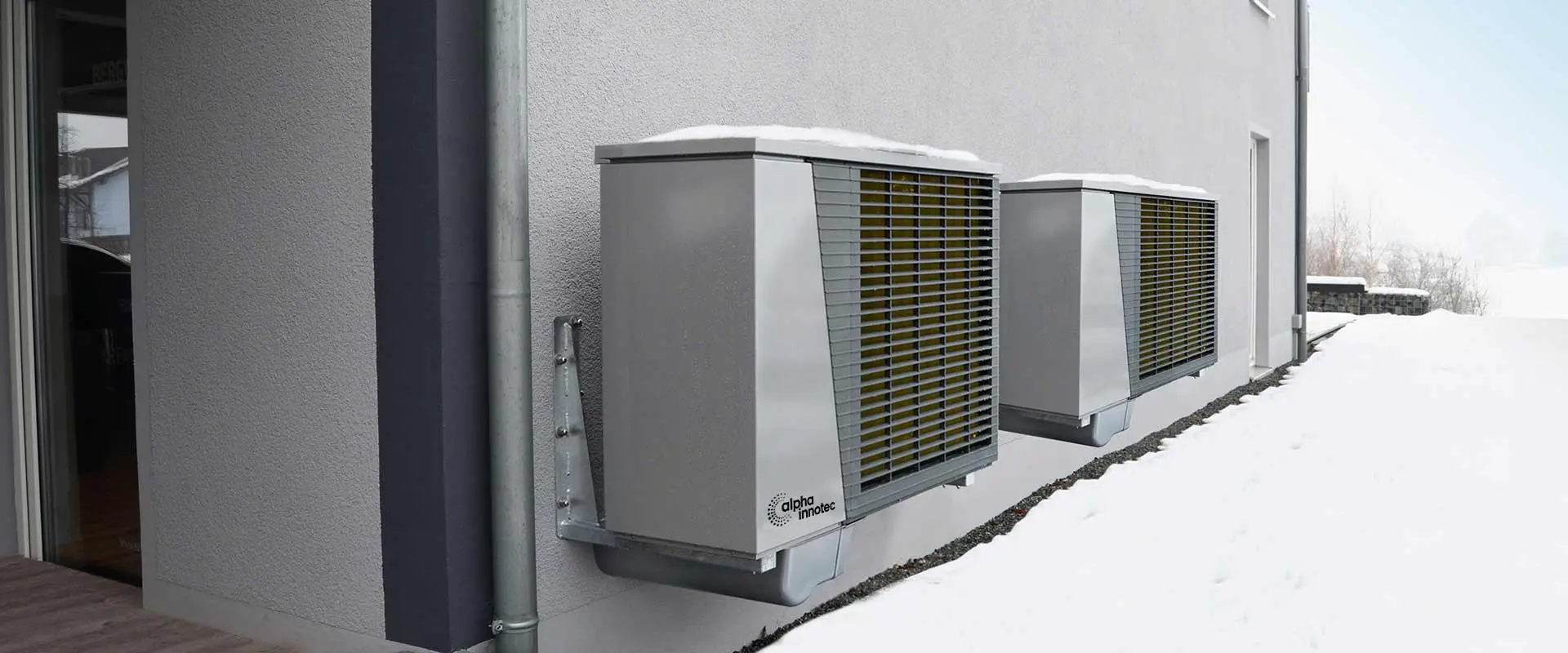
Air-to-water heat pumps use the thermal energy stored in the outside air and convert it into heating energy or hot water via the refrigerant circuit. A fan draws in ambient air and directs it through the evaporator, where a special refrigerant absorbs the heat. Through compression, liquefaction, and expansion in the cycle, the energy is ultimately transferred to the heating system. Many modern devices are reversible and can also be used for cooling in the summer.
Explained step by step:
- Fan draws in outside air
- Heat transfer to the refrigerant in the evaporator
- Compressor increases pressure → temperature rises
- Heat is transferred to the heating system in the condenser
- Expansion → cycle starts again

Advantages and disadvantages of air source heat pumps
Advantages:
- Uses free environmental energy (air)
- Easy to install (especially when installed outdoors)
- Also suitable for renovations
- Can also cool (reversible operation)
- Eligible for subsidies with a corresponding seasonal performance factor (COP ≥ 3)
Disadvantages:
- Dependence on outside temperature (less efficient in severe frost)
- Noise (outdoor unit)
- Refrigerant lines in split systems must be professionally installed
- Cooling mode requires suitable surface heating
Suitability of the air source heat pump
Suitable for ... | Not suitable for ... |
New buildings with underfloor or surface heating | High heat demand without insulation |
Well-insulated old buildings with large radiators | No space for outdoor unit / sound insulation problems |
Households with PV systems for own electricity consumption | Requirement for very high flow temperature without hybrid solution |
Modernization projects with hydraulic balancing | Indoor installation with very little space or poor ventilation |

Hybrox
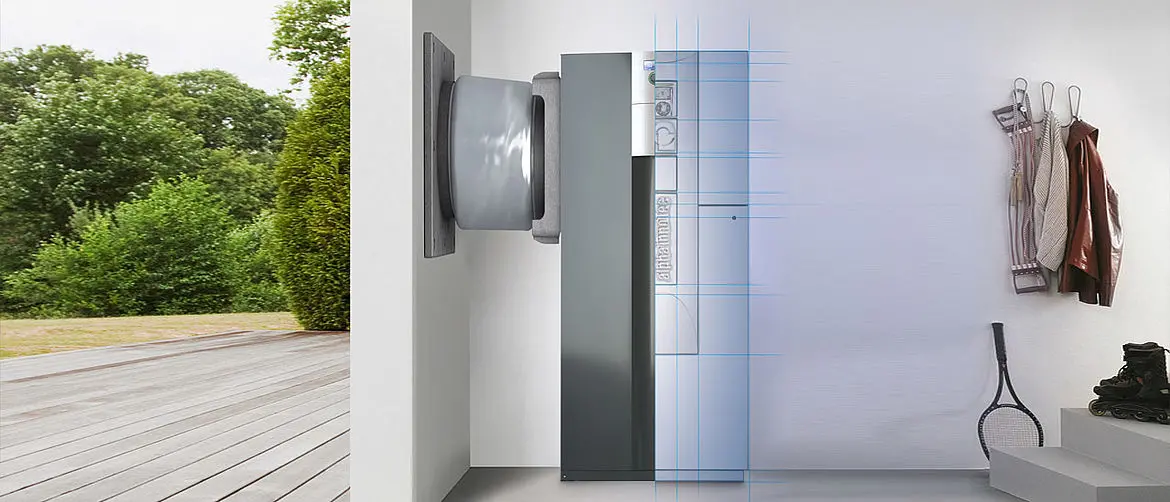
• Air/water heat pump
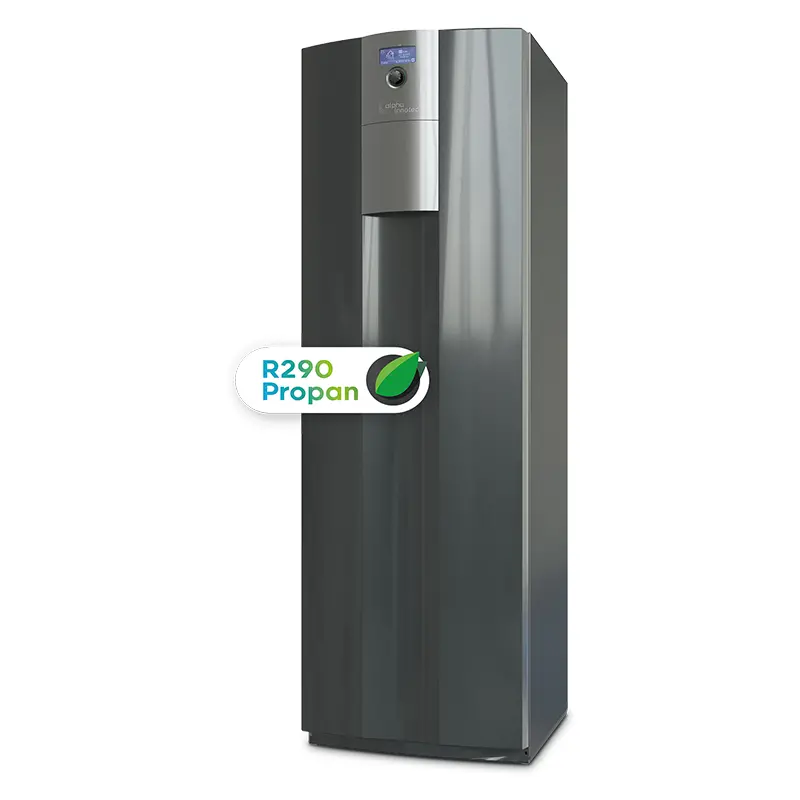
• Refrigerant R290
• Building heating load: 5-16 kW

Hybrox SE
• Air/water heat pump
• Refrigerant R290
• Building heating load: 5-14 kW
Costs of an air source heat pump
The costs for an air-to-water heat pump consist of three components: the heat pump technology itself, the installation costs, and, unlike other types of heat pumps, no additional development costs.
The price depends heavily on the desired heating output, the size of the building, and individual features such as buffer storage, smart home connectivity, or integrated hot water preparation.
Cost overview:
Equipment costs:
• Approx. €11,000 to €24,000 depending on heating capacity, manufacturer, and features
• Higher costs for integrated hot water heating, buffer storage, or smart home connectivity
Installation costs:
• Approx. €4,000 to €10,000
• depending on the structural conditions and the effort required for hydraulic and electrical connection
Development costs:
• none – a clear advantage over ground source and water heat pumps
Total cost:
• approx. €11,000 to €24,500 in total
Air-to-water heat pumps are not only cheaper to purchase than many other renewable systems, but also economical in the long term. Although they require electricity to operate, this is used very efficiently. The efficiency of modern devices is over 300%, which makes them particularly attractive for new buildings and renovated old buildings.
The geothermal heat pump
The geothermal heat pump, also known as a brine-water heat pump, uses natural heat from the ground to heat your home and, if necessary, for passive cooling in summer.
The thermal energy is transported to the evaporator via the so-called brine, a mixture of water and antifreeze. This is where the refrigerant cycle begins.
The brine circulates either in:
Ground collectors: laid close to the surface, require a lot of space
Ground probes: vertical boreholes up to 100 m deep
Ring trench collectors: laid around the perimeter of the property – ideal for renovations
Thanks to constant ground temperatures, the geothermal heat pump works particularly efficiently even in freezing cold weather. This not only reduces electricity consumption, but also ongoing operating costs.

Advantages and disadvantages of brine/water heat pumps
Advantages:
High efficiency thanks to constant geothermal energy
Very low power consumption compared to air source heat pumps
Durable and quiet (no outdoor unit)
Cooling function possible via passive cooling
Eligible for subsidies, especially for renovations
Disadvantages:
Higher investment costs due to drilling or earthworks
Permit required for geothermal probes (water law)
Requires sufficient free space or special solutions (e.g., ring trench)
More complex planning
Suitability of geothermal heat pumps
Suitable for ... | Not suitable for ... |
New buildings with underfloor - or surface heating | Very small properties without sufficient space for collectors |
Well-insulated old buildings with sufficient exterior space | Properties with difficult soil conditions or drilling restrictions |
Households with PV systems for their own electricity consumption | Short-term heating changes without planning time |
Modernization projects with a long-term energy saving strategy | Buildings without permission for deep drilling |

WZSV 63
• Ground Source Heat Pump
• Building Heating Load 3-6 kW
• Heating & Cooling
• Integrated Hot Water Tank
• Natural Refrigerant

SWCV 63
• Inverter Heat Pump
• Building Heating Load 3-6 kW
• Integrated Hot Water Tank
• Heating & Cooling
• Natural Refrigerant
Costs of a geothermal
The total cost of a geothermal heat pump consists of three areas: the heat pump technology, the installation, and the development costs—especially for collectors or geothermal probes.
The price depends largely on the type of system (collector, probe, ring trench collector), the heating capacity, and the size of the building. Additional equipment such as buffer storage tanks or smart home functions can also influence the price.
Cost overview:
Equipment costs:
€12,000 to €18,000 depending on heating output, manufacturer, and equipment
for ring trench collectors, comparable to high-quality air-to-water heat pumps
higher costs for integrated hot water preparation or intelligent control
Installation costs:
€3,000 to €7,000
depending on the construction work involved and integration into the existing heating system
Development costs:
Ground collectors: approx. €5,000 to €10,000
Ground probe drilling: approx. €6,000 to €12,000
Ring trench collector (depending on design): tends to be cheaper, may be possible to install yourself
Total cost:
Between €20,000 and €37,000, depending on the system
The water-water heat pump
The water-water heat pump is one of the most efficient heating systems on the market. It uses the constant temperature of groundwater as a heat source for both heating and cooling. However, its high efficiency is subject to strict conditions.
The system works with two wells:
Groundwater is pumped upwards via the extraction well.
In the heat exchanger, the heat pump extracts thermal energy from the water.
The cooled water is then returned to the groundwater via a return well.
Groundwater has a temperature between 5 °C and 15 °C – from a depth of about 10 to 15 meters, it remains stable throughout the year. This makes the heat pump particularly efficient and environmentally friendly.

Advantages and disadvantages od water/water heat pumps
Advantages:
- Very high efficiency due to constant groundwater temperature
- Suitable for heating and passive cooling
- Particularly efficient in year-round operation
- Low operating costs
Disadvantages:
- High planning costs and approval requirements
- More expensive to install (two wells required)
- Only functions with sufficient water quality and quantity
- Not eligible for approval or permitted everywhere
Suitability of the water/water heat pump
Suitable for ... | Not suitable for ... |
Properties with a proven, usable water source | Areas with poor or excessively deep groundwater |
Efficient heating systems with surface heating | Regions with strict water regulations |
New buildings and existing buildings that have undergone energy-efficient renovation | When there is no space for two wells |
High heating requirements under stable operating conditions | When the water temperature falls below 7 °C |
Costs of the water/water heat pump
The total investment costs are significantly higher than those for an air-to-water heat pump due to the need to drill two wells. At the same time, these systems offer very low electricity costs during operation.
Cost overview:
Equipment costs:
€12,000 to €18,000, depending on performance, features, and manufacturer
Installation costs:
€3,000 to €7,000, depending on structural conditions
Development costs:
€5,000 to €9,000 for extraction and return wells
Expert opinion, drilling, and water law approval
Total cost estimate:
€20,000 to €34,000 in total
Heat pumps in old and new buildings – which is suitable where?
The heating revolution is bringing with it a shift towards renewable energies. Heat pumps are now almost standard in new buildings, replacing conventional fossil fuel heating systems. However, retrofitting a heat pump is usually possible without any problems in existing buildings and even in older buildings. But which systems work best where? And what should you look out for depending on the type of building?
Which heat pumps are suitable for new builds
Thanks to modern insulation standards, large-area heating systems such as underfloor heating, and good building sealing, heat pumps can reach their full potential in new builds. Air-to-water heat pumps in particular offer an attractive price-performance ratio and are easy to integrate. Geothermal or water-water heat pumps are also suitable for houses with land. Their high seasonal performance factors make the operation of the heat pump particularly efficient – the higher initial investment often pays for itself quickly.
Which heat pumps are suitable for old buildings?
Replacing a gas or oil heating system with a heat pump is also possible in existing buildings, but depends on the building's insulation, heating load, and existing radiators. The poorer the insulation and the smaller the heating surfaces, the more difficult it is to heat efficiently with low flow temperatures.
The following are particularly recommended here:
- Hybrid solutions, in which the heat pump covers the basic demand and a peak load boiler is only switched on in extreme temperatures.
- High-temperature heat pumps for existing radiator systems.
- Hydraulic balancing and the replacement of individual radiators with larger surface solutions to improve the heating circuit.

Conclusion
Heat pumps today are more versatile than ever. Depending on the heat source, building type, and technical specifications, different types of heat pumps offer specific advantages: The air-source heat pump stands out for its low upfront costs and flexible installation. The ground-source heat pump impresses with its high efficiency and quiet operation—provided that drilling is possible. The water-to-water heat pump uses groundwater as a heat source and delivers particularly consistent performance.