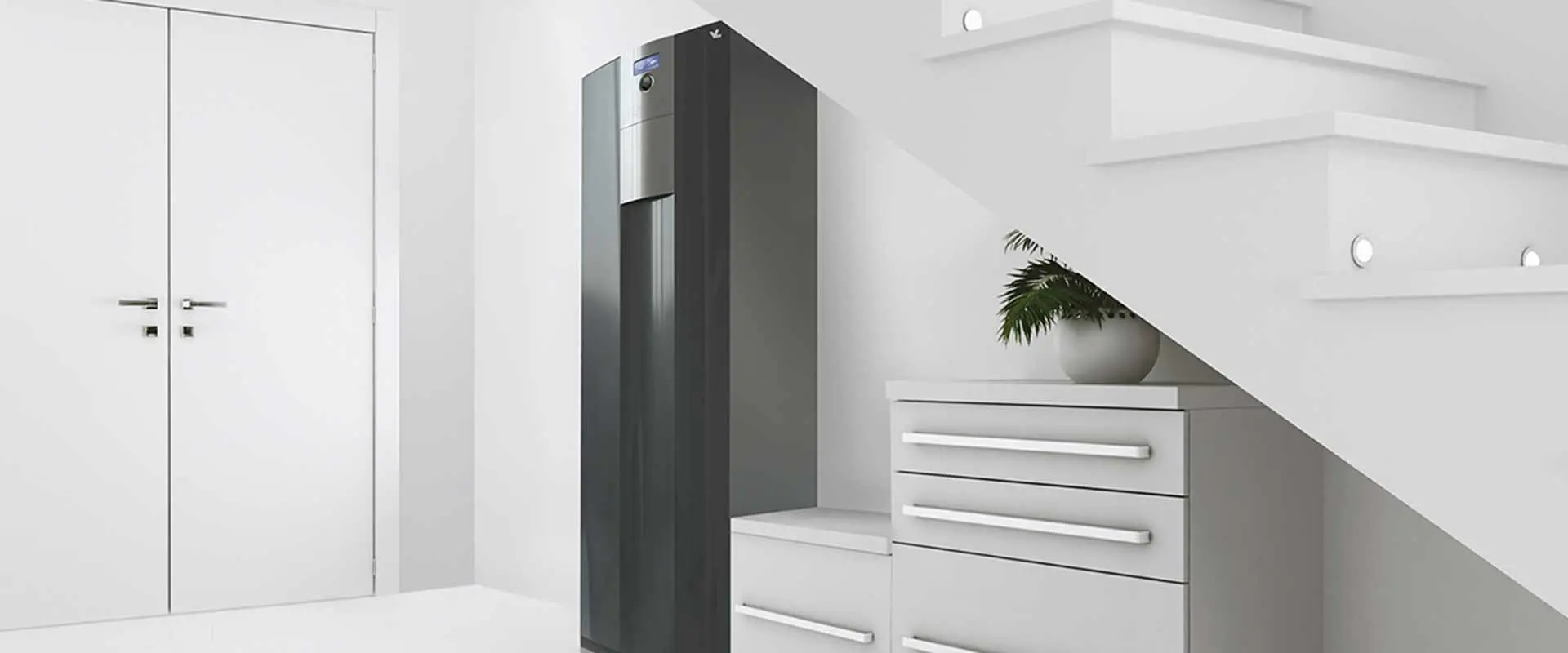
The function of a brine-water heat pump explained simply
How cool is that? Brine-water heat pumps use heat from the ground to provide energy-efficient heating and, depending on the system, cooling. In our overview, you can find out how brine-water heat pumps work, what advantages and disadvantages they have and under what conditions they are the ideal heating system for your home.
What is a brine-water heat pump?
A brine-water heat pump raises the temperatures in the ground, which in our latitudes are around 10 degrees Celsius, to cozy room temperatures without burning fossil and climate-damaging fuels in an oil or gas heating system at 1000 degrees Celsius.
You need these components for heating with brine-water heat pumps:
- Ground collectors or geothermal probes: These underground geothermal heat exchangers contain pipes filled with a mixture of water and antifreeze, known as brine. It absorbs the heat from the ground and transports it to the heat pump. Ground collectors are installed at a depth of around 1.5 to 2 meters, geothermal probes usually at a depth of up to 100 meters. You can find out why operating your heat pump with geothermal probes is more efficient than with ground collectors in our article “Heat sources for heat pumps”.
- Brine-water heat pump: The heat pump installed in the basement or utility room absorbs the energy from the brine and brings it to a higher temperature level to heat the heating water in the heating system.
- Heating system: The heat is distributed from the heat pump via the heating system in the house. This can be classic radiators or modern panel heating systems such as underfloor heating. We have summarized everything you need to know about radiators and heat pumps in a separate guide.
Excursus: What is a brine? In geothermal energy, the term brine refers to a special fluid that circulates in geothermal probes and ground collectors and absorbs heat from the earth. This brine usually consists of water and an antifreeze (often glycol) to prevent the liquid from freezing during the cold season. Brine has good thermal conductivity and optimizes heat transfer between the ground and the heat pump.
The ground is an ideal heat source for several reasons
- Constant temperature: From a depth of around 1.5 to 2 meters, there is a relatively constant temperature of between 8 and 12 degrees Celsius, which is only slightly affected by the weather. This stable temperature enables efficient heat transfer.
- Regeneration capacity: The ground has the ability to reheat itself after the heat has been extracted by the ground collectors and geothermal probes. This natural regeneration process ensures a continuous heat supply.
- Renewable energy source: Geothermal energy uses heat stored in the ground. This heat can be used for heating without burning fossil fuels directly in the building.
- Availability: The soil is available everywhere and can be used in both rural and urban areas.
How can we help you?
CHOOSE YOUR NEXT STEP.
How does a brine-water heat pump work?

A brine-water heat pump uses heat from the ground and electricity to provide energy-efficient heating. Depending on the building, system efficiency and energy prices, it can also help reduce heating costs. Its operating principle is based on a refrigerant that changes from a liquid to a gaseous state at low temperatures and is then compressed to raise its temperature. We have described this in more detail in our article “How a heat pump works”. Basically, all heat pumps work in the same way; the main difference is the heat source they use.
- Heat transfer to the heat pump: When the heated brine enters the heat pump, it transfers its energy to a refrigerant circuit. This refrigerant has a low boiling point and evaporates at relatively low temperatures, i.e. it becomes gaseous.
- Compression and heat transfer: The gaseous refrigerant is compressed in a compressor, causing its temperature to rise sharply. It now transfers its heat to a heat exchanger, which brings the water in the heating system to the required flow temperature.
- Re-cooling of the refrigerant: After the refrigerant has released its heat, it is cooled and liquefied again. The cycle starts all over again.
This cycle is constantly repeated so that your home is continuously supplied with heat. The heat pump itself only requires a small amount of electricity to drive the compressor and pumps. By using heat from the ground in addition to electricity, brine-water heat pumps can achieve high heating efficiency and help reduce CO₂ emissions compared with oil or gas heating systems, depending on the electricity mix and operating conditions.
Is there a difference between a brine-water heat pump and a geothermal heat pump?
Yes, there is such a thing, although the two terms are often used interchangeably. As described above, a brine-water heat pump uses a fluid (brine) that circulates through geothermal probes or ground collectors to extract heat from the ground. A geothermal heat pump, on the other hand, refers to all systems that use geothermal heat. In addition to brine-water heat pumps, this also includes water-water heat pumps that use groundwater as a heat source.
Benefits of a brine-water heat pump
The use of a brine-water heat pump offers numerous advantages:
- Reduced direct emissions: Brine-water heat pumps do not burn fossil fuels to generate heat in the building. Depending on the electricity mix and operating conditions, they can help reduce CO₂ emissions compared with oil or gas heating systems.
- Lower costs: You save on running costs for heating, as the heat pump is very energy-efficient. In combination with photovoltaics, the costs are reduced even further, as you can produce the energy to operate the heat pump yourself.
- Flexibility: Brine-water heat pumps can be used not only for heating, but also for hot water preparation and even for cooling in summer.
- Low noise: Brine-water heat pumps do not require a fan, so they operate virtually silently.
- Longevity: Ground collectors and geothermal probes have a long service life and require only minimal maintenance if they are installed professionally.
A brine-water heat pump also has some disadvantages compared to other heat pumps
As already mentioned, the purchase and installation of a brine-water heat pump can be more expensive, as geothermal probes or ground collectors have to be laid.
Our advice: Choose your new heat pump soon. You can currently take advantage of an attractive state subsidy. In addition, you will need sufficient space for installation or ground drilling and in many regions permits are required to drill boreholes, which can complicate the process. If you have the choice, the advantages of the brine heat pump always trump its disadvantages in terms of its outstanding efficiency. In particular, ground source heat pumps with geothermal probes usually achieve the highest seasonal performance factors compared to other heat pumps. This means that they can produce the most heat per kilowatt hour of electricity used.
Possible applications for a brine-water heat pump
Brine-water heat pumps are versatile and can be used for various purposes:
- Heating: The primary application of a brine-water heat pump is to provide energy for heating. It can be connected to standard heating systems such as underfloor heating or conventional radiators.
- Hot water heating: In addition to heating, you can also use a heat pump to heat hot water for showering, bathing and cooking.
- Cooling: Many models can also be used to cool your home in summer. With active cooling, the refrigerant process is simply reversed to transport the heat from the interior to the outside. This technology is usually found in reversible air-water heat pumps. In comparison, brine-water heat pumps have a major advantage: they are suitable for passive or natural cooling via the existing surface heating systems in your home, such as underfloor heating, wall or ceiling heating. The temperature of the circulating heating water is below room temperature, so it absorbs the heat energy from the air and transports it to the heat pump. This in turn dissipates the heat energy into the ground via the connected underground pipe system. One heat exchanger in the house and one in the ground act as a transfer station, so to speak. Natural cooling works without refrigerants and the heat pump's compressor is not required, only a small amount of electricity is needed to operate the circulation pumps. It therefore saves a lot of energy compared to active cooling. In this article you will find everything you need to know about cooling with a heat pump.
- Commercial and industrial applications: Brine-water heat pumps are also used in commercial and industrial areas, for example to heat office buildings, production halls or greenhouses.
- Swimming pool heating: Brine-water heat pumps are also ideal for heating swimming pools, as they maintain a constant water temperature with high efficiency.
Maintenance and care of a brine-water heat pump
Like any heat pump, a brine-water heat pump requires regular maintenance and care to ensure optimum performance and longevity. Here are some important points to bear in mind:
- Annual inspection: It is recommended that the heat pump is inspected once a year by a qualified technician. All important components are checked for function and efficiency.
- Checking the brine: The concentration and quality of the brine circulating through the ground collectors should be checked at regular intervals. If necessary, it must be renewed or topped up.
- Leakage check: Any leaks in the refrigerant circuit can impair the efficiency of the heat pump and must be rectified quickly.
- Regular venting: The heating system should be vented regularly to ensure efficient heat transfer.
With regular maintenance and care, you can extend the service life of your brine-water heat pump and keep its efficiency at a high level.
Costs and savings when using a brine-water heat pump
The purchase and operation of a brine-water heat pump involve costs. However, high energy efficiency and potentially lower operating costs can help offset the initial investment over time, depending on the building, energy prices and system design.
- Acquisition costs: The investment costs for a brine-water heat pump are higher than for conventional heating systems. These costs include the heat pump itself, the ground collectors or geothermal probes, the installation and any adjustments to the heating system. The exact costs vary depending on the size of the system and the complexity of the installation.
- Operating costs: In contrast to a fossil fuel heating system, any heat pump incurs significantly lower running costs as it only uses a fraction of the energy. The electricity costs for operating the heat pump are generally lower than the costs for oil, gas or other fossil fuels – especially if you generate the electricity with your own photovoltaic system.
- Maintenance costs: Although regular maintenance of a heat pump is necessary, it is relatively inexpensive compared to conventional heating systems, as there are fewer moving parts and no fuels to handle or combustion residues to clean.
- State subsidies: In many countries, there are state subsidies or loans for the purchase and installation of heat pumps, which can cover part of the investment costs.
- Energy efficiency: Although the initial investment can be higher, the efficient use of geothermal energy can help reduce heating costs over time. The actual payback period depends on installation costs, energy prices and operating conditions. Using electricity from your own photovoltaic system may offer additional savings.
- Increase in value: A brine-water heat pump can increase the value of your property, as it brings significant benefits in terms of the running costs for heating.
Conclusion: The advantages of a brine-water heat pump as a future-proof heating system
If you are looking for an energy-efficient, reliable heating system that uses heat from the ground, a brine-water heat pump is an excellent choice. Let us and one of our qualified specialist companies advise you to find the ideal system for your needs.