Case Study: Neighborhood Heat Pump in a Row House Community (Cold District Heating Network)
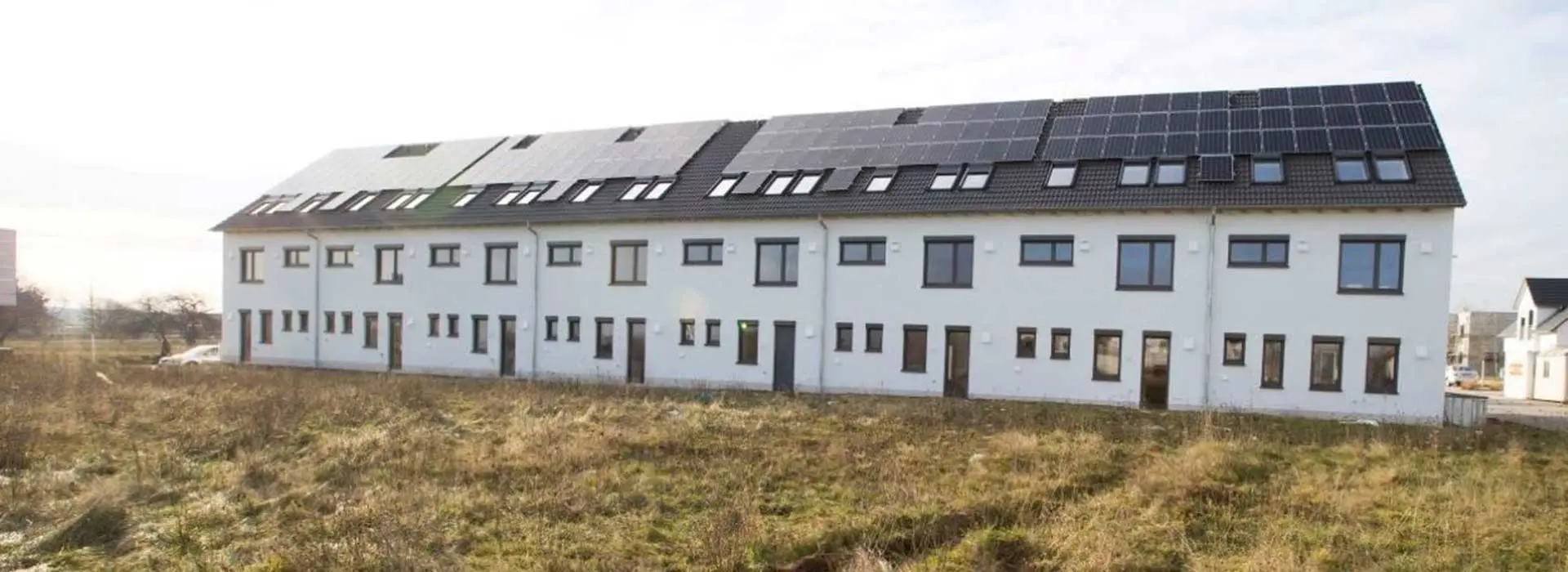
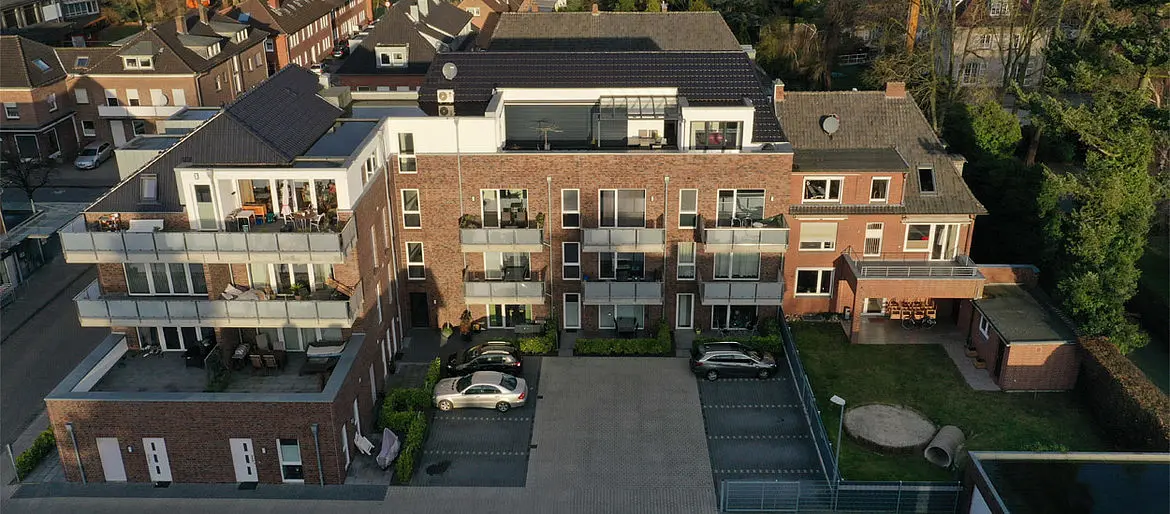
In a row house development built in 1993, an important decision had to be made: the roughly 30-year-old gas heating systems needed to be replaced. At the same time, connecting to a district heating network was not a viable option.
The residents therefore sought a long-term alternative—and found an unusual solution: a shared heat pump system connected to a cold local heating network, in which several houses share a single heat source.
Today, a system consisting of groundwater wells and heat pumps efficiently supplies a total of 15 townhouses with heat—and even cooling.
One of the project’s initiators explains how the idea came about, how the system works, and why the decision is already paying off after just a few years.
Key facts about the project
Category | Details |
Building Type | Townhouse |
Year Built | 1993 |
Number of Houses | 20 |
Households in the Heating Network | 15 |
Previous Heating System | Gas Heating |
Heating Load | ~ 4,7 kW |
Heating Surfaces | Floor Heating |
Heat Pump Type | Water-to-Water-Heat Pump (Ground water) |
Investment per Household | ~ 33.000€ after subsidies |
Previous Energy Consumption | ~ 1.200 - 1.600€ per Household |
Current Energy Consumption | ~ 500€ per Household |
Location | Munich |
Contractor |

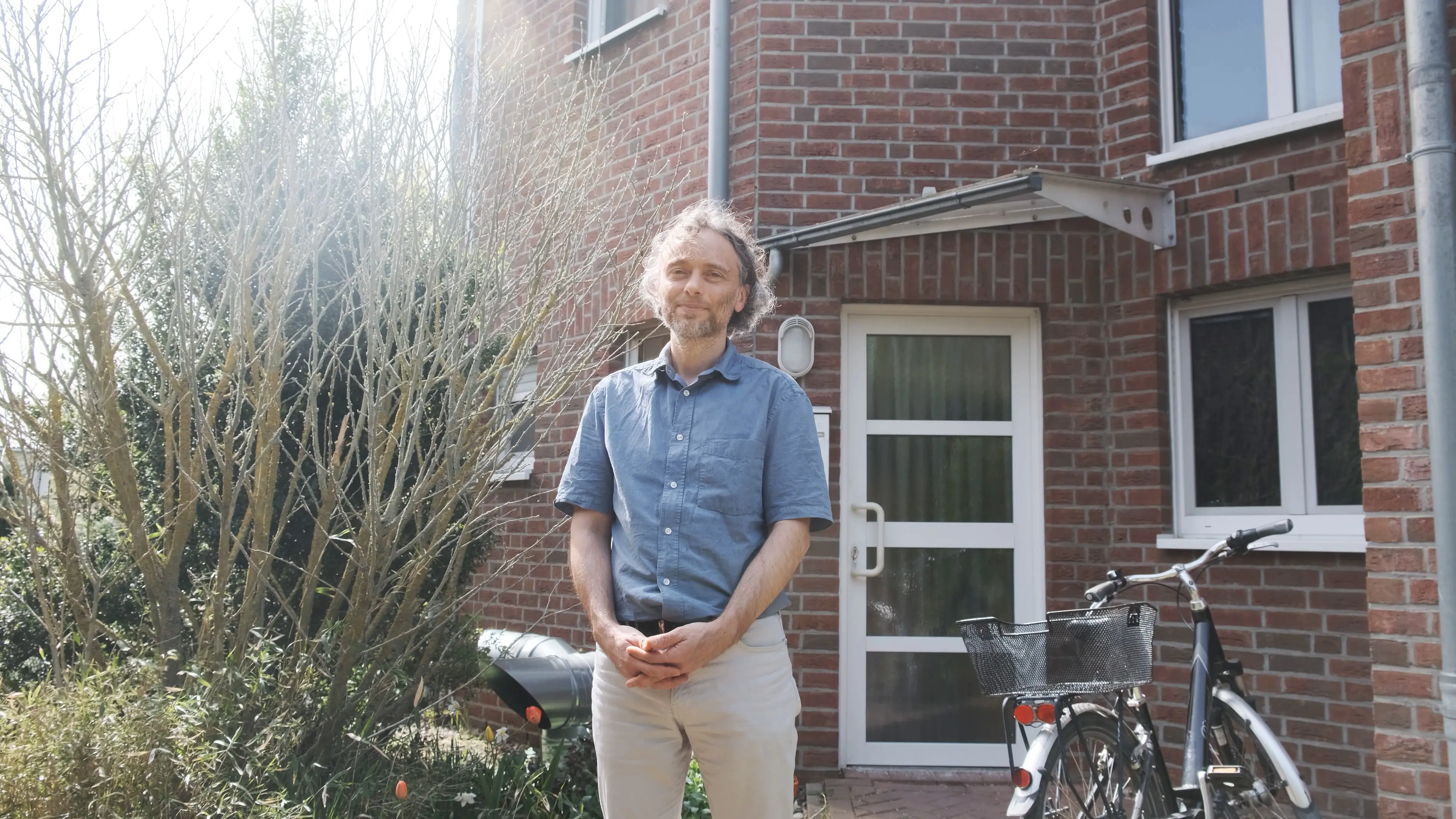
Nikolaus Plesnila (townhouse owner) is absolutely thrilled with the project’s success:
„Sometimes I feel like I’m living in a fantasy world. You turn on the TV and everyone is complaining about heat pumps—but for us, the system works perfectly.“
- Dr. Nikolaus Plesnila
Why did you have to replace your heaters in the first place?
Our townhouse was built in 1993. The heating system was by then about 30 years old and consisted of traditional gas boilers. Spare parts were becoming increasingly difficult to find, so it was clear that sooner or later we would need a new solution.
At the same time, there were no plans to connect our housing complex to district heating. That’s why we had to figure out for ourselves which heating technology would work for us in the long term.

How did you come up with the idea of a heat pump?
I first sought advice from the Consumer Advice Center. They quickly pointed out that our house is actually very well suited for heat pumps.
The reason is the existing underfloor heating. It operates at low temperatures and is therefore ideally suited for heat pump systems.
We then looked into whether a traditional air-source heat pump would be feasible. However, due to the layout of our townhouse community, this was difficult to implement.
That’s why we finally came up with the idea of using groundwater as a heat source.
Infobox: Groundwater as a Heat Source? Pros and Cons
Advantages | Disadvantages |
Very high efficiency due to constant groundwater temperature | High upfront costs for well drilling |
Low operating costs | Permit requirements and regulatory restrictions |
Very quiet operation without an outdoor unit | Only possible with suitable water quality and quantity |
Stable heating output year-round, regardless of outdoor temperatures |
|
Often usable for cooling as well |
|
How did this turn into a shared heat pump system for several homes?
While planning, I quickly realized that drilling a well for a single heat pump is quite expensive. So I simply asked my neighbors if they would be interested in joining such a project.
In the end, a total of 18 households expressed interest. Fifteen of them ultimately installed a heat pump. Today, the network is jointly owned by the participating households. This allowed us to spread the costs for the wells and the infrastructure across multiple homes.
How does the district cooling system work in your apartment complex?
The system is based on three extraction wells. Groundwater is pumped from these wells, which maintains a temperature of approximately 10 °C year-round. This water is passed through a heat exchanger, where it transfers its heat to a brine solution.
The brine is then transported to the individual homes via a cold local heating network. Each home has its own heat pump. This uses the energy from the brine and raises the temperature to just under 30 °C using electricity. The heat is then distributed throughout the home via the existing underfloor heating system.
What else is special about this system?
In addition , three wells were drilled instead of just one, as the access routes for a single well were difficult to construct. The wells are now controlled by a regulator and operate in rotation. This ensures the system has a very high level of operational reliability, as if one pump fails, another one takes over.

The heat pumps used
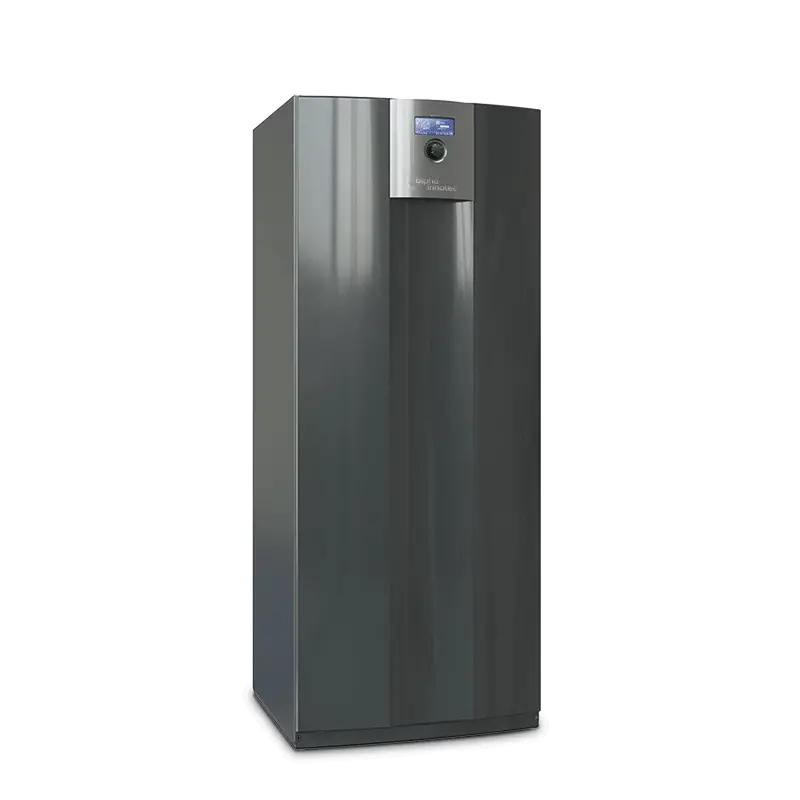
SWCV
• Inverter heat pump
• Energy efficiency class for space heating at 35°C: A+++
How did you get in touch with alpha innotec?
I researched various heat pump manufacturers online and contacted them.
The first to get back to me was Herr Wimmer von alpha innotec. He took a look at our situation and came up with a plan fairly quickly for how to implement the project from a technical standpoint.
Planning is especially important when it comes to a system involving multiple homes and a shared network.
How much have your energy costs changed?
The difference is really striking. During the gas crisis, we would have had to pay about 2,500 euros a year for gas. In a typical year, our costs were around 1,200 to 1,600 euros.
Today, we’re at about 500 euros per year. Once the subsidy has been fully paid out, we’ll have invested about 33,000 euros per household.
With the savings, the system will pay for itself in about seven and a half years compared to a new gas heating system.
Can your heat pump also cool?
Yes—and that’s an added bonus.
Our heat pump also has a cooling function. You really notice the difference, especially in the summer. Even when it’s very hot outside, the temperature inside stays around 21 to 22 degrees. This ensures that we have a very comfortable indoor climate practically all year round.
Would you choose this solution again?
Absolutely. You often hear people criticizing heat pumps. Our experience, however, has been quite different.
The system works reliably and efficiently, and we hardly have to worry about it in our daily lives.
Sometimes I even find myself thinking: When you see how well it works—why don’t people do this more often?

Conclusion: The heat pump in the neighborhood works
The project demonstrates that heat pumps are not only suitable for individual buildings.
Especially in densely built-up residential areas, a cold district heating network with a shared heat source can be a very attractive solution.
In this setup, several homes share wells or geothermal probes—and each apartment uses its own heat pump to generate heat.
The result:
- low operating costs
- high efficiency
- long-term independence from fossil fuels