How an air-water heat pump works
Air-water heat pumps use heat energy from the ambient air to provide efficient heating. In this guide, you will find out how this technology works and learn about the advantages and disadvantages of air-to-water heat pumps.
An air-water heat pump can be an efficient alternative to conventional oil or gas heating systems. It uses heat from the ambient air and electricity to heat your home. Depending on the building, system design and electricity mix, a heat pump can help reduce CO₂ emissions compared with fossil fuel heating systems.
Air-water heat pumps are a popular choice for both new buildings and modernization projects. Of the 356,000 heat pumps sold in Germany in 2023, more than 90 percent were air-water heat pumps. And that's for many reasons.
Operating principle: Heat generation from the ambient air
The ingenious way an air-water heat pump works is easy to explain. It uses air as a heat source. Even at very low temperatures down to minus 20 degrees celsius, it can extract sufficient heat from the outside air. But it even knows how to help itself at lower temperatures. It can switch on a heating element in the buffer tank and thus reliably heats your rooms even on those rare days when it is freezing cold in our latitudes.
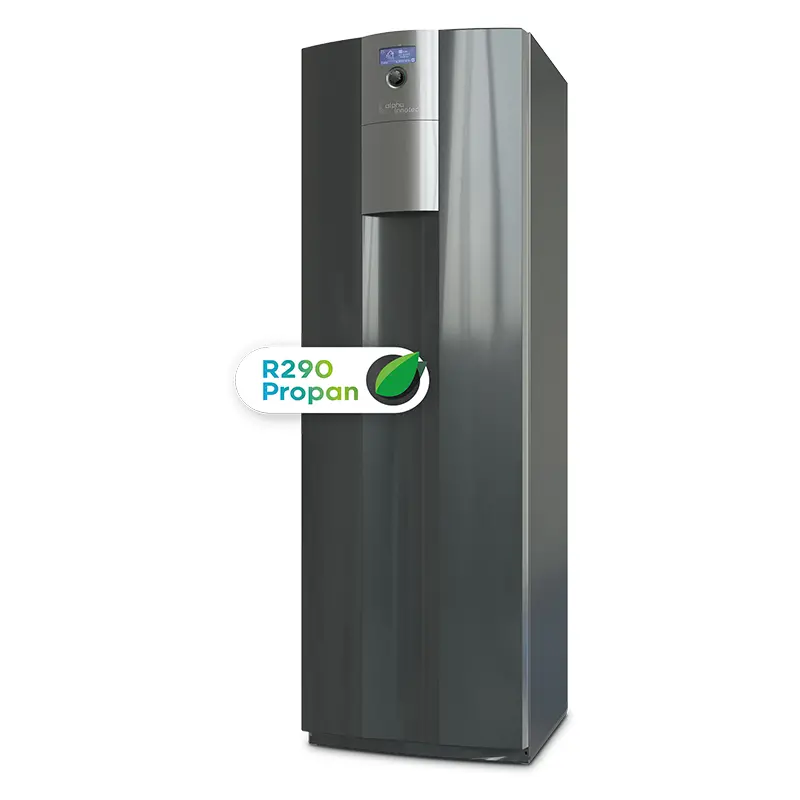
This seemingly paradoxical process is made possible by special refrigerants that evaporate at low temperatures. The boiling point of the natural refrigerant R290 (propane) is approximately −42 °C at atmospheric pressure. R290 also has a very low global warming potential (GWP) compared with many synthetic refrigerants.
In the first step of the refrigeration cycle, a powerful fan draws in the ambient air and directs it to a heat exchanger, the so-called evaporator. The liquid refrigerant circulates here and steadily increases in temperature through contact with the warmer outside air until it finally evaporates.
How can we help you?
CHOOSE YOUR NEXT STEP!
From gaseous refrigerant to usable heat
Once the refrigerant has changed from a liquid to a vapor, it flows on to a compressor. This increases the pressure of the vapor by compressing it, which also raises its temperature.
The refrigerant vapor is brought to the required temperature and then passes to the condenser, another heat exchanger. Here, the hot refrigerant vapor transfers its temperature to the heating water in the heating circuit or the fresh water in the domestic hot water tank. The refrigerant vapor cools down again, condenses and becomes liquid again.

Now your air-water heat pump has “pumped up” the temperature of the air and you can use the energy gained to heat your home and prepare hot water. Before the heat pump's refrigeration cycle starts again, the liquid refrigerant still has to pass through the expansion valve. The pressure and temperature then return to the initial level.
Installation options for an air-water heat pump
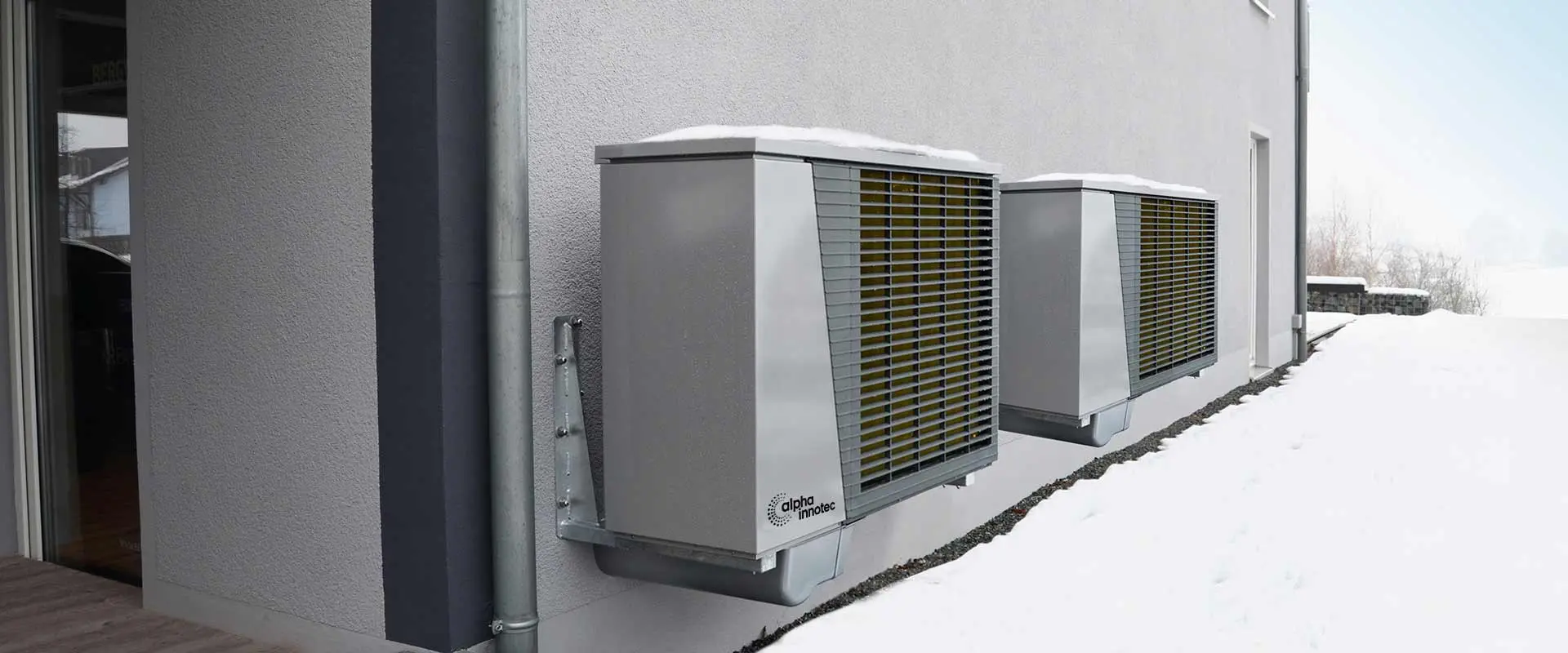
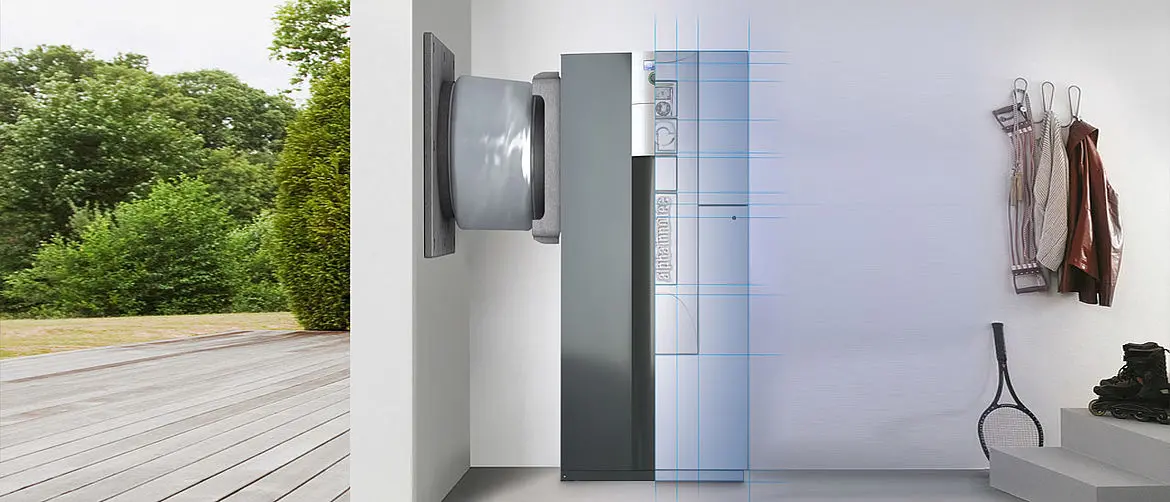
Air-water heat pumps are suitable for heating new buildings as well as for modernizing an existing heating system. They can be installed inside and outside the house.
Basically, the air-water heat pump is available as a monobloc or split device. In the split design, the cooling circuit is partly inside and partly outside the building. The moving and noise-generating parts such as the fan, evaporator and compressor are housed in the outdoor unit. A refrigerant line leads from the outdoor unit to the indoor unit with condenser, circulation pump and control technology.
With the monobloc, the complete cooling circuit is located in a single unit. If the monobloc air-water heat pump is installed outside, it is connected to the indoor unit with a water pipe. Only the warm heating water is then distributed in the heating system via the indoor unit. Indoor units for alpha innotec air-water heat pumps are available either as a wall-mounted controller with circulation pump, as a compact hydraulic module or as a hydraulic tower with in-line buffer cylinder and hot water cylinder - the latter being the perfect complement to our Hybrox heat pump family with the natural refrigerant R290.
A space-saving outdoor installation is the preferred solution, especially for modernization. In a new build, you can also plan the location of your air-water heat pump indoors from the outset.
Using photovoltaics and electricity from renewable sources
Air-water heat pumps use heat from the ambient air and electricity to provide heating. The electricity mix influences the CO₂ emissions associated with operation. Many energy suppliers also offer special heat pump tariffs, including tariffs with electricity from renewable sources.
By using electricity generated by your own photovoltaic system, you can cover part of the heat pump's electricity demand directly from your roof. The amount of self-generated electricity used depends on factors such as system size, weather conditions and consumption.
Combining an efficient air-water heat pump with photovoltaics can help reduce purchased electricity and associated operating costs. The actual savings and emissions depend on the individual system and electricity supply.
Reversible operation enables cooling in summer
Although the main task of an air-water heat pump is to heat and prepare hot water, you can also use modern appliances for cooling, as their cooling circuit can be switched at the touch of a button. The heat pump then draws the heat energy from your home and discharges it to the outside. Reversible operation ensures a pleasant indoor climate all year round – in both the cool and warm months.
Quiet operation due to sound decoupling
Like almost every technical system, an air-water heat pump generates unavoidable sounds during operation. However, a modern air-water heat pump from alpha innotec is very quiet thanks to a combination of sound and vibration optimization. Measured directly at the sound source, the noise is in the range of a normal conversation. At a distance of three meters, the sound level of our Hybrox 5 is reduced to around 45 dB(A) – comparable to the gentle humming of a refrigerator.
To avoid complaints, you should always make sure to maintain sufficient distance from neighboring properties and your own bedroom when installing the unit outdoors. For indoor installations, for example in the basement or garage, it is advisable to decouple the sound and install special vibration dampers under the heat pump. This prevents the transmission of noise as unpleasant structure-borne sound to walls, ceilings and pipes.
Advantages and disadvantages of an air-water heat pump
As an air-water heat pump, this technology has both advantages and disadvantages. Here is an overview:
ADVANTAGES OF THE AIR-WATER HEAT PUMP
- Use of ambient heat: Air-water heat pumps use heat from the outside air to provide heating. Depending on the electricity mix and operating conditions, they can help reduce CO₂ emissions compared with oil or gas heating systems.
- Energy efficiency: Air-water heat pumps use electricity to extract and transfer heat from the ambient air. Their efficiency depends on the system design, outdoor temperature and required flow temperature.
- Operating costs: By using ambient air as a heat source, air-water heat pumps can offer lower operating costs than conventional heating systems. Actual savings depend on electricity prices, efficiency and individual heating requirements.
DISADVANTAGES OF THE AIR-WATER HEAT PUMP
- Depending on the outside temperature: The efficiency of air-water heat pumps depends heavily on the outside temperature. The higher the difference between the temperature at the heat source and the flow temperature of the heating system, the more the pressure must be increased – the colder the outside temperature, the more power the heat pump needs.
- Noise: Some models can make sounds that can be perceived as disturbing. This can be a problem in residential areas. Seek advice from a specialist partner company and choose a sound and vibration-optimized appliance.
- Required space: Air-water heat pumps require space for the installation of outdoor units.
- Costs compared to fossil fuel heating systems: The purchase costs for an air-water heat pump can be higher than for conventional heating systems. The purchase costs for an air-water heat pump can be higher than for conventional heating systems. However, government subsidies, efficient operation and the use of self-generated photovoltaic electricity can help offset the additional investment costs over time. The actual payback period depends on the individual building, energy prices and available subsidies.
Economic efficiency of an air-water heat pump
Heat pumps can achieve high energy efficiency because they use electricity to transfer additional heat from the environment. Their actual performance depends on the building, system design and operating conditions.
How economically a heating system operated with an air-water heat pump works depends on many individual factors, such as:
- Building insulation and heat demand in your home
- Self-generated electricity via photovoltaics or external power supply
- Average outdoor temperatures in winter
- Acquisition and operating costs compared to alternative systems
- State subsidies
Be sure to seek advice from trained specialist partner companies. After all, the efficiency and performance of any heat pump stands and falls with the design and correct setting of the system.

Blue = capital costs (incl. subsidies), gray = maintenance costs, yellow = energy procurement costs (excl. BEHG), red = CO² costs | Source https://www.wwf.de/2023
However, one thing is certain: heat pumps almost always pay off, even in older buildings. In 2023, WWF Germany showed in a sample calculation that even with the minimum subsidy of 30 percent over 15 years, the heat pump is the cheaper option - and that in a single-family home with energy efficiency class F. If you have photovoltaics on your roof, the additional costs are amortized even faster, as the electricity you produce and use yourself is significantly cheaper than tariff electricity.