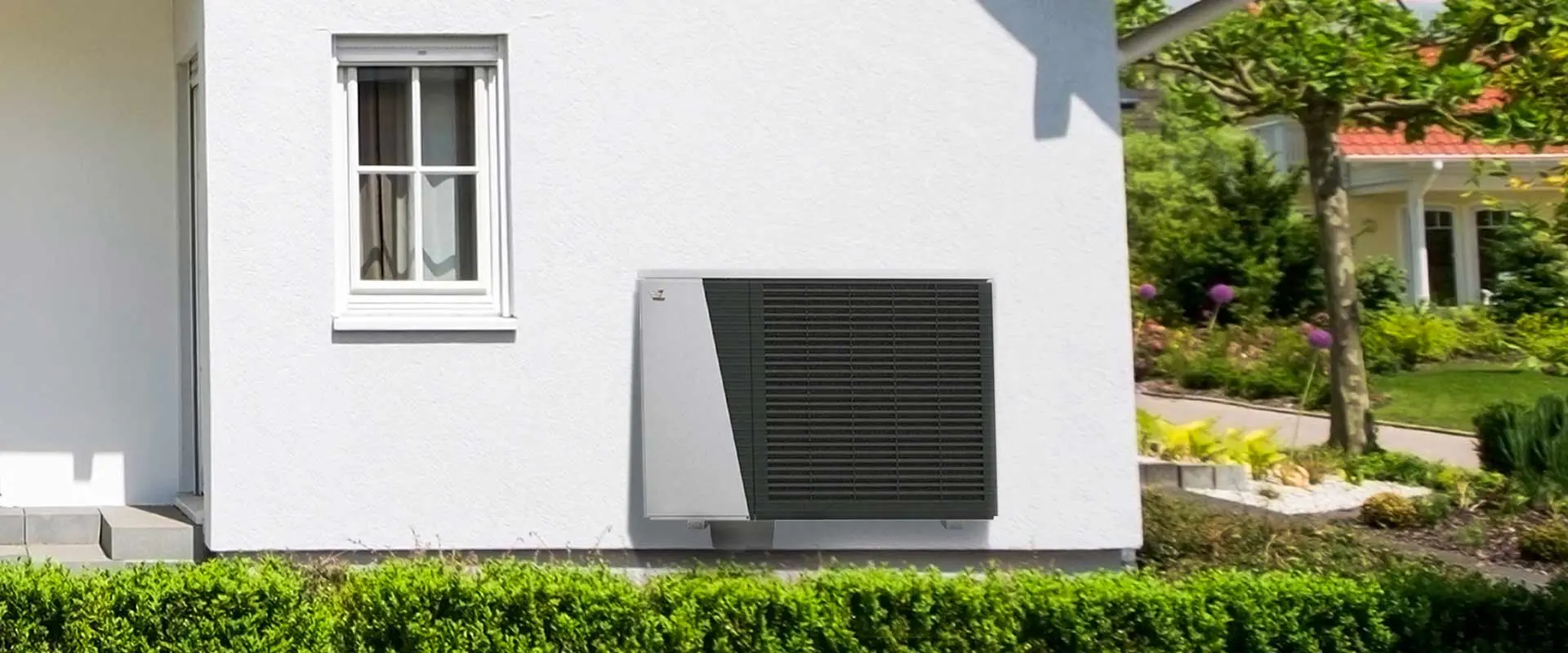
Use geothermal drilling for a comfortable home
With a geothermal borehole, you can extract heat from deep within the earth and use it as a heat source for your home. This allows you to benefit from one of the most reliable and efficient methods of using renewable energy in your own four walls.
In our guide to heat sources for heat pumps, we have already shown you where the environmental energy that feeds a heat pump can come from: air, water, and earth. In this article, we take a closer look at geothermal drilling.
In other articles, we highlight two other ways of using geothermal energy:
The most important facts about geothermal drilling at a glance:
- Geothermal energy provides a reliable, consistent source of heat – regardless of the season.
- The deep drilling required is not possible everywhere.
- Drilling requires a permit.
- Drilling is relatively expensive, but in some countries there are government subsidies available.
- Geothermal energy is very inexpensive to use and the system is virtually maintenance-free.
- In summer, the system can also be used for passive cooling.
What is geothermal drilling?
In geothermal drilling, vertical holes are drilled deep into the ground to install so-called geothermal probes. These probes constantly extract heat from the ground using frost-proof brine. A brine-water heat pump then raises the geothermal heat to a higher temperature level.
This process utilizes near-surface geothermal energy—i.e., heat from the upper 200 meters of the ground. It is part of the Earth's natural geothermal energy—a virtually inexhaustible source of heat that comes from the natural radioactive decay of elements in the Earth's core and the original heat from the Earth's formation.
Compared to air heat pumps, geothermal probes deliver consistent temperatures throughout the year and are therefore particularly efficient.
GEOTHERMAL ENERGY – THE NATURAL ENERGY SOURCE
Geothermal energy is the thermal energy stored in the earth. It comes from two sources:
- Solar energy, which heats the upper layer of the soil.
- Heat from the earth's interior, which is generated by the decay of radioactive elements and residual heat from the formation of the earth.
At a depth of around 15 meters, temperatures remain constant at around 10 °C throughout the year. The deeper you go, the higher the temperature becomes – on average by 3 °C per 100 meters of depth.
The technical term for this is geothermal energy (from the Greek “geo” = earth, “therme” = heat). A geothermal borehole therefore uses part of this geothermal energy at shallow depths. While deep geothermal energy is used for power generation on a power plant scale, near-surface geothermal energy is used in private house construction.
This makes geothermal drilling a form of renewable energy generation that is reliable, virtually inexhaustible, and independent of weather conditions.
GEOTHERMAL ENERGY – THE NATURAL ENERGY SOURCE
Both ground collectors and ground probes tap into the geothermal energy stored in the ground so that the heat pump can use it. In both cases, a brine circulates in a closed pipe system, absorbing heat from the ground and transferring it to the heat pump.
The difference lies in the depth at which they are installed:
- Ground collectors lie flat and cover an area of approximately 1.2 to 1.5 meters deep. They require a large plot of land (approximately twice the size of the living space to be heated). They are slightly less constant due to seasonal temperature fluctuations, as they are close to the earth's surface. They are particularly suitable for new buildings with a sufficiently large plot of land.
- Ground probes, on the other hand, are installed vertically at a depth of 40 to 200 meters. There, temperatures remain constant at around 10 °C and above. They therefore deliver significantly better seasonal performance factors (SPF) and are more space-saving. This makes them ideal for smaller properties. They are extremely efficient in operation, but more expensive to install.
HOW IS GEOTHERMAL DRILLING CARRIED OUT?
The requirements for geothermal drilling are clearly regulated: a soil survey and water law permits are required. Whether geothermal drilling is permitted depends on the location, soil conditions, and the requirements of the relevant authorities.
1. Planning and approval:
The first step is thorough planning by a specialist company: What are the building's heating requirements and what are the soil conditions? Based on this data, calculations are made to determine how deep the drilling needs to be and how many geothermal probes are required. An application for a geothermal drilling permit is then submitted – usually to the state geological office and the lower water authority. The Water Resources Act plays a central role here, as the protection of groundwater is a top priority.
2. Drilling:
Once the permit has been granted, the actual geothermal drilling begins. To do this, vertical holes are drilled into the ground. The typical diameter of the borehole is between 15 and 18 centimeters. Depending on the heat demand, a single borehole or an entire field of several boreholes may be necessary.
3. Inserting the probe:
A closed pipe system made of plastic or stainless steel is inserted into the boreholes. This is carefully sealed to prevent contact between the brine and the ground.
4. Filling with brine:
The pipes are filled with a frost-proof glycol-water-salt mixture. This brine absorbs heat from the ground and reliably transports it to the heat pump.
5. Connection to the heat pump:
Finally, the individual probes are connected via a distribution shaft and linked to the heat pump installed in the building. From this point on, the system can use the constant geothermal energy in the ground to heat your home efficiently and sustainably.
Inside the heat pump, the absorbed heat is increased by a compressor and transferred to the house's heating and hot water system. The cooled brine mixture is then returned to the probe.
HOW DEEP IS A GEOTHERMAL DRILLING?
The depth of the geothermal drilling depends on how much heat is to be generated and on the geological conditions.
For a typical single-family home, the drilling depth is between 40 and 200 meters, although in practice around 100 meters is sufficient. The decisive factor for the depth is the so-called extraction capacity: in the best case scenario, around 50 watts of energy can be extracted per meter drilled. This depends on the type of soil.
Example: If a house requires 4,000 watts of heating power, drilling to a depth of around 80 meters would be necessary. Alternatively, several shorter boreholes would also be possible, but these should be at least six to ten meters apart.
Factors that influence drilling depth:
- Heat demand: The greater the demand, the deeper the drilling or the more holes are required.
- Soil conditions: If the subsoil has good thermal conductivity, the drilling depth will be shallower. Hard or rocky soil may require several shorter holes.
- Extraction capacity: The energy that a geothermal probe can extract from the ground varies depending on soil conditions. Ideally, it is around 50 watts/m. Dry sandy soils have a significantly lower extraction capacity than granite or sandstone.
- Property area: In unfavorable subsoil conditions such as rock, it may be advisable to carry out short boreholes at a shallower depth instead of a single deep borehole – provided the property is large enough. This is because minimum distances (6–10 m) must be maintained between boreholes.
HOW TO CALCULATE THE DRILLING DEPTH 💡
Drilling depth (in m) = heating capacity (in W) ÷ ground extraction capacity (in W/m)
Example 1 with poor extraction capacity:
Heating capacity = 7,200 W (7.2 kW)
Extraction capacity of the ground = 45 W/m
7,200 ÷ 45 = 160 m
This means that a drilling depth of around 160 meters is required for moderately conductive ground.
Example 2 with good extraction performance:
Heating output = 7,200 W (7.2 kW)
Extraction performance of the ground = 70 W/m
7,200 ÷ 70 ≈ 103 m
Result: In ground with good thermal conductivity, around 100 meters is sufficient.
Or as a table:
Heating capacity of heat pump | Extraction capacity of the ground | Calculation | Required drilling depth |
7,200 W (7.2 kW) | 45 W/m | 7.200 ÷ 45 = 160 | 160 m |
7.200 W (7,2 kW) | 70 W/m | 7.200 ÷ 70 ≈ 103 | ca. 100 m |
The table shows at a glance: the better the thermal conductivity of the ground, the shorter the borehole required. This also makes it clear why a soil survey is one of the most important prerequisites for geothermal drilling.
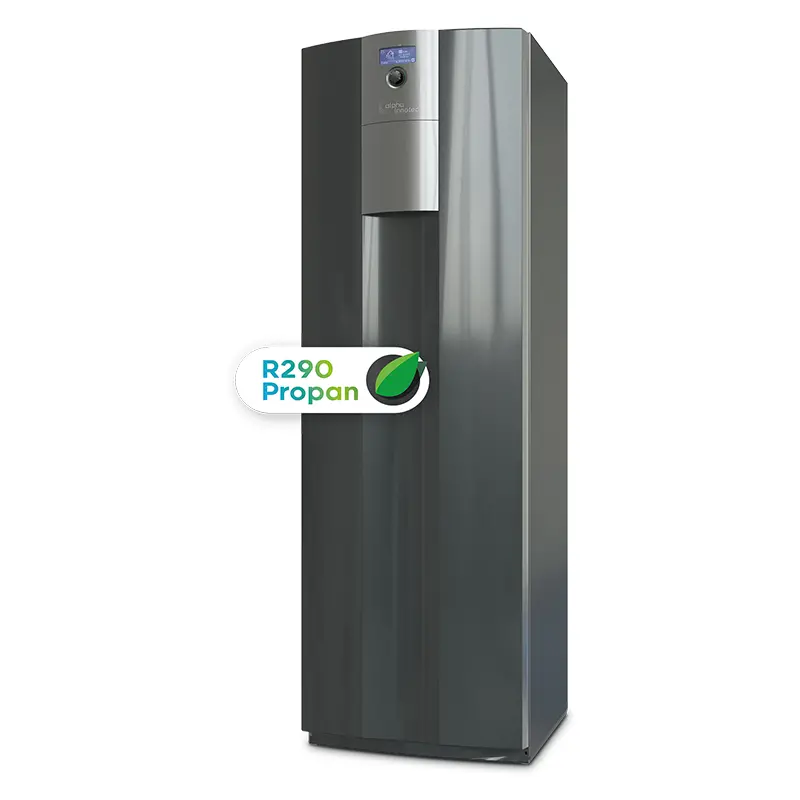
WZSV 63
• Inverter heat pump
• Refrigerant R290
• Building heating load: 3-6 kW
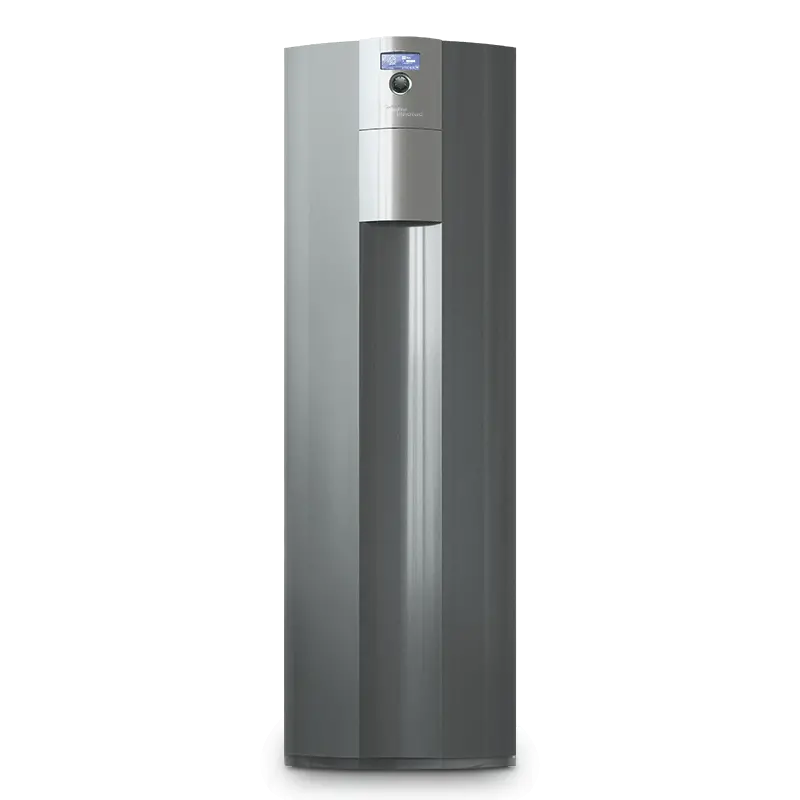
WZSV Series
• Inverter heat pump
• Refrigerant R410A
• Building heating load: 3-14 kW
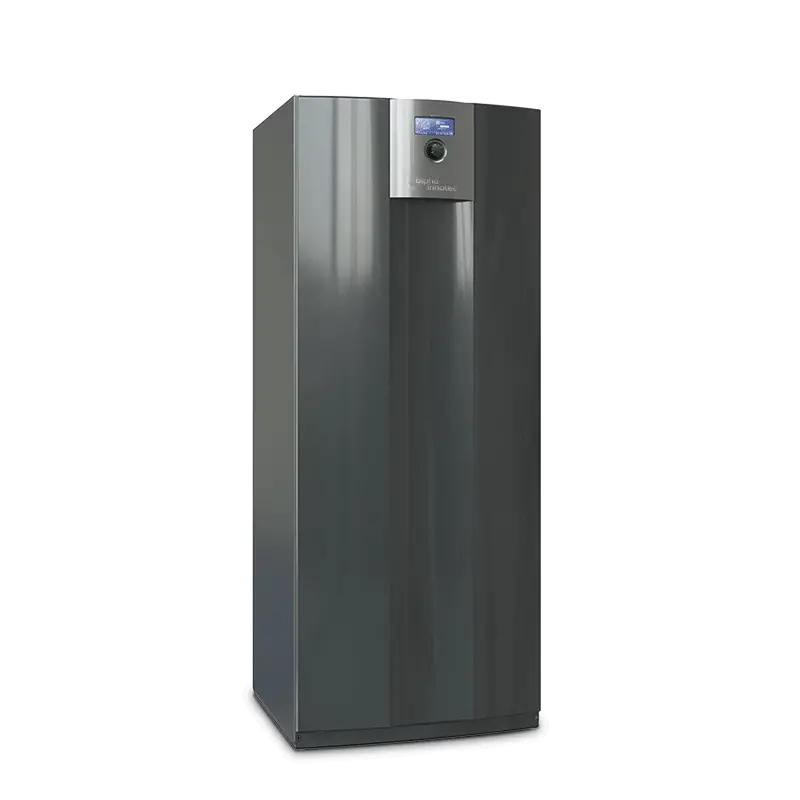
SWCV Series
• Inverter heat pump
• Refrigerant R407C
• Building heating load: 4-5 kW
How much does geothermal drilling cost?
If you decide on a heat pump that is powered by geothermal energy, the most important question is: geothermal drilling – how much does it cost? The costs for drilling and the entire system can vary depending on the drilling depth and local conditions. They depend mainly on these variables:
the required heating output,
the soil conditions, and
the required drilling depth.
For a single-family home, the total cost of drilling and geothermal probes is usually between $8,000 and $15,000, plus the cost of the heat pump itself.
To make the costs of geothermal drilling more tangible, you can also calculate using two key figures:
Firstly, the price per meter, which is usually between €50 and €100. A 100-meter borehole therefore costs around €5,000 to €10,000.
Secondly, the cost per kW of heating output – this is usually estimated at 70 to 120 euros per kW.
There are also additional costs for setting up the construction site, disposing of the excavated material, and obtaining the necessary permits. Authorities usually charge between €250 and €600 for a geothermal drilling application. These requirements are mandatory, as water law regulations must be complied with.
The total cost of geothermal drilling varies depending on the soil conditions.
Sample calculation for geothermal drilling for a single-family home
Cost factor | Good soil (70 W/m, 120 m) | Poor soil (45 W/m, 160 m) |
Drilling costs (× 80 €/m) | 9.600 € | 12.800 € |
Permits (geothermal drilling application) | 500 € | 500 € |
Construction site setup | 700 € | 700 € |
Total gross costs | 10.800 € | 14.000 € |
Advantages and disadvantages of geothermal drilling
Geothermal drilling is less common in Germany than air source heat pumps. On the one hand, the technology is impressively efficient and reliable, but on the other hand, it is also more expensive.
It is therefore worth comparing the most important advantages and disadvantages of geothermal drilling.
ADVANTAGES
- Very low operating costs (electricity)
- High efficiency (annual performance factor JAZ > 4)
- Durable (geothermal probes last up to 100 years)
- Uses an inexhaustible energy source: geothermal energy is continuously renewed
- Environmentally friendly, saves CO₂
- Low space requirements (no large plot of land necessary)
- Long service life (up to 100 years, with almost no maintenance required)
DISADVANTAGES
- Higher construction costs
- Subject to approval
- Not permitted or possible everywhere
- Space required for drilling equipment
- Distance from house/neighbors must be maintained

Conclusion: Is geothermal drilling worthwhile?
Geothermal drilling is worthwhile despite the higher costs and comparatively high expenses, because it uses an energy source that is constant, reliable, and practically inexhaustible. However, it is not possible everywhere: permits, soil conditions, and space for the drilling rig are mandatory requirements. If the conditions are right, however, geothermal drilling is one of the most efficient heating methods available—hardly any other system achieves similarly high annual performance factors at such low operating costs.
And that is precisely where the decisive advantages lie: those who invest in geothermal energy benefit in the long term from low heating costs, enormous security of supply, and a heating system that will continue to operate reliably for decades to come.
Are you planning a geothermal drilling project?
Request your consultation now and find out how much you can save with geothermal drilling.










.webp)

.webp)




_Referenz%20Neustadt%20am%20R%C3%BCbenberge.webp)