Retrofitting a heat pump? You can even do it in the attic!
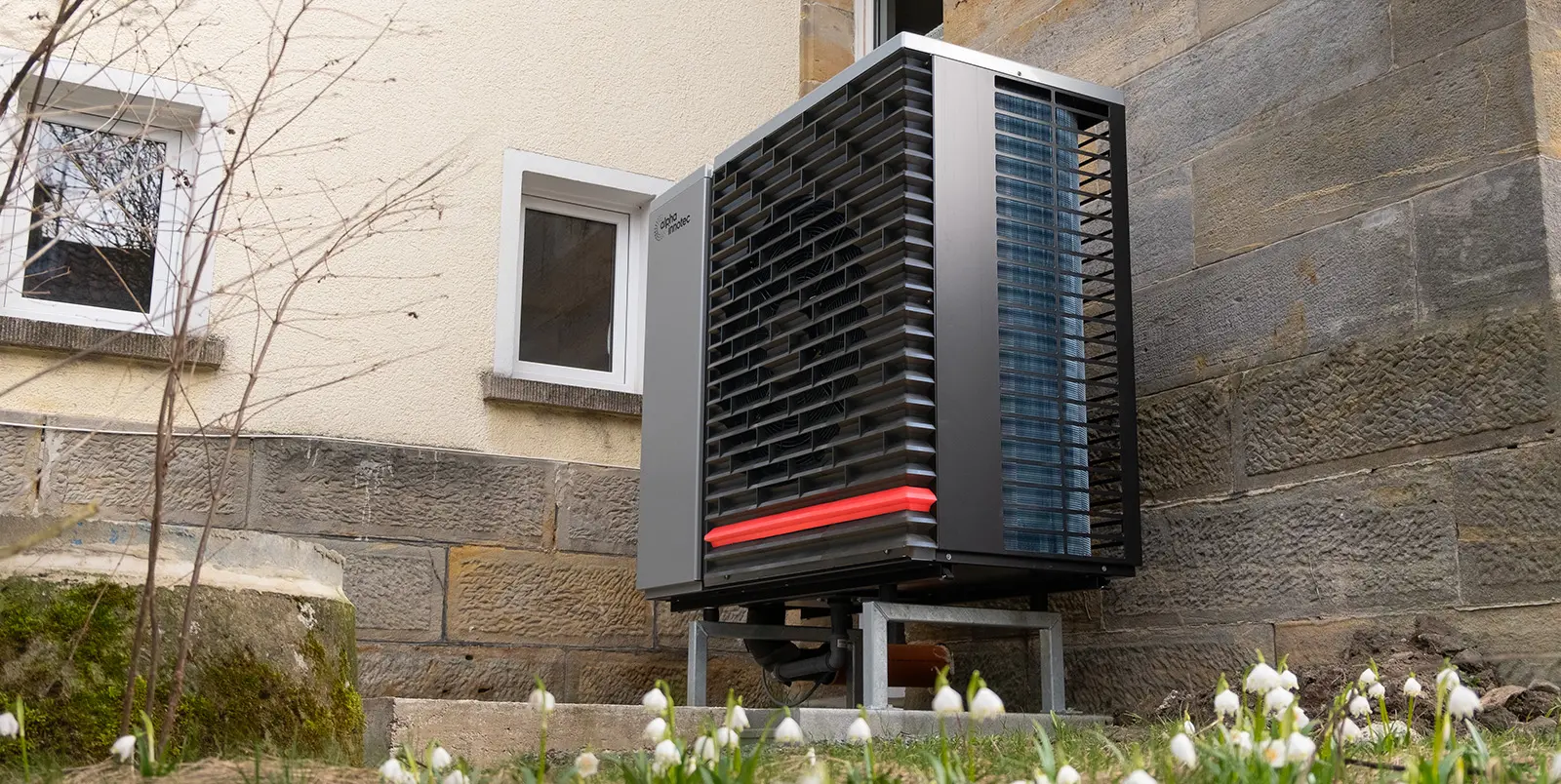
Heat pumps are now the most popular heating system in new buildings. But in your old building, you may have steep and narrow staircases, narrow doors, a tiny garden—and, to top it all off, neighbors who love to argue.
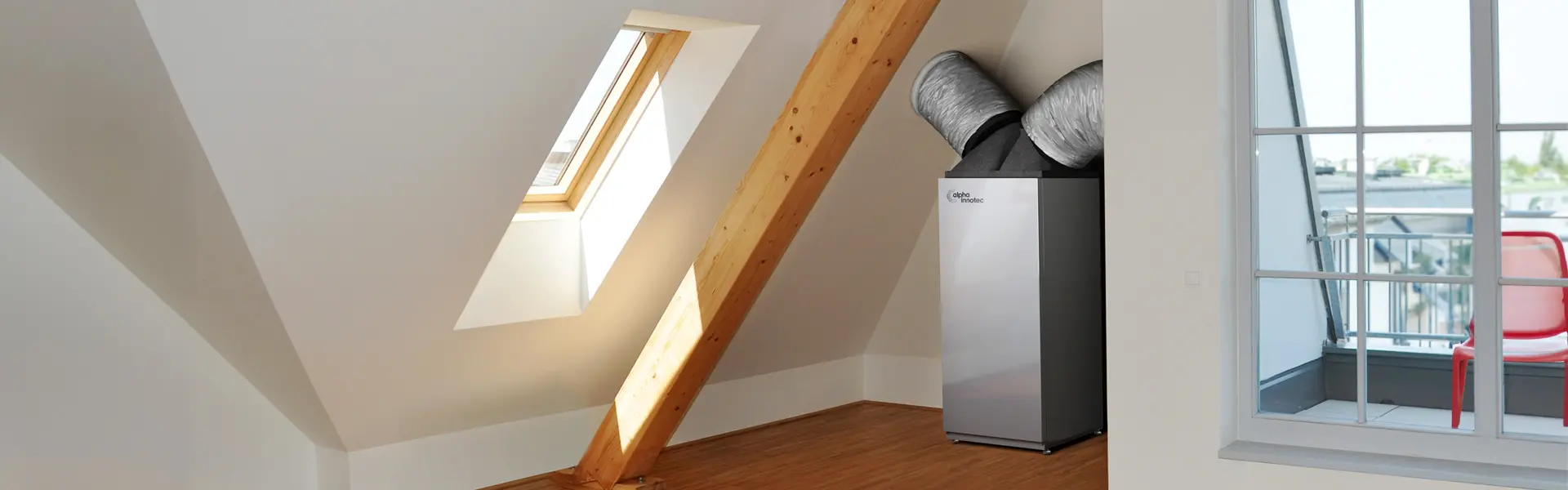
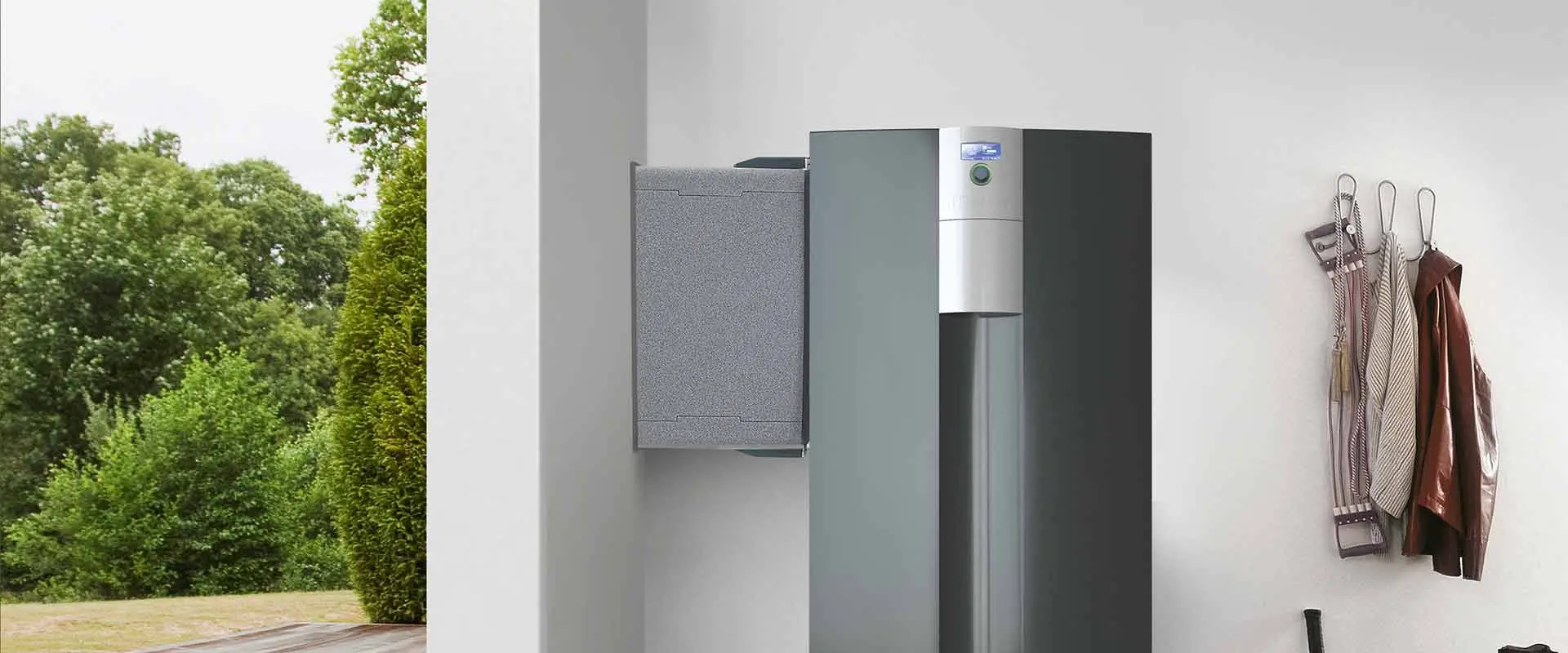
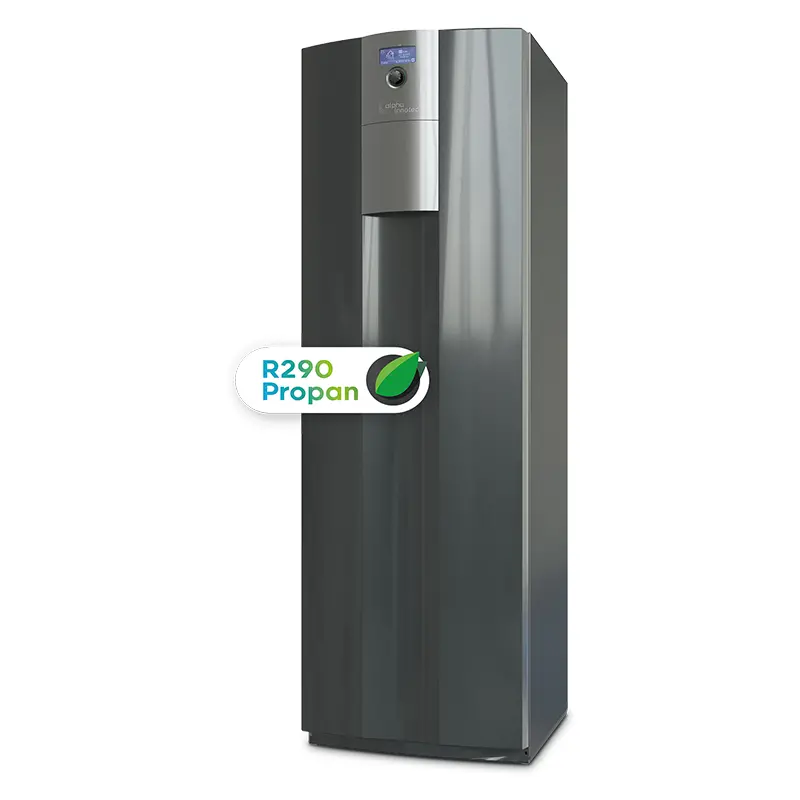
No problem! The Paros air/water heat pump from alpha innotec only takes up 0.3 square meters of floor space, weighs just 116 kilograms, and is super quiet. You can even hide the heat pump in the attic. So don't let fossil fuel fans talk you out of it. You can practically always find a place for an indoor heat pump.
The most important facts in 10 seconds
- Heat pumps can also be installed in the attic—with the right equipment and professional planning.
- Requirements: load-bearing structure, sound insulation, air ducts, condensation drainage.
- Compact air/water monoblocks such as Paros are particularly suitable, while brine or water heat pumps are less suitable.
- Advantages: space savings in the basement and garden, flexible air ducting, neighborhood conflicts can be avoided.
- Disadvantages: higher installation costs, sound transmission through ceilings, more difficult access for maintenance.
Can a heat pump be installed in the attic?
Yes, a heat pump can be installed in the attic. And it's actually not that complicated. It is important to have a load-bearing structure, good insulation against sound and heat loss, and secure air ducts for supply and exhaust air. Compact air/water monoblock units are particularly suitable—they can be installed in the attic to save space and avoid conflicts with neighbors or lack of space in the garden.
Why is the attic a good location for a heat pump?
Installation in the attic offers a clever solution if there is no space in the basement or on the property, or if there is a risk of neighborhood conflicts. It is particularly advantageous in new buildings without basements or in terraced houses with small outdoor areas.
EXAMPLE Challenge 1: HEAT PUMP AND LIMITED SPACE IN NEW BUILD

Finally, your dream of owning your own home is about to come true. The plot of land you can plan for is probably much smaller than that of your parents' and grandparents' generation, because building land is scarce and expensive. Around 200 square meters of land is the new normal for a terraced house in an affluent urban suburb. You may also want to forego a basement to save on your construction budget. At this point, at the latest, the competition for the remaining, limited space in the living area begins. Whether it's the heating system, domestic water tank, washing machine, or hobby corner—everything has to be accommodated there.
Where to put the heat pump in your new terraced house or prefabricated house? With a small plot of land, you will naturally be stingy with the space outside – also to avoid any discussions with the neighbors. In this case, the compact and quiet Paros heat pump is ideal. In combination with a buffer tank or domestic hot water tank, it can be flexibly installed in the basement, in the utility room, or even in the attic. With a sound power level of 48dB(A) and 45dB(A) in night mode, it makes no more noise than your refrigerator.
EXAMPLE CHALLENGE 2: HEATING REPLACEMENT IN A TERRACED HOUSE OR HOUSING ESTATE

With dense development, limited living space, and narrow stairwells, you will probably want to delay replacing your heating system for as long as possible. This is especially true if you have a small garden and you already know that your neighbors will complain even if you install the quietest heat pump available.
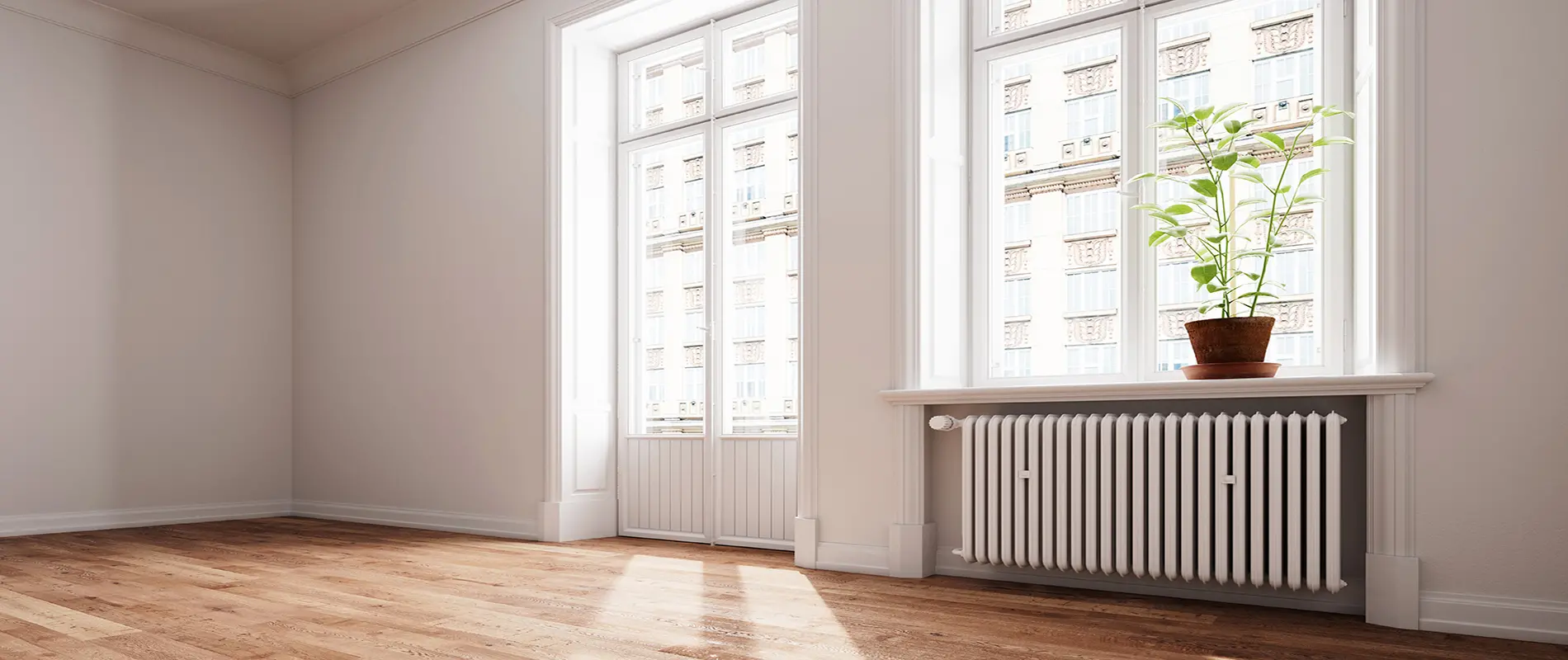
So where can you install a heat pump in your old terraced house or apartment building? In most cases, you will always gain space with a compact monoblock heat pump installed indoors instead of your old oil or gas heating system. The Paros air/water heat pump also has the advantage that you can install it in the attic and use your basement as additional storage space or a hobby room. Since the Paros weighs just over 100 kilograms, even narrow doors and steep stairs are no problem. And most importantly, you can connect the Paros to your existing underfloor heating, panel heating, or even your radiators.
Field report: Air source heat pump with radiators – indoor installation in an older terraced house
Our field report from Weimar shows that a heat pump with a photovoltaic system not only ensures independence from oil and gas, but also results in surprisingly low electricity consumption:
What are the advantages and disadvantages of a heat pump in the attic?
Advantages | Disadvantages |
Space in the garden and basement remains free | More complex installation due to air ducts and pipes |
Ideal for densely built-up areas or sensitive neighbors | Difficult access for maintenance and service (roof hatch, stairs) |
Flexible air ducting (e.g., through the roof or wall) | Structure must be able to bear the weight |
Low noise in living areas, no outdoor unit required | Structure-borne noise can be transmitted through ceilings → sound insulation required |
Eligible for subsidies like other heat pumps | Not all types of heat pumps are suitable (especially no brine or water heat pumps) |
Checklist: Requirements for a heat pump in the attic
In principle, a heat pump can also be installed in the attic—but only if certain structural and technical conditions are met. Unlike in the basement or outdoors, structural stability, sound insulation, and air flow play a particularly important role here.
Important requirements at a glance:
- Load-bearing capacity and structural stability: The attic must be able to safely support the weight of the heat pump. Vibrations (e.g., during installation) must not cause any damage to the building structure.
- Insulation & sound insulation: Good insulation and decoupled installation (e.g., vibration dampers) are important to prevent structure-borne noise and noise emissions from being transmitted into the building.
- Air flow: Suitable supply and exhaust air ducts must be available – either through the roof or through the outer wall. The air flows must not influence each other (no short circuits).
- Dew point control & condensation: Temperature differences can cause condensation to form. Therefore, drainage and dew point control are mandatory.
- Access & maintenance: The attic must offer sufficient space and safe access for service work. Narrow roof hatches or steep ladders are unsuitable.
Why is our Paros air/water heat pump so well suited?

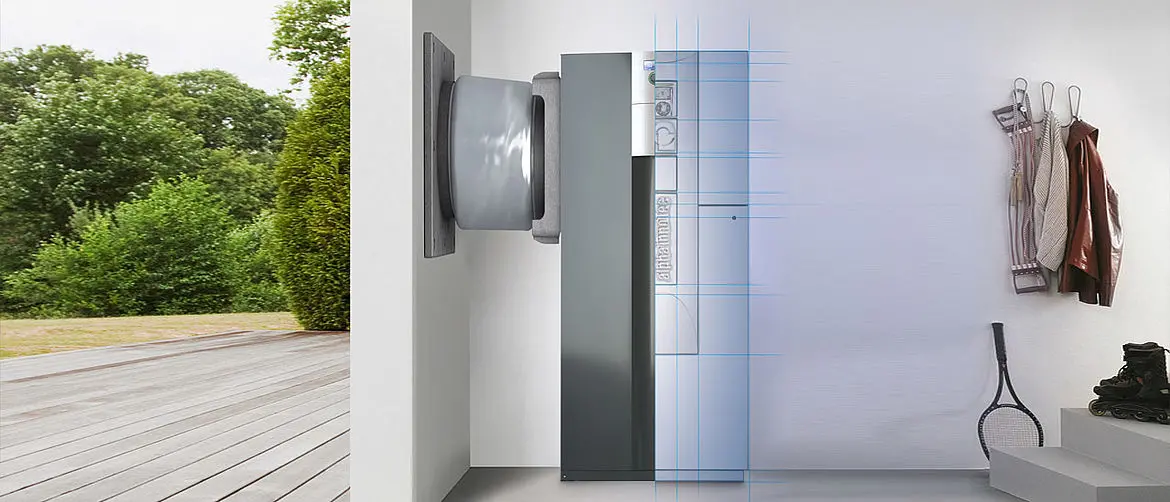
The alpha innotec development department has given the Paros a unique airflow concept. This makes it the first air/water heat pump that can even draw in environmental heat through the roof. The air is fed in from the side, rear, or top through the wall or roof and then discharged again. And it can also be combined: as a roof+roof connection, as a wall+wall connection, or as a wall+roof connection. The innovative air duct system allows a minimum distance of only 1 m between the two passages without the risk of thermal short circuits. In other words, there is no chance that the cool air discharged from the heat pump will be sucked back in immediately.
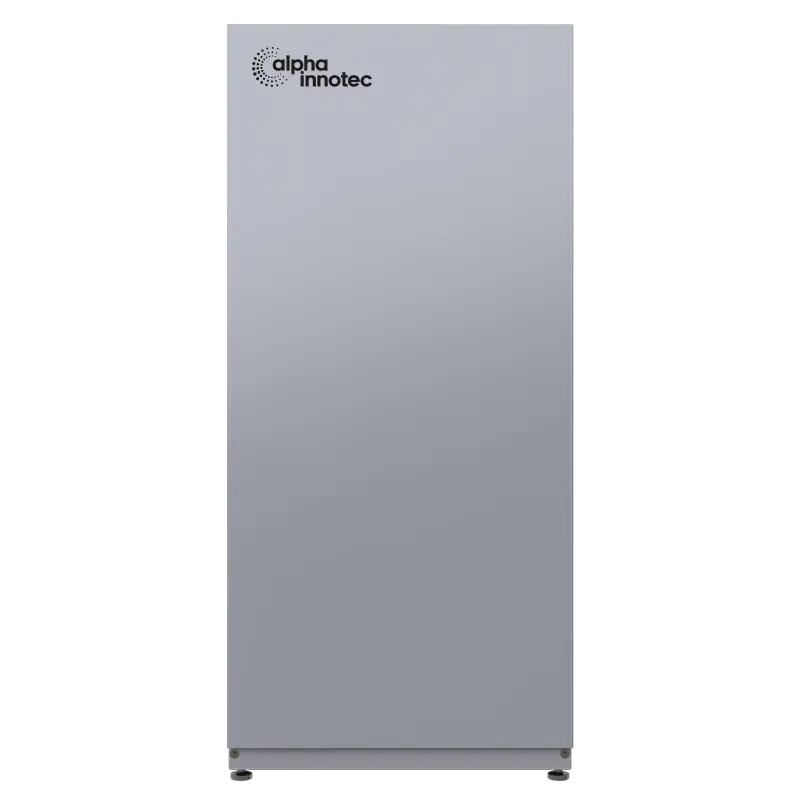
Paros heat pump
Experience maximum flexibility in heat pump installation
Soundproofing measures for a heat pump in the attic
- Decoupled installation: Use vibration dampers or rubber pads to prevent vibrations from being transmitted to the ceiling.
- Solid foundation: Install on a stable floor slab to prevent resonance.
- Insulation of air ducts: Sound insulation mats or insulated air ducts reduce airborne noise during operation.
- Optimized air flow: Sufficient distance between supply and exhaust air openings, no bottlenecks or sharp deflections.
- Distance from living spaces: If possible, do not place the heat pump directly above bedrooms or living spaces.
- Regular maintenance: Clean fans and intact bearings prevent additional noise.

Conclusion
Although a heat pump in the attic is not standard practice, it can be the perfect solution if there is no basement or outdoor space and space is particularly limited. Stable statics, good insulation, and well-designed air ducting and soundproofing measures are crucial.
In confined spaces and densely built-up areas, Paros, our compact indoor heat pump, is a real alternative. Thanks to its clever air flow, it can be installed flexibly from the basement to the attic.








_Referenz%20Neustadt%20am%20R%C3%BCbenberge.webp)


.webp)



.webp)