The flow temperature of your heat pump plays a crucial role if you want to heat as energy-efficiently as possible. The lower the temperature is set, the lower the power consumption—and the lower your heating costs will be in the end. But no one has to shiver to save money, because a lower temperature and cozy warmth are not mutually exclusive. With the optimal setting, you can find the right balance between efficiency and comfort. This article will show you how to find the right flow temperature.
The most important information at a glance:
- The flow temperature describes the temperature of the heating water after it has been heated by the heat pump and fed into the radiators or panel heaters.
- Heat pumps are most efficient at flow temperatures of up to 35 °C.
- Depending on the building and system, 50 °C and above can also be economical.
- Even older buildings can be retrofitted with heat pumps – in this case, a higher flow temperature is usually required and, accordingly, a high-temperature heat pump or a hybrid heating system.
What is the flow temperature of a heat pump?
The flow temperature is the temperature to which your heat pump heats the heating water and at which it is fed into the heating system. It is therefore responsible for both the heating output and the efficiency of the system.
After the water in the heating system has released its heat, it flows back to the heat pump as return flow. The difference between the flow and return temperatures is the temperature spread.
Why is the flow temperature of heat pumps so important?
Heat pumps are already extremely economical in themselves. With the optimal flow temperature, you can increase efficiency even further. This not only means pleasant warmth in your home, but also noticeably lower heating costs.
The situation is different if the setting is not optimal:
FLOW TEMPERATURE TOO HIGH
If the temperature is set too high, electricity consumption increases. This is because more energy is required for a higher energy lift. Even slight deviations from the optimal flow temperature have a significant effect on the efficiency of your heat pump. As a rule of thumb:
- For every degree Celsius above the ideal flow temperature, the heat pump's electricity consumption increases by about 2 to 2.5%.
- A heat pump flow temperature of 35 degrees, 40 degrees, or 45 degrees therefore makes a huge difference: if the temperature controller is turned up by just 5 °C, this can lead to additional electricity consumption of up to 12%.
In the long term, temperatures that are set too high can even shorten the service life of your heat pump:
The reason: The heat pump has to work harder to bridge the difference between the heat source (e.g., outside air, ground, or groundwater) and the target temperature. This puts more strain on the compressor and leads to faster wear and tear.
A consistently high flow temperature can also lead to your system's output being restricted. This is related to the seasonal performance factor (SPF). The SPF indicates the ratio of electricity used to heat generated. A minimum COP must be achieved in order to receive subsidies. A heat pump is considered efficient if it has a COP of 3 or higher. This means that your heat pump generates three times as much heat energy from one kilowatt hour of electricity.
Would you like to find out the seasonal performance factor of your heat pump? Get in touch with our team!
TOO LOW FLOW TEMPERATURE
Although low temperatures do not have a negative effect on heating costs, they do lead to insufficient heating of the rooms. If the building is not heated sufficiently, it is simply uncomfortable.
As you can see, it is worth checking the flow temperature regularly and adjusting it accordingly – ideally with professional support.
What is the ideal flow temperature for a heat pump?
In general, flow temperatures between 30 and 35 °C are considered optimal for heat pumps. They operate particularly efficiently in this range because the temperature of the heat source only needs to be raised slightly. However, these low temperatures require large-area heating systems such as underfloor heating or wall heating, which can sufficiently distribute the generated heat throughout the rooms.
Temperatures of up to 50 °C can also be economical, making heat pumps a sensible heating alternative even in existing buildings.
However, a permanently higher flow temperature can increase electricity consumption and also limit or completely exclude possible eligibility for subsidies. It therefore makes double sense to set your heat pump to the optimum level.
Modern inverter heat pumps offer an advantage in this respect. They continuously adjust their output to the actual demand. This means that they do not run continuously at full load, but only as much as is necessary at any given time. This avoids frequent switching on and off – and saves energy.
WHAT IS THE RIGHT FLOW TEMPERATURE?
The appropriate flow temperature depends largely on the heating system used and how well your house is insulated, rather than on the type of building (old or new).
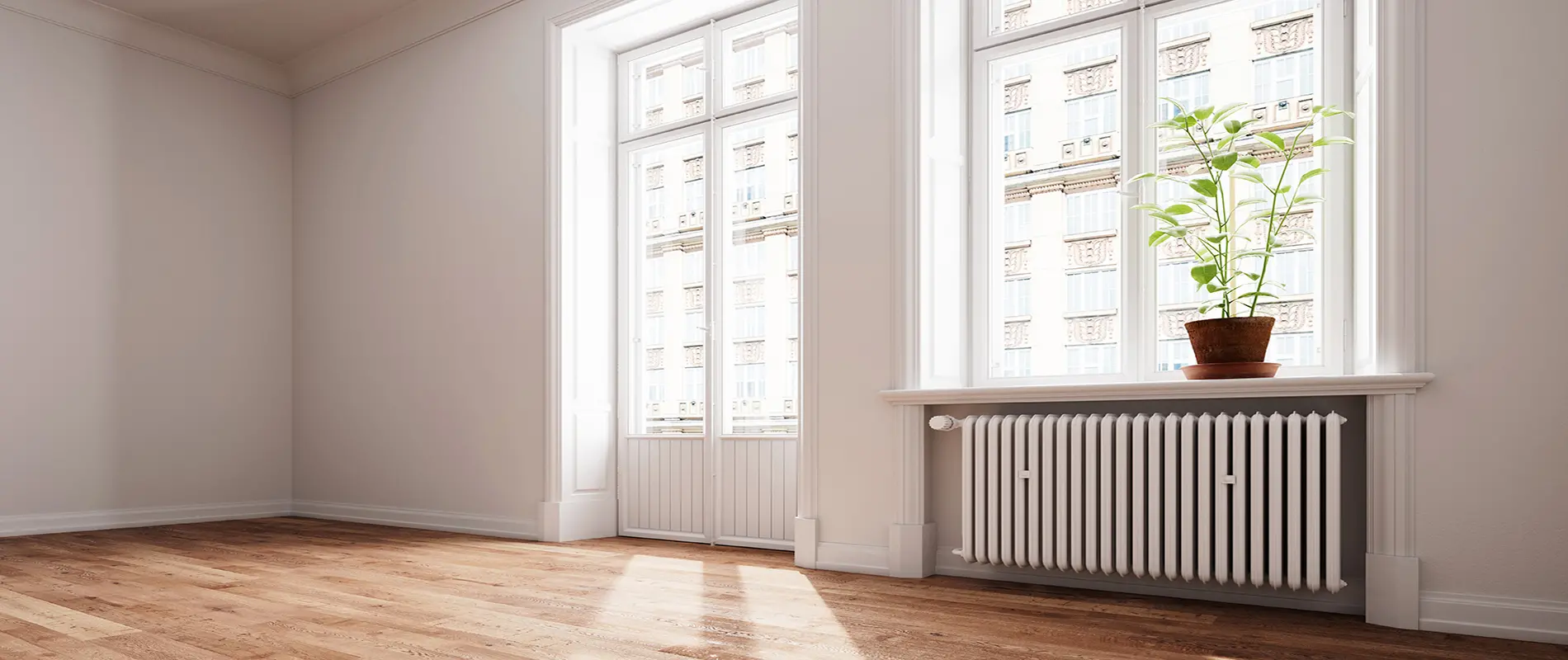
As a general rule, the larger the area over which the heat is distributed, the lower the flow temperature can be. Underfloor or wall heating systems are therefore ideal. With traditional radiators, on the other hand, you need higher temperatures to heat your rooms sufficiently. It also makes a difference whether you have older or newer models, as they distribute heat differently.
An overview of typical flow temperatures for different systems:
Heating system | Vorlauftemperatur |
|---|---|
Old radiators in old buildings | 75–90 °C |
Modern radiators | 55–75 °C |
Underfloor Heating | 30–40 °C |
Underfloor Heating | bis 50 °C |
Boiler systems (heating oil, gas) | 45–60 °C |
*The lower temperature indicates good insulation, while the higher temperature indicates poor insulation.
The table shows that the larger the heating surface, the lower the required flow temperature. This is why surface heating systems are particularly advantageous for use with heat pumps.
FLOW TEMPERATURE AND UNDERFLOOR HEATING – A DREAM TEAM
Underfloor heating systems can operate at flow temperatures below 35 °C – ideal for use with heat pumps. The large surface area of this type of heating distributes the heat evenly and comfortably throughout the rooms. The low operating temperature means you benefit from lower electricity consumption and therefore lower heating costs.
TIPS FOR RETROFITTING IN OLD BUILDINGS
Retrofitting with a heat pump is also possible in older buildings. In theory, modern heat pumps can deliver up to 75 °C – our Hybrox 11 and 16 models even reach up to 78 °C – so even old radiators can provide cozy warmth. However, even if this is technically feasible, operation in this temperature range is no longer efficient.
However, energy-saving heat pumps are a sensible heating option even in older buildings:
- Use a hybrid heating system and combine the heat pump with an existing gas or oil heating system. This allows you to switch to bivalent operation when outside temperatures are low and to heat your hot water, with the second heating system supplementing the heat pump.
- Install underfloor or wall heating to distribute heat efficiently and over a large area.
- If this is not possible, replace old radiators with modern low-temperature models so that you can heat with lower flow temperatures.
- Improve the thermal insulation of the roof, exterior walls, and windows so that no heat is lost.
HOW TO OPTIMIZE YOUR FLOW TEMPERATURE
Less is more—this applies not only to fashion, but also to flow temperature. After all, every degree less saves electricity costs. This is one reason to take a detailed look at possible factors for optimizing your heating settings. Here we summarize what you should pay attention to and what you can do to optimize your flow temperature.
An overview of the influencing factors:
- Type of building (new or old)
- Insulation of facade and windows
- Type of heating (e.g., radiators or panel heating)
- Outside temperature
- Desired room temperature
Don't worry, you don't have to constantly readjust: modern heat pumps have automatic weather-compensated controls. These systems ensure that the flow temperature automatically adjusts to the outside temperature – without you having to do anything. The only requirement is that the system is installed correctly and serviced regularly.
What else you can do to make your heat pump more efficient:
- If possible, lower the room temperature by one degree—this will save a noticeable amount of energy.
- Ventilate intermittently instead of continuously to prevent unnecessary heat loss. An alternative is to install a ventilation system with heat recovery. With controlled ventilation, you will always have fresh air in your home.
- Use the night setback function on your heating system.
- Check whether the temperature sensors inside and outside are positioned correctly and reliably detect the current conditions.
- Use the automatic weather-compensated control of your heat pump, if your model has this feature. It ensures that the flow temperature automatically adjusts to the outside temperature and you benefit from a demand-based heat supply with the lowest possible energy consumption.
- Have a hydraulic balancing carried out – this will distribute the heat more evenly throughout the house.
- Further comprehensive measures such as insulation, heating replacement, and hybrid solutions are already described above in the section on retrofitting in old buildings. These are costly, but worthwhile in the long term.
These measures will enable you to achieve a permanently lower flow temperature and benefit from a reliable, cost-saving heat supply.
PROFESSIONAL SETUP BY EXPERTS
Even though you now have a comprehensive overview of the factors that are important when setting the flow temperature, in most cases it is advisable to consult a specialist company. In addition to the details described here, experts can use a heating load calculation and hydraulic balancing to ensure that your heating system is precisely tailored to your building.
Would you still like to do it yourself? Then it's time to experiment: lower the flow temperature in small steps—for example, by 2 degrees at a time. If it still feels comfortably warm, you can reduce it further. If you feel cold, set the temperature a little higher again. It makes sense to start this series of tests when the outside temperature is no higher than 5 degrees. This method requires a little patience, but it will get you where you want to be.
In the long run, however, having the settings adjusted by a professional is the more sustainable option.











.webp)


.webp)


_Referenz%20Neustadt%20am%20R%C3%BCbenberge.webp)