How a Heat Pump Works
The heat pump is the technology for sustainable heating of the future—and a central component of the energy transition. But how does a heat pump actually work? And what sets apart air‑source, ground‑source, or domestic‑water models?
In just 10 seconds:
- A heat pump converts environmental energy into heating or cooling power
- Uses renewable heat sources like air, earth, or water
- A heat exchanger transfers this energy into your heating system
- Cooling with a heat pump is possible—environmentally friendly & efficient
What is a heat pump?
A heat pump is a heating system that extracts warmth from the environment (air, ground, or water), raises it to a usable temperature level, and delivers efficient, emission‑free heating and hot water. Due to its eco‑friendliness and high efficiency, heat pumps are currently state‑subsidized.
At its core, a heat pump is nothing more than a reversed refrigeration machine. Instead of cooling, like a fridge, it pulls heat into the house—from the air, groundwater, or ground.
Marion Kirchner, Head of Sales alpha innotec Bavaria
A piece of technical history lives on here: In 1873, engineer Carl von Linde—born just a few kilometers from our Kasendorf location—built the first working refrigeration cycle. His invention laid the foundation for modern cooling systems—and, in reverse, today’s heat pump technology.
Heat Pump vs. oil- & Gas Heating: What´s the difference?
While oil and gas heaters burn fossil fuels and emit CO₂, a heat pump uses free environmental energy. It works like a reversed refrigerator: instead of releasing heat outside, it brings it into the house using a refrigerant cycle powered by compression.
Construction of a heat pump
At its core, a heat pump comprises four key components: an evaporator, compressor, condenser, and expansion valve. Together, they form the refrigerant cycle that captures and delivers heat from the environment.
The four main components at a glance:
- Evaporator: Absorbs ambient heat (e.g., from the air or ground) and evaporates the refrigerant.
- Compressor: Compresses the evaporated refrigerant, causing the temperature to rise significantly.
- Condenser: Transfers the heat to the heating system, causing the refrigerant to liquefy again.
- Expansion valve: Lowers the pressure of the refrigerant – the cycle begins again.
Monoblock vs. Split – whats the difference?
- Monoblock: All components housed in one compact unit, typically installed outdoors. Easy to install, no refrigerant connections inside, but needs more outdoor space and frost protection.
- Split: Components are split between outside (evaporator) and inside (compressor & condenser). More flexible indoor placement, but requires refrigerant lines and professional installation.
Bauweise | Advantages | Disadvantages |
Monoblock | – Complete system, easy installation – No refrigerant connection required in the house | – Requires more space outdoors |
Split |
– Compact exterior – No water in the outdoor unit – More flexible indoor placement options | – Refrigerant lines required in the house (specialist company!) – More maintenance required |

How does a heat pump work?
Brief explanation: A heat pump uses electricity to raise free environmental heat from the air, ground, or groundwater to a usable temperature level. It works on the principle of a refrigerant cycle, which is implemented via four central components: evaporator, compressor, condenser, and expansion valve.
The effect is based, among other things, on the Joule-Thomson effect: the temperature rises during compression and falls during expansion. This is why a heat pump can also heat efficiently in winter.

The four process steps for operating a heat pump. To generate energy, the heat pump requires 75% environmental energy and 25% electricity.
HOW IT WORKS: THE HEAT PUMP CYCLE IN 4 STEPS
Absorbing heat (evaporator):
In the first step, a special refrigerant flows through the evaporator. Since it evaporates even at very low temperatures, it absorbs heat from cold outside air, the ground, or groundwater. This environmental heat causes the liquid refrigerant to evaporate and become gaseous.
Pumping heat up (compressor):
The gaseous refrigerant now enters the compressor. There it is strongly compressed under high pressure. The compression causes the temperature of the gas to rise significantly. This is the phase in which the heat is “pumped” to a higher, heatable level.
Heat transfer (condenser):
In the condenser, the stored heat energy is transferred to the heating system in the house, for example to radiators or underfloor heating. In the process, the refrigerant cools down and liquefies again.
Pressure reduction (expansion valve):
Finally, the liquid refrigerant flows through the expansion valve. There it is expanded, which leads to a drop in pressure and temperature. The cycle then starts again from the beginning.
How does an air-to-water heat pump work?
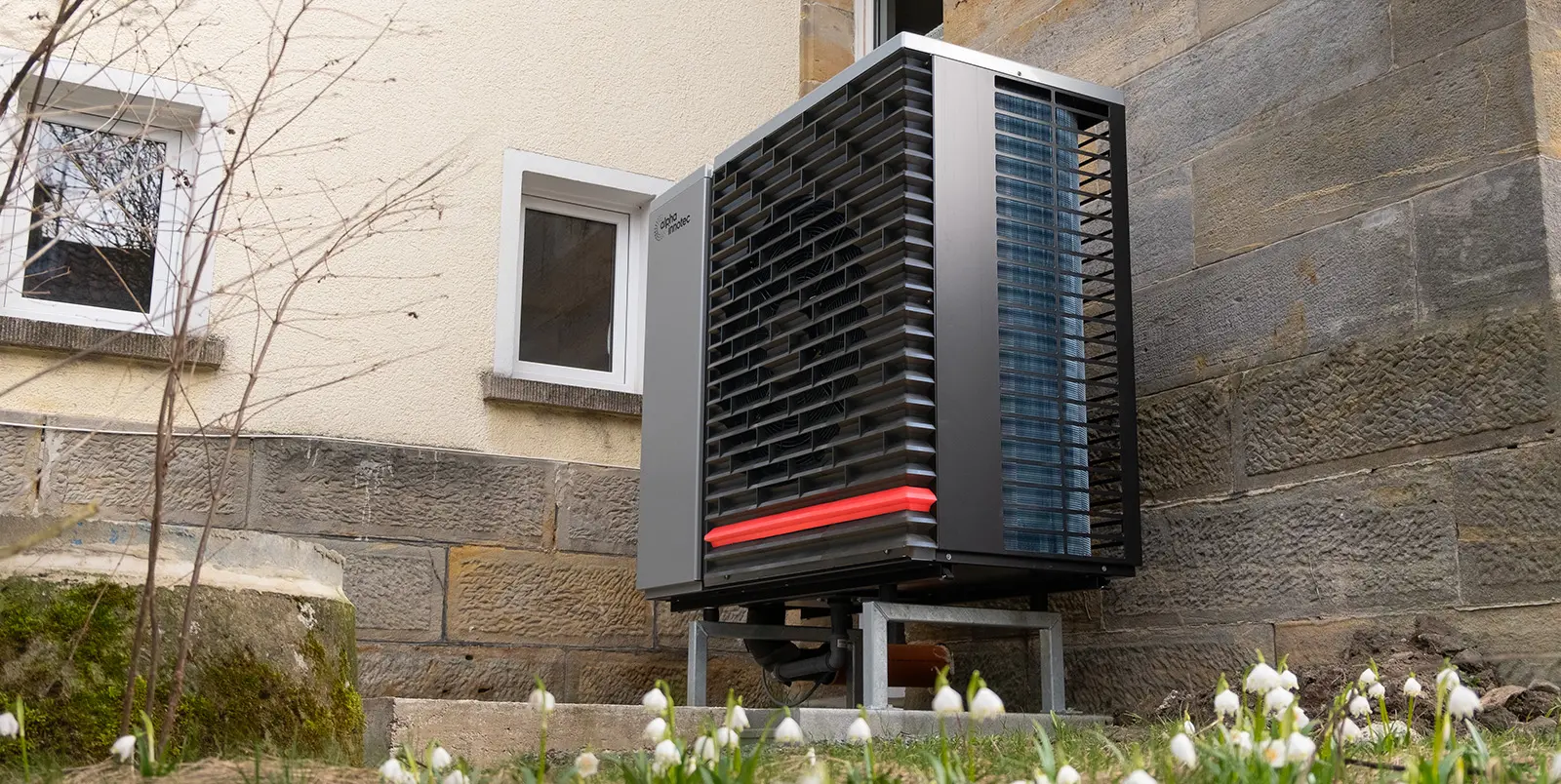
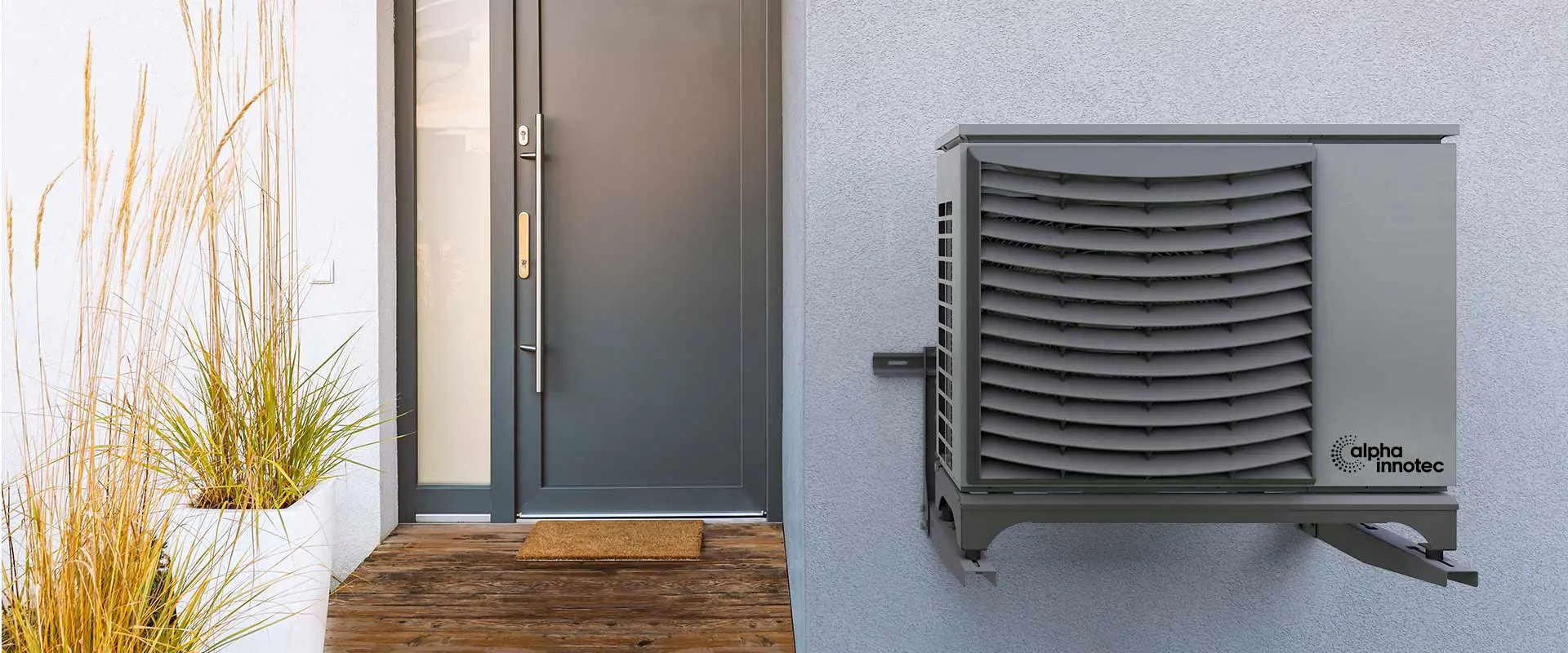
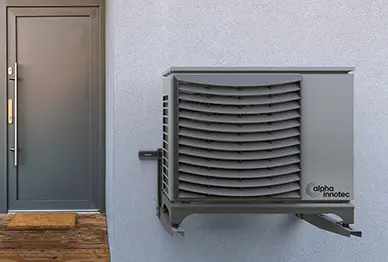
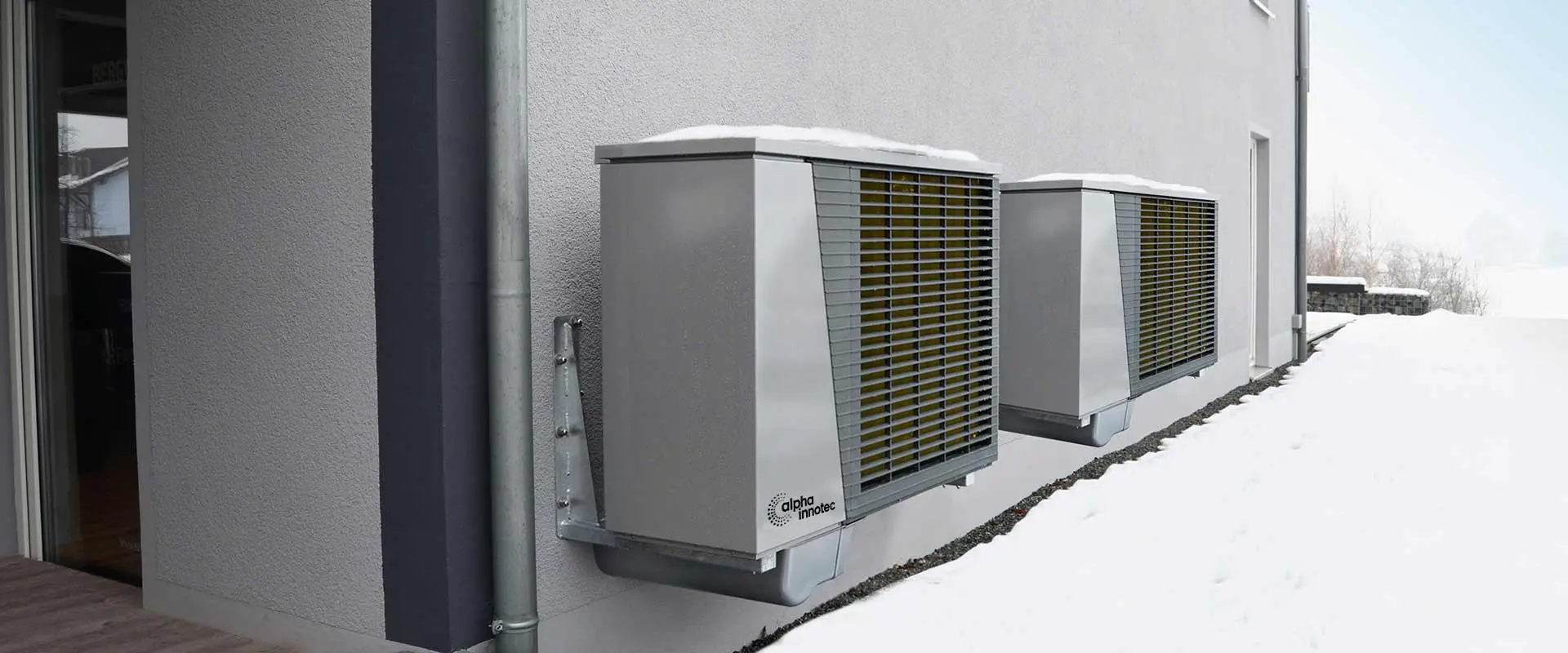
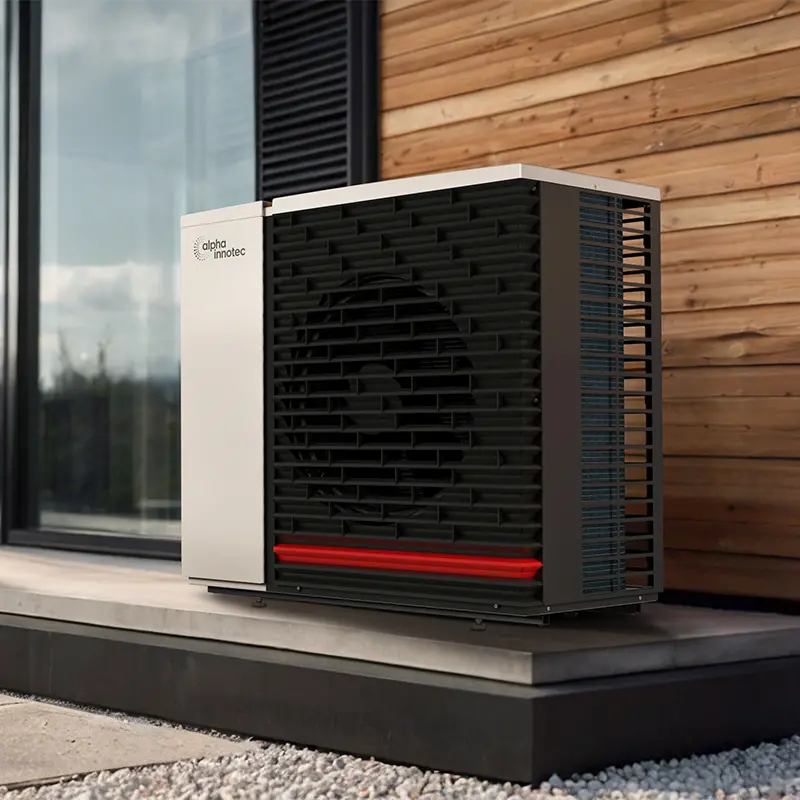
An air source heat pump extracts heat from the outside air and converts it into energy for heating using a refrigeration cycle. To do this, a fan draws in the ambient air and transfers the heat it contains to a refrigerant. This evaporates, is compressed in the compressor, and is then used in the heating system for space heating or hot water.

Learn more about the funtion of an air/water-heat pump
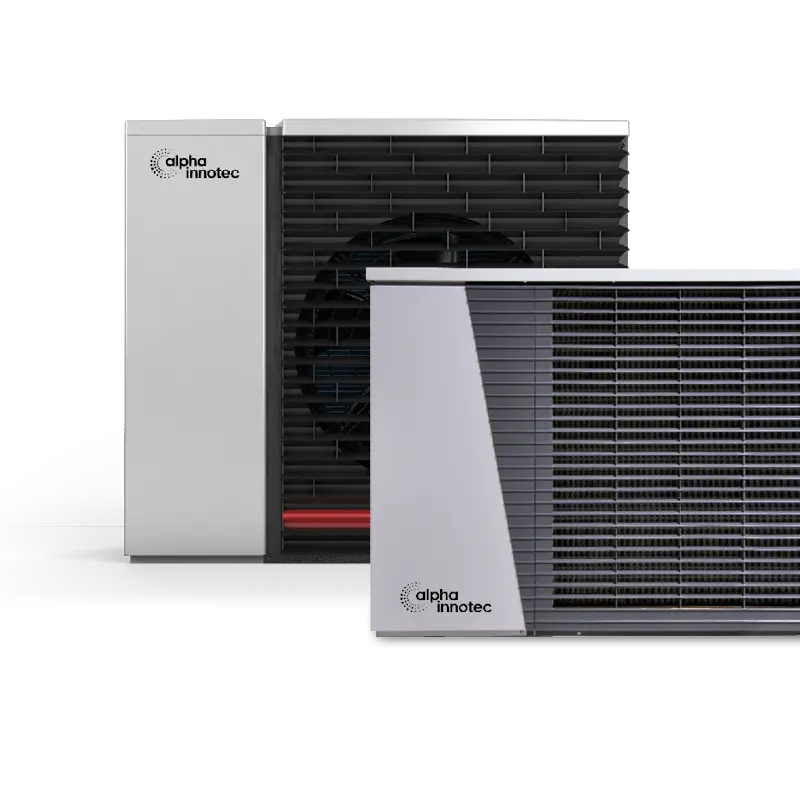
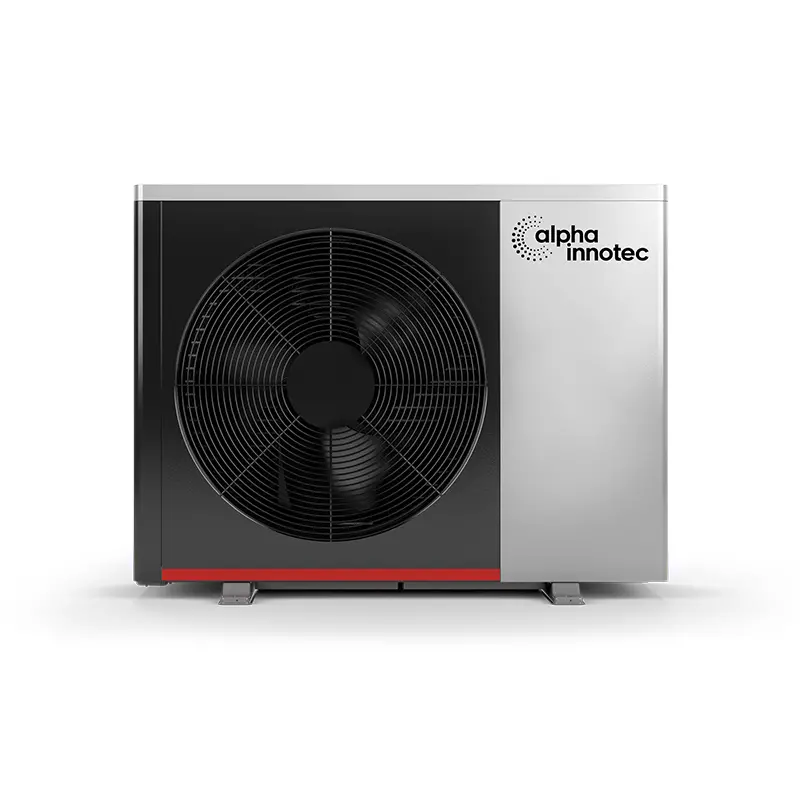
Hybrox Series
• Inverter Heat Pump
• Building heat load: 5-16 kW
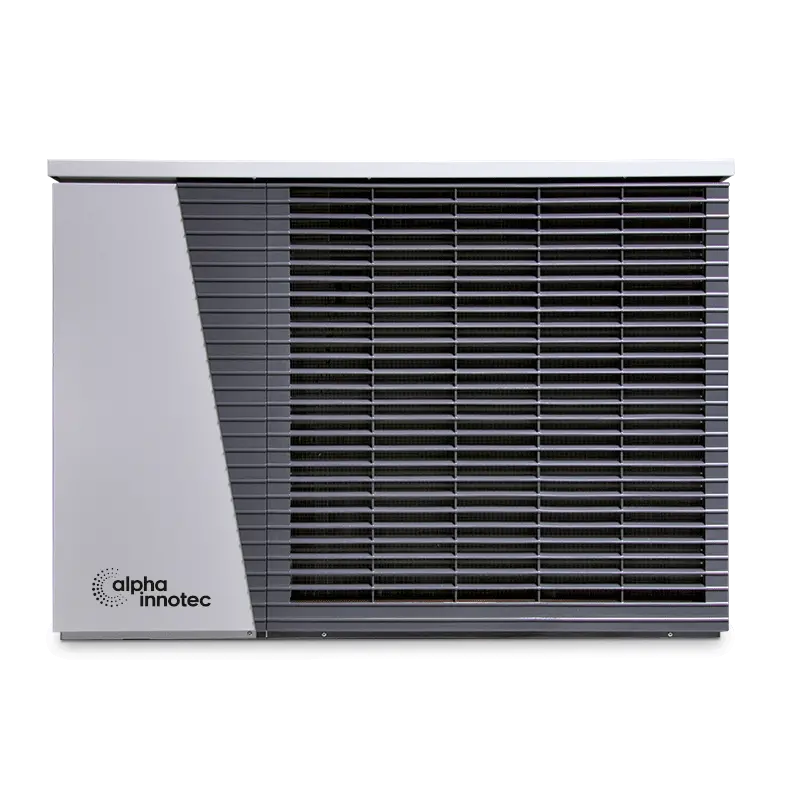
Hybrox SE Series
• Inverter Heat Pump
• Building heat load: 5-14 kW
LWDV
• Inverter Heat Pump
• Building heat load: 6-11 kW
How does a geothermal heat pump work?
Brine-water heat pumps, also known as geothermal heat pumps, extract geothermal energy from the ground and use it as a heat source for heating. The heat is absorbed by ground collectors or ground probes and transferred to the heat pump in the house using a frost-protected brine fluid (water-glycol mixture). There, the energy passes through the classic refrigeration cycle and is made available for use in radiators or underfloor heating.

TECHNICAL VARIATIONS:
- Ground collectors: Surface installation at a depth of 1.2–1.5 m
- Ground probes: Vertical boreholes up to 100 m deep
- Ground baskets/ring trench collectors: Alternative for limited space
Tip: The installation of a geothermal heat pump requires approval and careful planning. It is essential to seek advice from a specialist company.
More about how brine-water heat pumps work
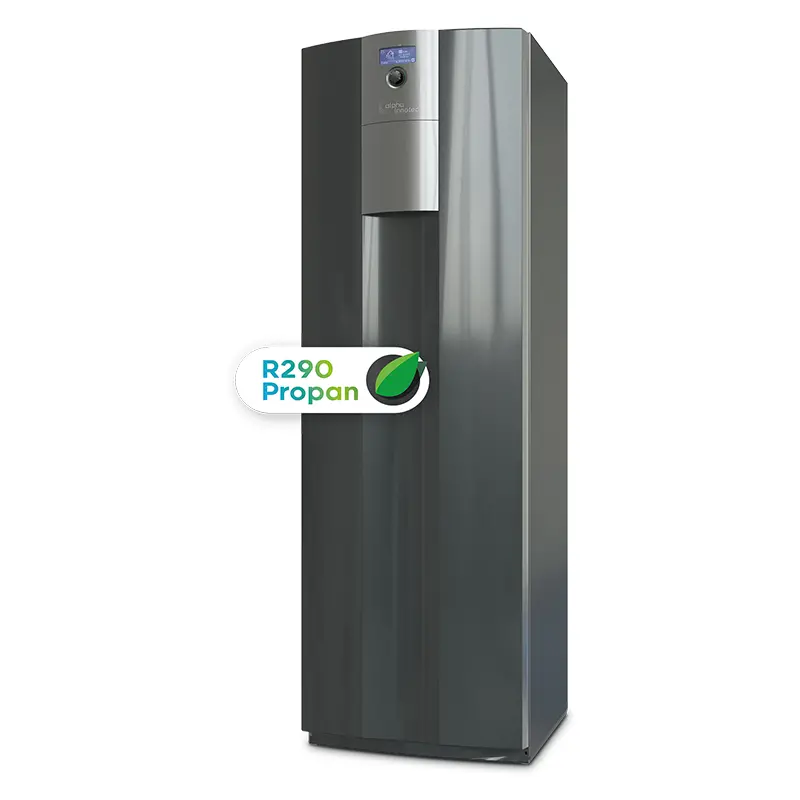
WZSV 63
• Inverter Heat Pump
• Building heat load: 3-6 kW
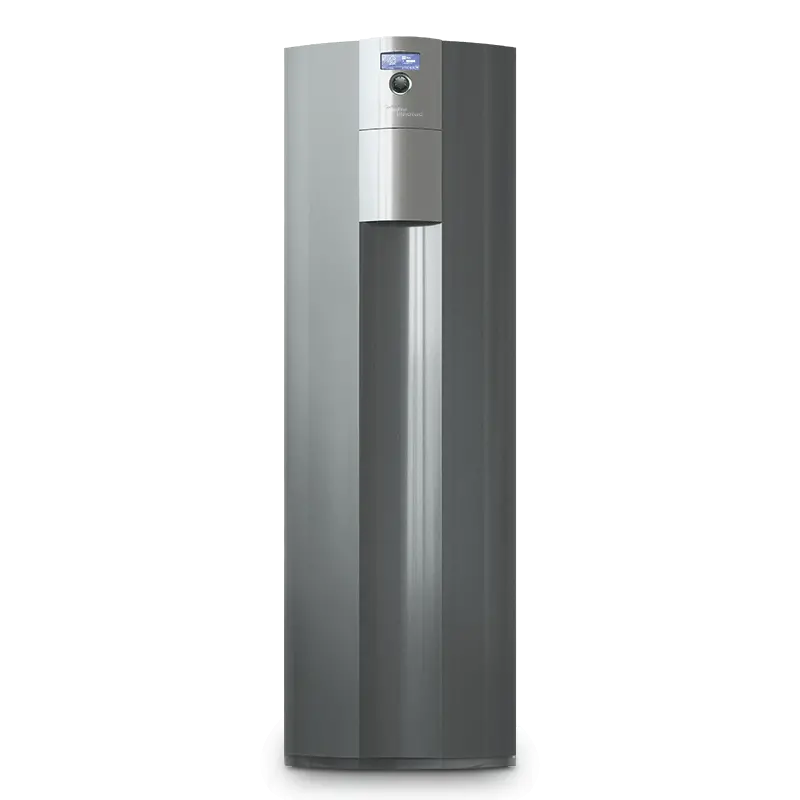
WZSV Serie
• Inverter Heat Pump
• Building heat load: 3-14 kW
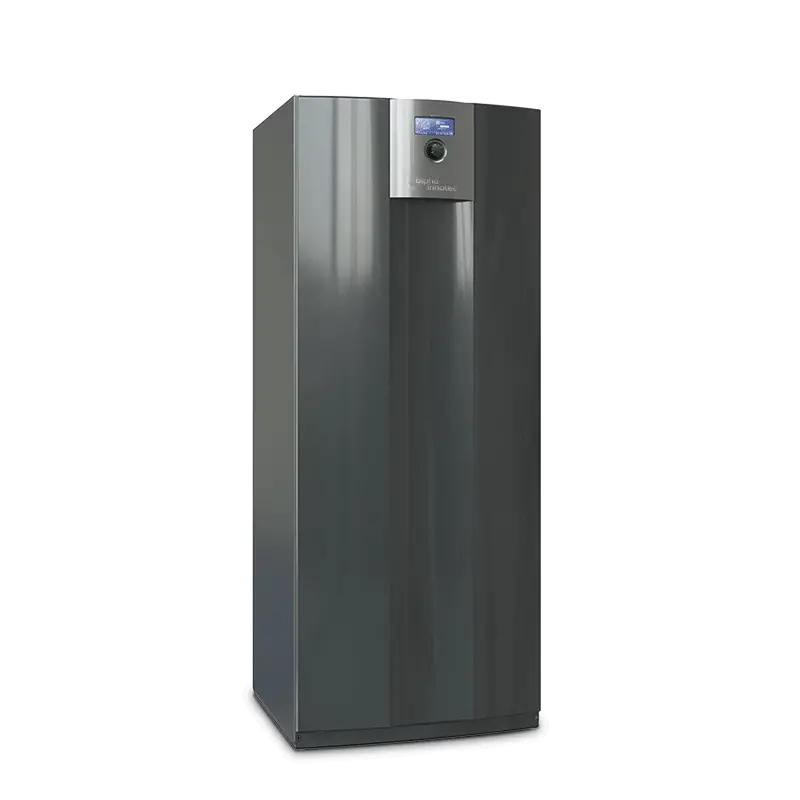
SWCV Serie
• Inverter Heat Pump
• Building heat load: 3-17 kW
How does a hot water heat pump work?
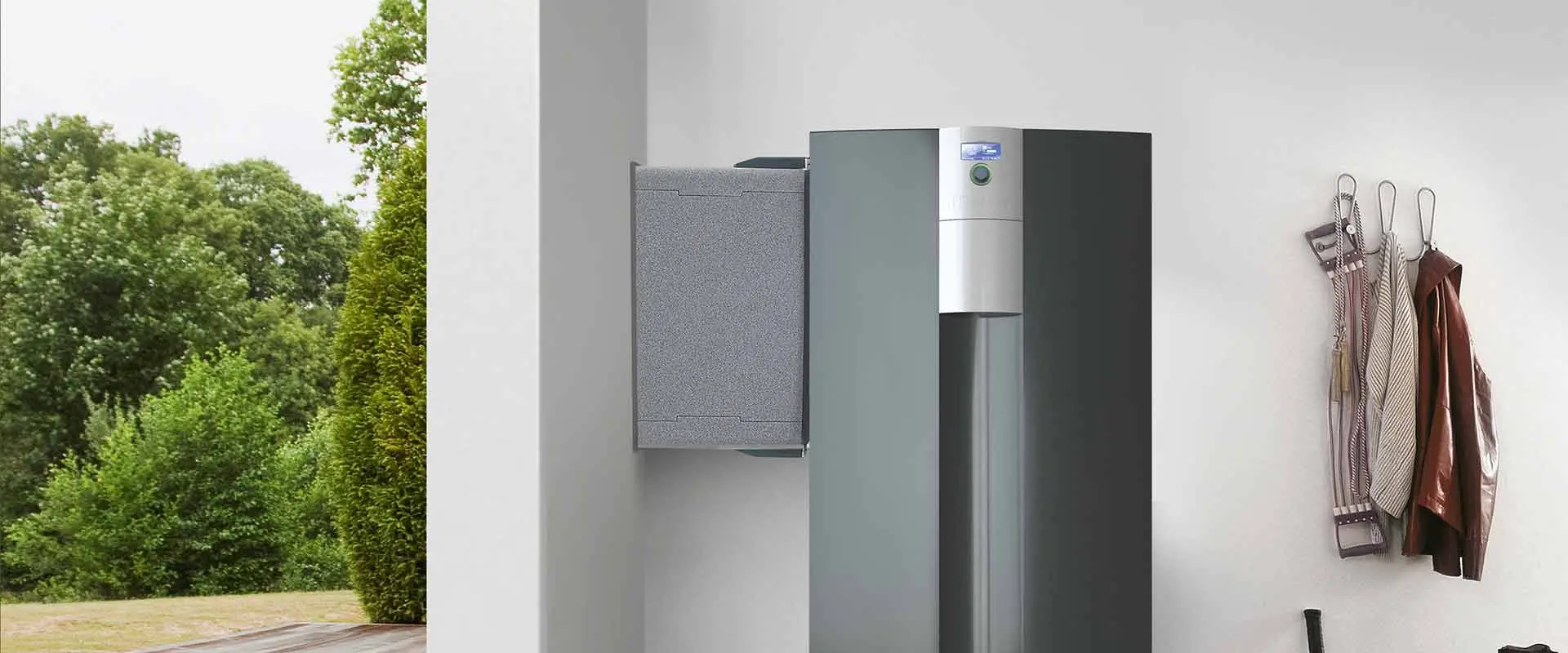
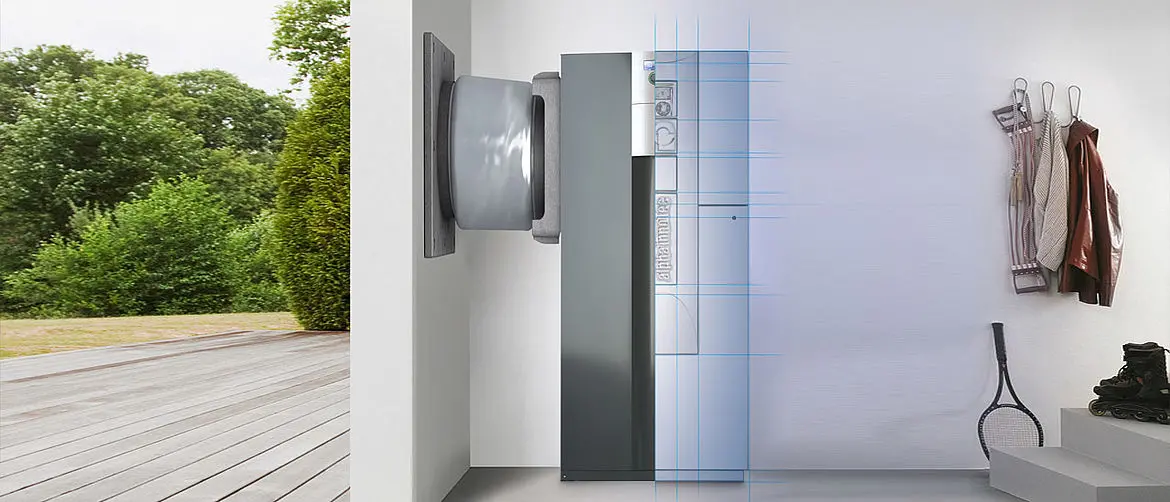
A hot water heat pump, also known as a domestic water heat pump, uses heat from the ambient air (e.g., from the basement) to heat drinking water in the integrated storage tank. The heat pump works on the same physical principles as all other types of heat pumps: heat is extracted from the air using a refrigerant, compressed, and raised to a higher temperature to heat water.
DIFFERENCE FROM A HEATING HEAT PUMP
This type of heat pump is only designed for hot water production. It cannot be used for space heating. It is ideal for use in combination with other heating systems or photovoltaics, especially where hot water consumption is low, or as a cost-effective retrofit in existing buildings.
WHEN IS A DOMESTIC HOT WATER HEAT PUMP SUITABLE?
Ideal for... | Less suitable for... |
Households with existing heating systems | High hot water demand (e.g., apartment buildings) |
Combination with PV systems | Very cold or unheated installation rooms |
Retrofitting in old buildings / replacement of old boilers | Need for heating support |
Energy-saving individual measures with a low budget | Buildings without suitable installation options |
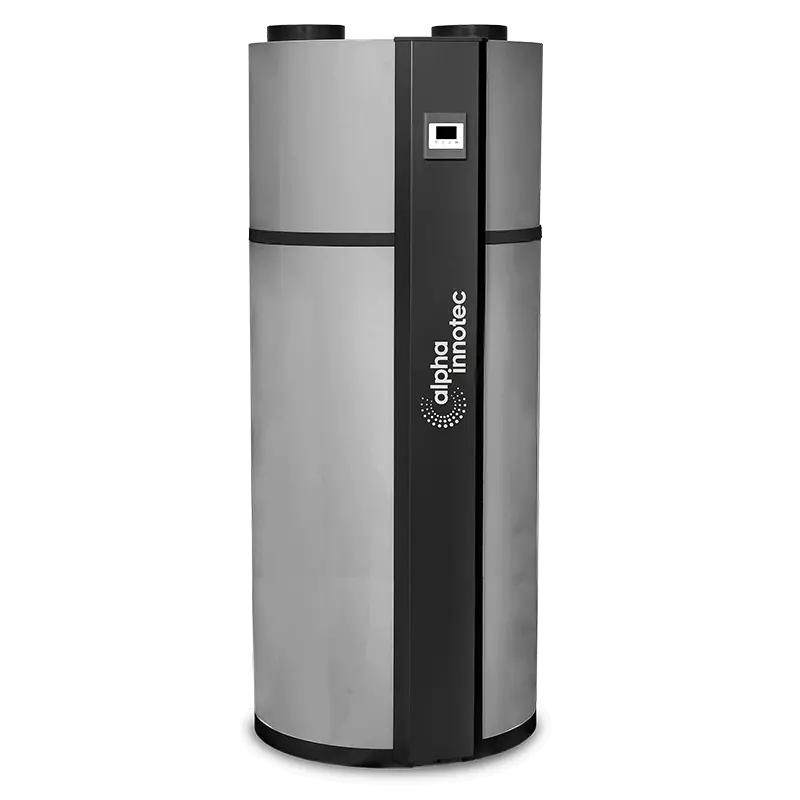
BWP Series
• Plug-in device
• Refrigerant R134A
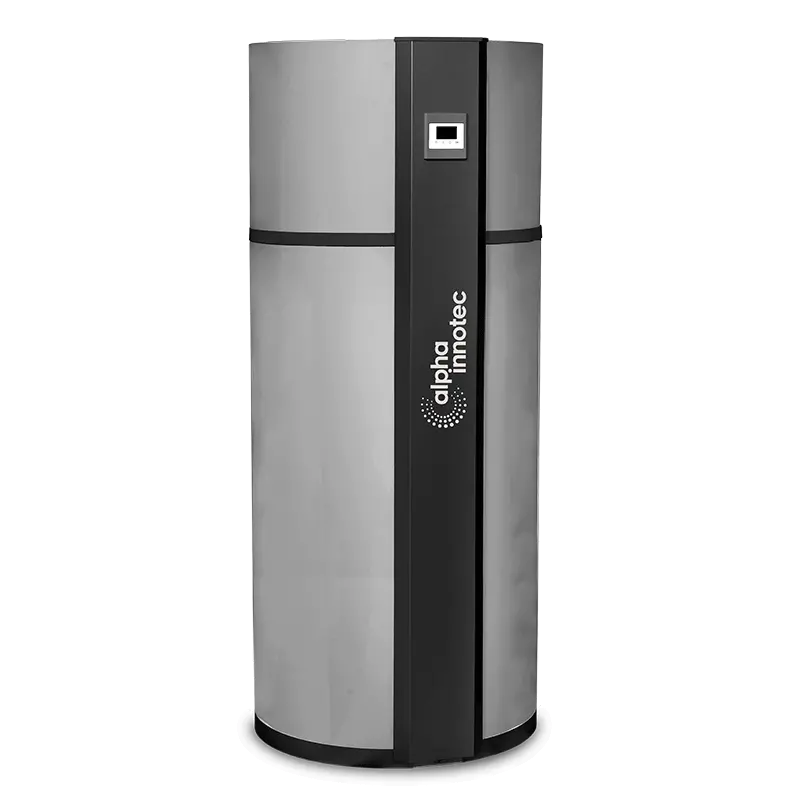
WWB Water/Water Booster
• Highly efficient operation
• R134A refrigerant
How does a heat pump work in winter?
Does the heat pump also work in winter? Yes, modern heat pumps are designed to operate efficiently even at outdoor temperatures as low as -20 °C. The key factors here are the technology used and the overall system design.
HOW A HEAT PUMP WORKS IN WINTER:
- Heat pumps use environmental heat, which is still available even at sub-zero temperatures. Even at -10 °C, air still contains thermal energy.
- Modern refrigerants such as propane (R290) have extremely low boiling points (approx. -42 °C), enabling heat to be extracted even in very cold winters.
- Inverter technology ensures that the heat pump flexibly adjusts its output and operates efficiently in the partial load range – this saves energy and reduces power consumption.
- Devices such as the Hybrox air/water heat pump from alpha innotec achieve flow temperatures of up to 78 °C – even at -22 °C without a heating element.
WHAT NEEDS TO BE CONSIDERED IN WINTER?
- Insulation is crucial: the better the house is insulated, the lower the heating output required – and thus the flow temperature.
- A low flow temperature (below 55 °C) significantly increases efficiency.
- Hydraulic balancing and correctly dimensioned radiators (e.g., low-temperature radiators) help to heat economically even in cold weather.
- Ice formation on the outdoor unit: No problem—good units have an automatic defrost function.

Can a heat pump also cool?
Yes, a modern heat pump can not only heat rooms, but also cool them comfortably. The principle of heat transfer is simply reversed: instead of transferring heat from an energy source in the environment, such as air or soil, into the house, it is transported from the house to the outside.
When operating a heat pump for cooling, the system uses either active or passive technology:
Passive cooling (usually with brine/water heat pumps): Here, the lower temperature of the ground is transferred directly to the heating or cooling system in the house via a circulating fluid (brine) – without any additional energy for the compressor.
Active cooling (mostly used in air/water heat pumps): The function of the heat pump is reversed, similar to a refrigerator. The compressor runs electrically and pumps the heat out of the house.
COMPARISON: HEAT PUMPS VS. AIR CONDITIONING
Criterion | Heat Pump (cooling function) | Air Conditioning System |
Cooling principle | Active (compressor) / Passive (brine) | Active (compressor & fan) |
Cooling capacity | Lower, more consistent | Higher, selectively |
Spatial awareness | Comfortable, without airflow | Direct, noticeable draft of air |
Energy efficiency | High (especially passive) | Medium to low |
Environmentally friendly | Very high (renewable, electric) | Low (high power consumption) |
Conclusion
The heat pump works on a simple but ingenious principle: it uses renewable energy to reliably heat your home and, if necessary, cool it too. Thanks to its efficient heat exchanger, modern technology, and clever use of natural heat sources, it is a future-proof solution.




.webp)



_Referenz%20Neustadt%20am%20R%C3%BCbenberge.webp)






.webp)