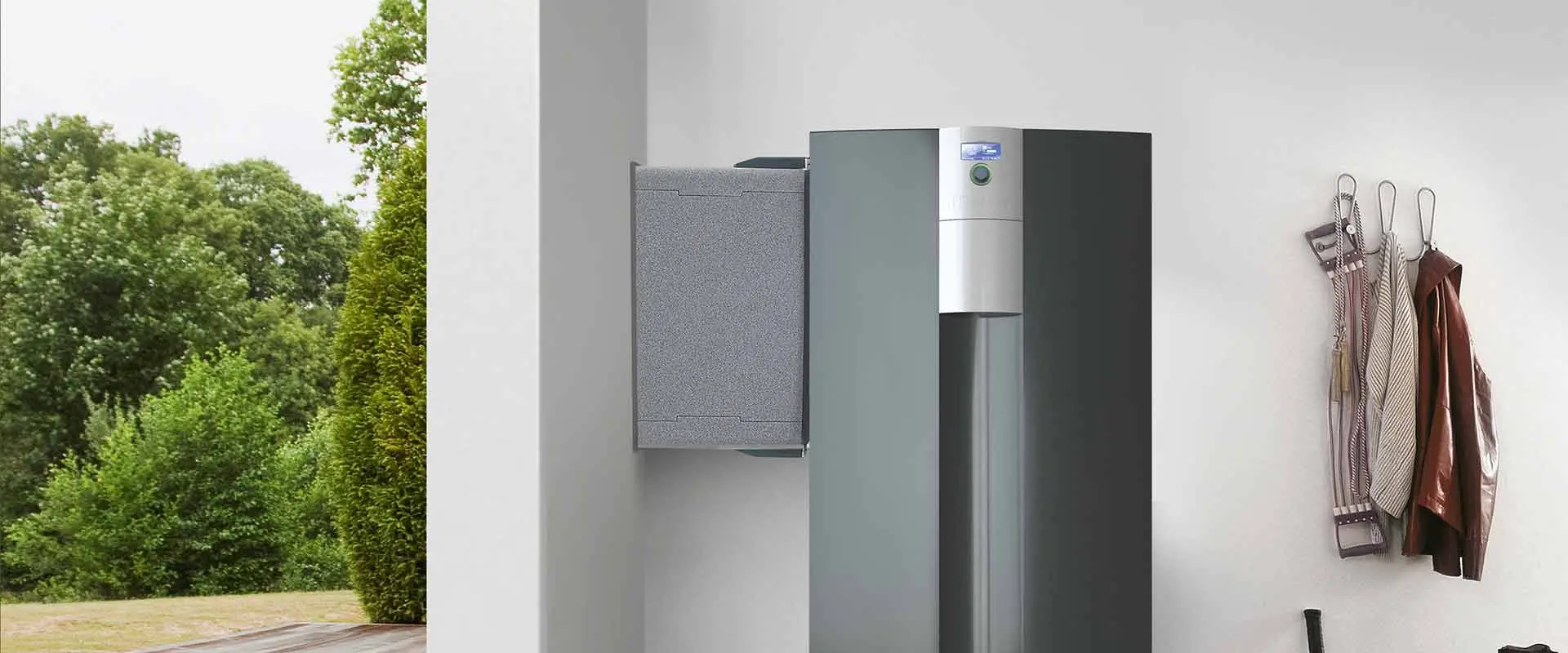
The most important facts in 10 seconds
- Heat pumps are now standard in most new buildings
- They meet all legal requirements for energy efficiency in residential buildings
- Subsidies significantly reduce costs
- They are most compatible with underfloor heating, but can also be used with normal radiators
- Investment: approx. 13,000–31,000 €, depending on the type of heat pump and equipment.
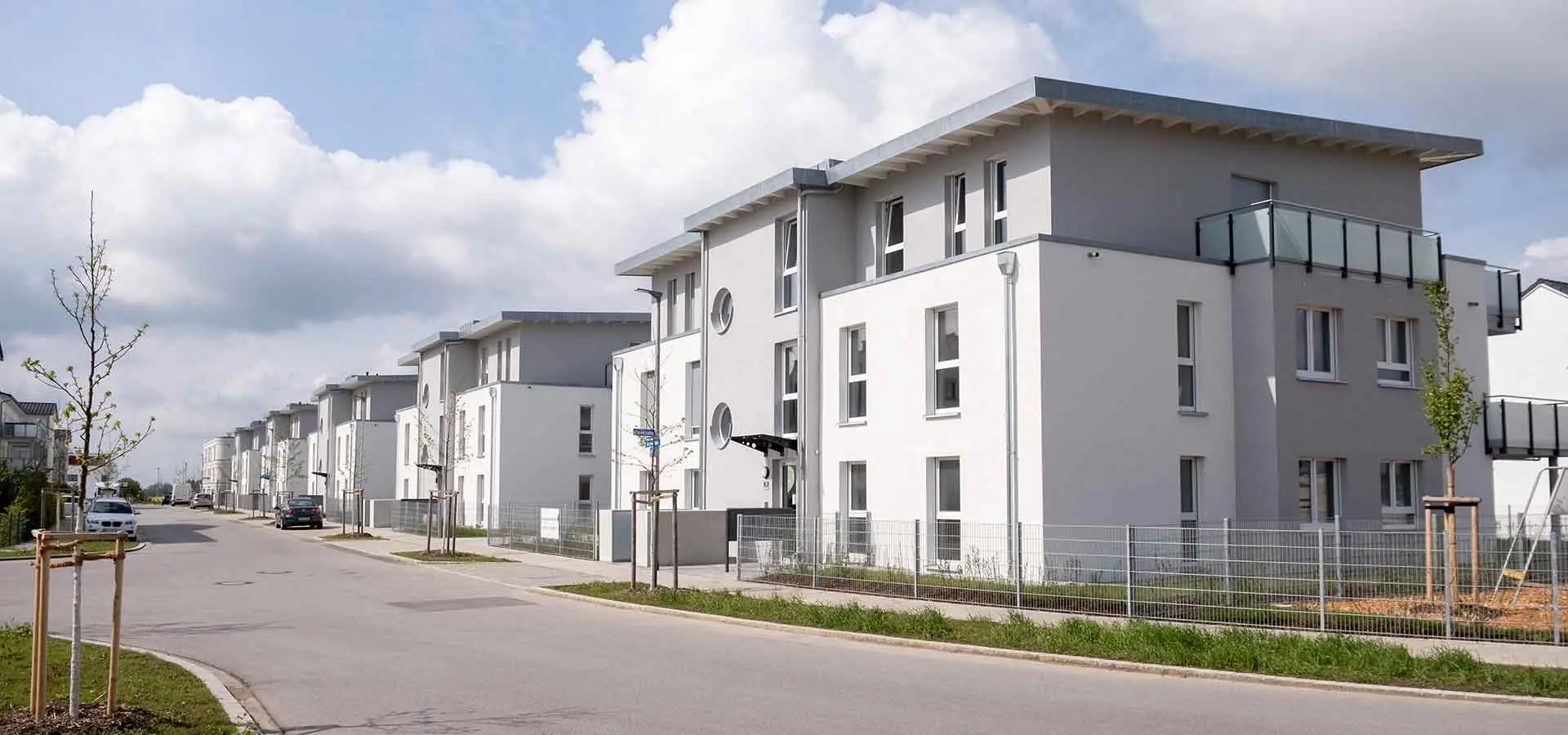
Heat pumps are already being installed in one in three new buildings – and the trend is rising. This is due to the requirements of the Energy Saving Ordinance (EnEV), the increasing demands for modern, environmentally friendly heating systems and the fact that heat pumps are becoming quieter and more efficient. As an efficient, sustainable and climate-friendly heating system, the heat pump has also more than proven itself.
Why new buildings are perfect for heat pumps
Anyone building a new home today is automatically choosing the future. And when it comes to heating, that definitely means heat pumps and sustainable heat sources. No other heating system can be integrated as harmoniously into modern building concepts as the heat pump. In combination with high-quality insulation, efficient surface heating and intelligent control, it ensures an all-round coherent energy concept.
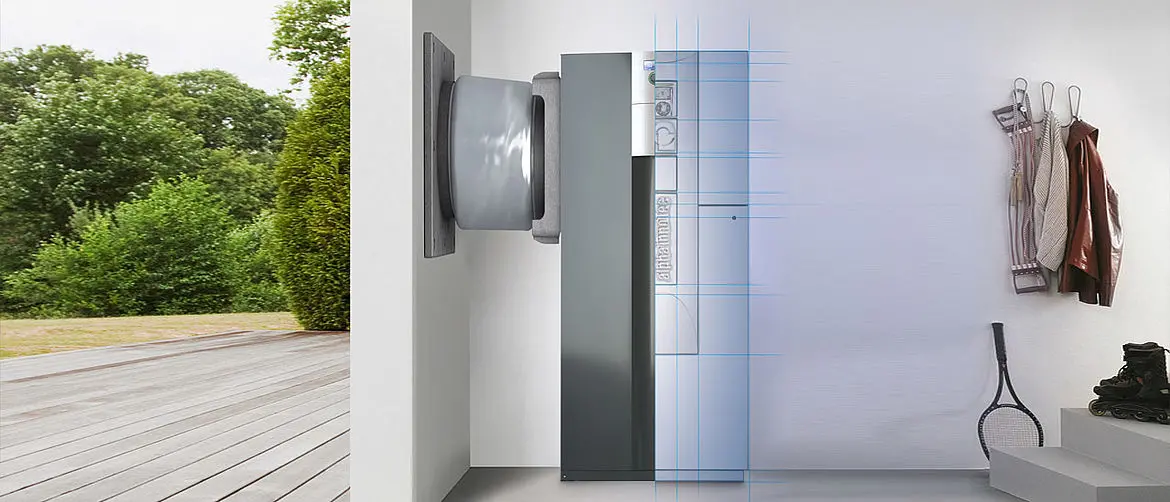
In addition to being environmentally friendly, heat pumps also score points for comfort: even heat distribution, cooling function in summer and virtually silent operation. Modern devices are low-maintenance, durable and blend inconspicuously into the architecture of the house – whether in the basement, outside or even in the attic.
A heat pump not only makes the new building energy-efficient, but also particularly future-proof and represents an enormous increase in value for the property. So it's basically a win-win situation in every respect.
Patrick Pohl, Sales Team Leader North/West, alpha innotec heat pumps
Heat pumps vs. traditional heating systems
Criterion | Heat pump | Gas heating | Oil heating | Pellet heating | District heating |
Energy source | Environmental energy (air, earth, water) | Fossil natural gas | Fossil heating oil | Renewable biomass (wood pellets) | Central heat generation (e.g. biomass, CHP) |
CO₂ emissions | very low, locally emission-free | high | high | low, depending on the origin of the pellets | highly variable depending on production |
Efficiency | 300–450 % (SPF 3–4,5) | ca. 90–100 % | ca. 85–95 % | ca. 85–90 % | 80–95 % |
Operating costs | low, especially with PV | medium to high | high | medium | medium |
Investment costs | 15.000–35.000 € | 10.000–14.000 € | 10.000–15.000 € | 20.000–35.000 € | 8.000–20.000 € |
Future security | very high | low | very low | medium (depending on carbon footprint) | depending on supplier |
Cooling function | yes (active or passive) | no | no | no | rarely |
Which types of heat pumps are suitable for new buildings?
In principle, all types of heat pumps can be used in new buildings. The right one depends on the property, budget and efficiency requirements.
AIR-TO-WATER HEAT PUMP
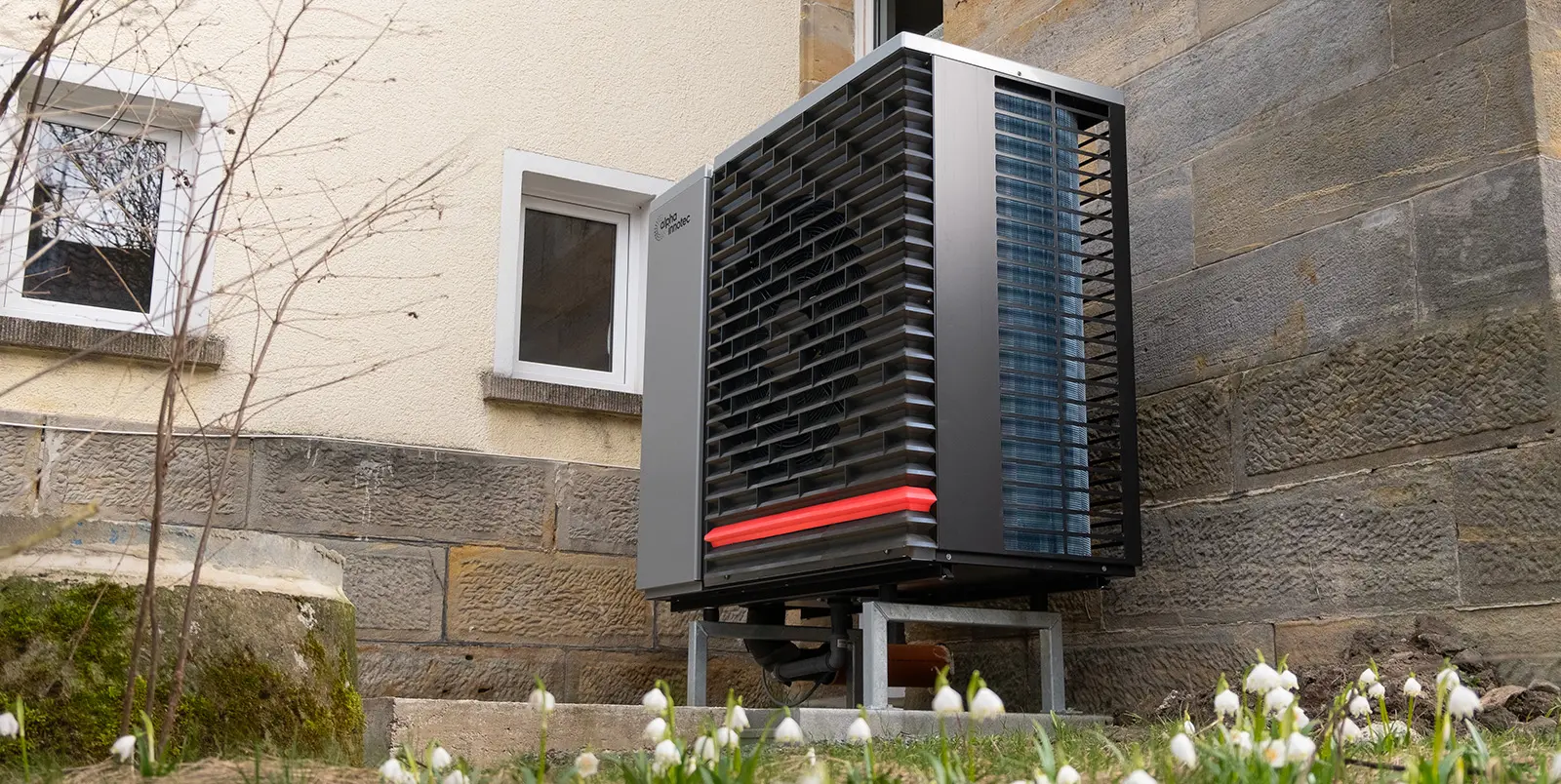
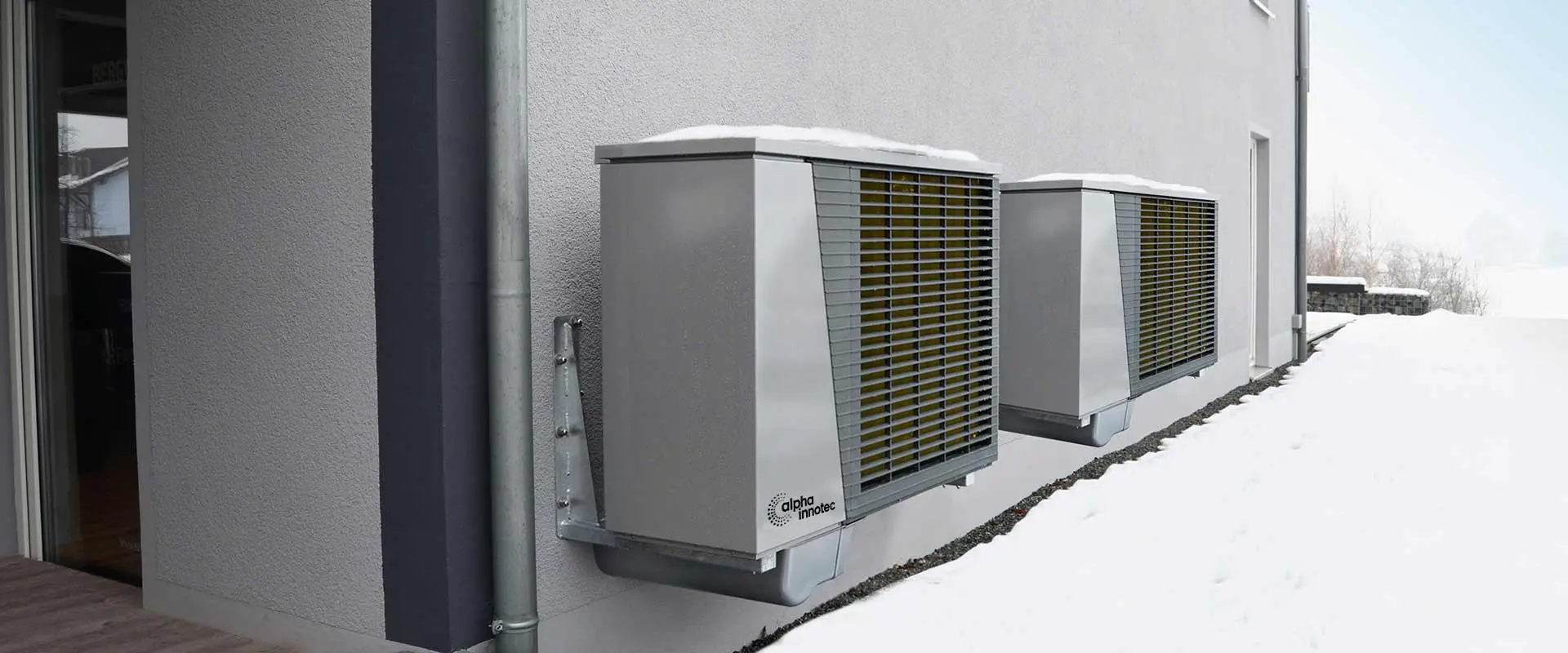
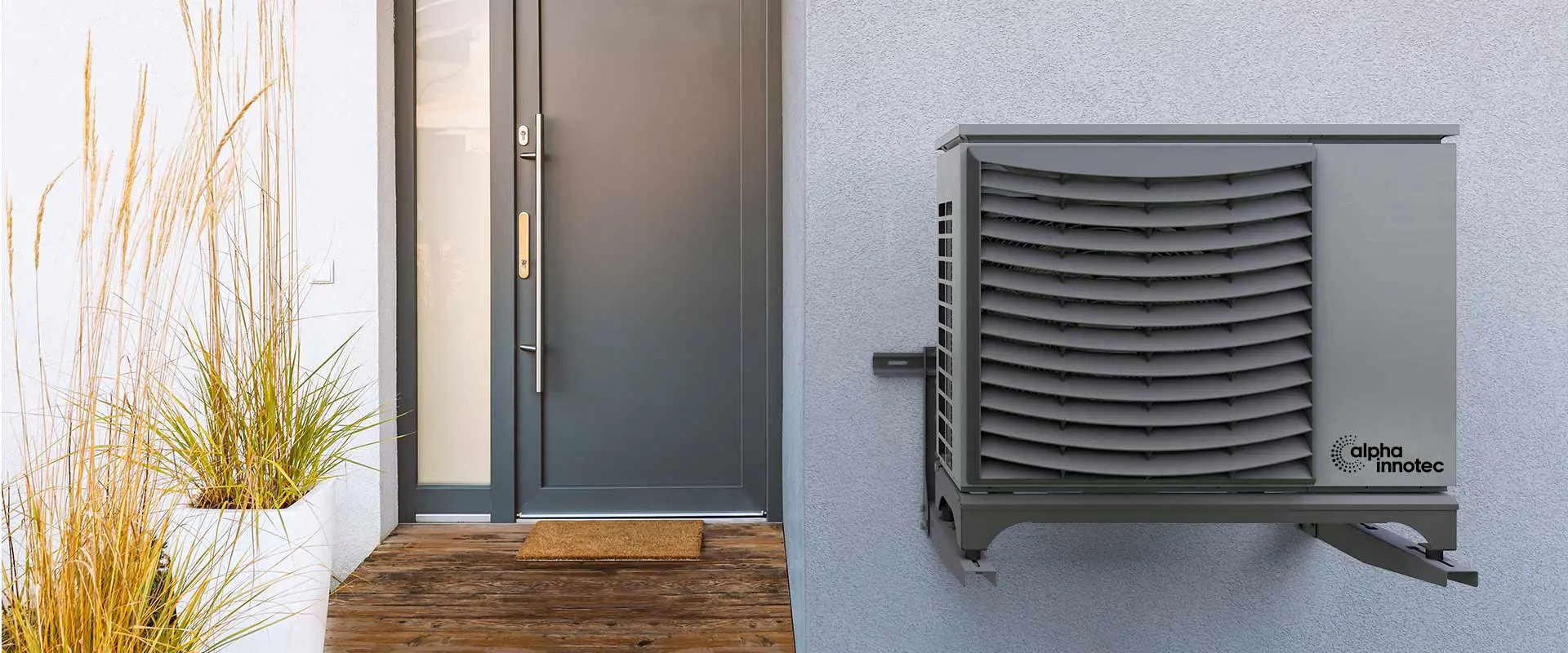
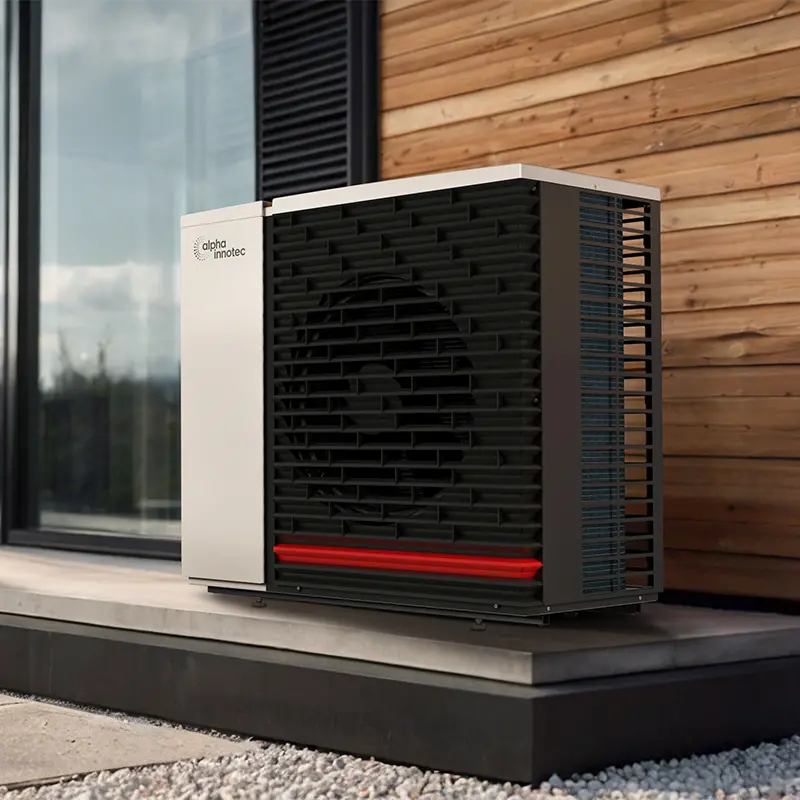
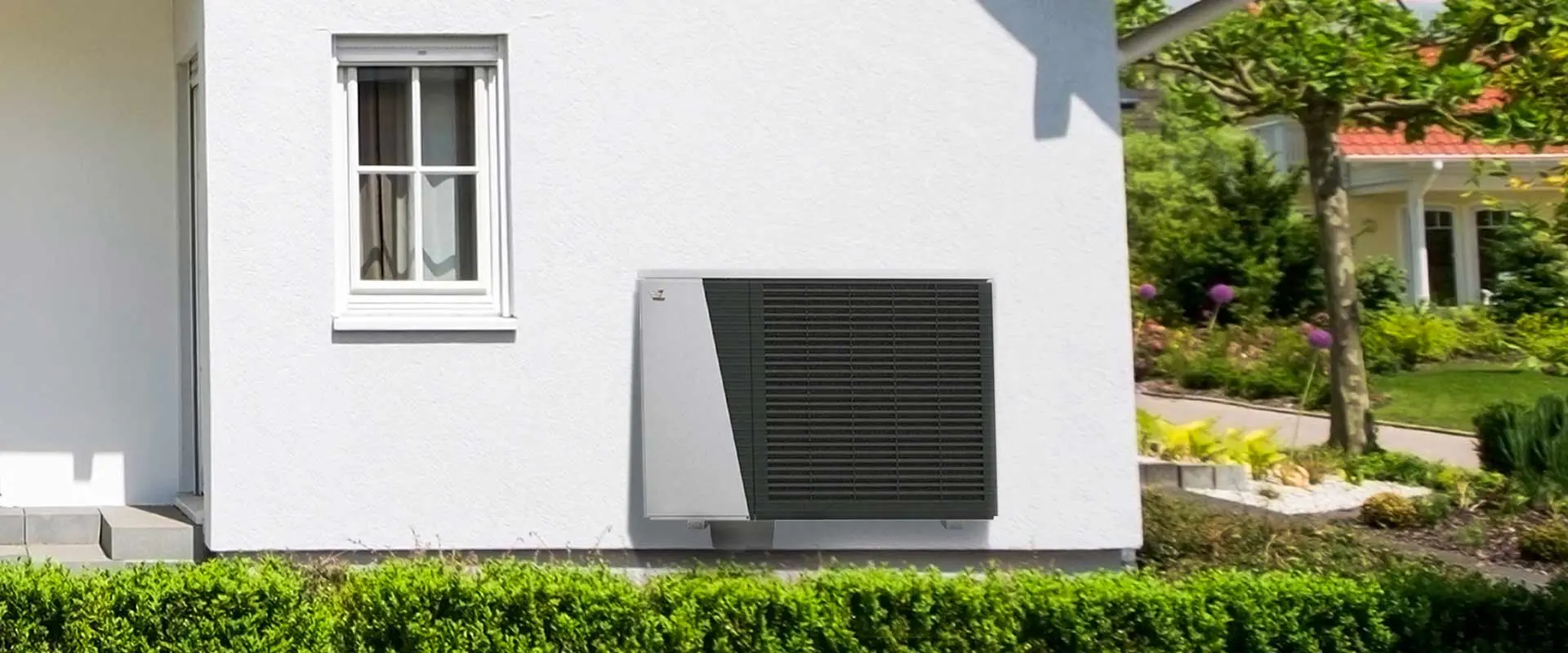
The air heat pump uses the outside air as an energy source. It is particularly popular because it is easy to install and does not require any groundwork.
Advantages:
- Inexpensive to purchase and install
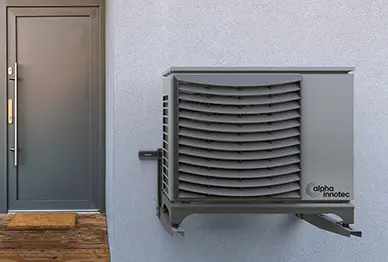
- Flexible installation (indoors or outdoors)
- Ideal for detached and semi-detached houses
Disadvantages:
- Slightly lower efficiency in winter
- Outdoor unit requires space and sound insulation
Suitability: Perfect for almost all new buildings with panel heating.

Hybrox Series
• Inverter heat pump
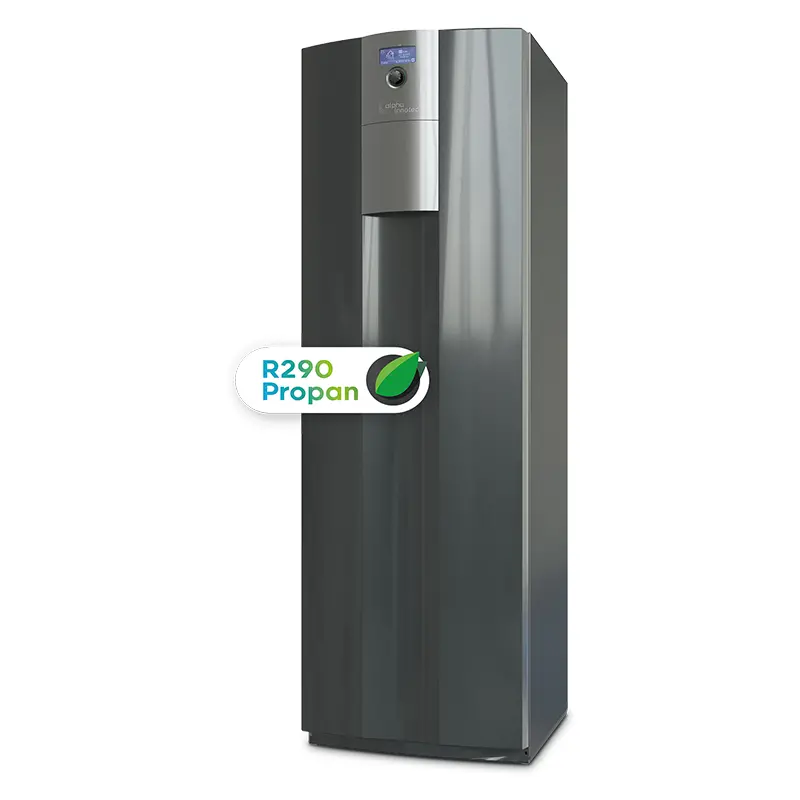
• Refrigerant R290
• Building heating load: 5-16 kW

Hybrox SE Series
• Inverter heat pump
• Refrigerant R290
• Building heating load: 5-14 kW

Paros
• Inverter heat pump
• Suitable for indoor installation
• Building heating load: 4-5 kW
Brine-WATER HEAT PUMP (GROUND SOURCE HEAT PUMP)
The ground source heat pump utilises the evenly tempered energy of the ground. Heat is transferred to the heat pump via ground probes or surface collectors.
Advantages:
- Very high efficiency (annual performance factor > 4.5)
- No external noise
- Passive cooling possible
Disadvantages:
- Higher investment due to drilling or earthworks
- Permits required in some regions
Suitability: Particularly economical if sufficient land area is available and long-term planning is possible.

WZSV 63
• Inverter heat pump
• Refrigerant R290
• Building heating load: 3-6 kW

WZSV Series
• Inverter heat pump
• Refrigerant R410A
• Building heating load: 3-14 kW

SWCV Series
• Inverter heat pump
• Refrigerant R407C
• Building heating load: 4-5 kW
HOT WATER HEAT PUMP
The hot water heat pump – also known as a domestic water heat pump – is used exclusively for heating drinking water. It uses the heat from the ambient air, for example from the utility room, basement or exhaust air, to generate hot water particularly efficiently.
Advantages:
- Compact, inexpensive and easy to install
- Uses free ambient air
- Can be perfectly combined with photovoltaics for virtually free hot water production
Disadvantages:
- No heating function (hot water only)
- Efficiency decreases in very cold installation rooms
Suitability: Ideal as a supplement to a heating heat pump in new buildings – especially if hot water is to be produced using PV electricity.

BWP series
• Fixspeed - heat pump
• refrigerant R134A

WWB
• Water/water booster
• refrigerant R134A
The requirements for a heat pump in a new building
Good planning is half the battle. These points should be considered early on in new construction:
- Surface heating: Large heating surfaces enable low flow temperatures, allowing the heat pump to operate efficiently.
- Low flow temperature: Values below 35 °C are optimal.
- Good insulation and airtight construction: A good building envelope ensures low heating loads and optimum heat pump efficiency.
- Space requirements for indoor and outdoor units: Depending on the system, space is required in the utility room or on the terrace.
- Early planning in the heating concept: The heat pump should be integrated into the building services from the outset, ideally with ventilation, a PV system and energy management.
PLANNING THE OUTDOOR UNIT IN DENSELY BUILT-UP AREAS
In new housing developments with little distance between neighbouring houses, sound insulation and air flow are crucial.
✔ Solid ground (concrete slab)
✔ Distance from windows and terraces
✔ No heat build-up due to walls or hedges
✔ Enclosure with air flow possible
The cost of a heat pump for new buildings
Heat pump type | Equipment costs | Installation | Total costs for new build |
Air-water heat pump | 8.000 – 17.000 € | 3.000 – 7.000 € | 15.000 – 25.000 € |
Brine-water heat pump | 12.000 – 18.000 € | 5.000 – 10.000 € (including earthworks) | 20.000 – 35.000 € |
Water-water heat pump | 12.000 – 18.000 € | 6.000 – 12.000 € (including fountain) | 25.000 – 37.000 € |
Running costs: Depending on efficiency and electricity tariffs, annual heating costs in new buildings usually range between 600 and 1,000 €. In combination with photovoltaics, they are significantly reduced.
TIPS FOR REDUCING RUNNING COSTS
✔ Keep the flow temperature low
✔ Perform hydraulic balancing
✔ Make optimal use of photovoltaics
✔ Adjust heating times and maintain a constant temperature in rooms
✔ Regular heat pump maintenance
✔ Check thermal insulation
Heating and cooling with one system
Modern heat pumps can not only heat, but also cool. This works efficiently and comfortably, especially in well-insulated new buildings.
- Active cooling: The heat pump works like a reverse air conditioning system: heat is transported from the house to the outside. Ideal for air-to-water heat pumps.
- Passive cooling: Here, the system uses the low temperatures of the ground or groundwater – without additional energy consumption. Particularly quiet and economical.
Dew point control & cooling mode
Sensors continuously measure the dew point to prevent condensation from forming on floors or walls. Modern systems automatically adjust the cooling capacity – even via smart home controls.
👉 More on cooling with heat pumps
Combining heat pumps and photovoltaic systems
A heat pump reaches its full potential when combined with a PV system. The electricity generated can be used directly for heating or cooling.
Advantages:
- Lower electricity costs and greater self-sufficiency
- Surplus electricity can be used for hot water
- PV and storage subsidies can be combined
Sample calculation:
A 5 kWp PV system generates around 5,000 kWh of electricity per year. A heat pump in a new building only needs around 2,500 kWh of this – the rest can be used for household purposes or storage.
👉 More on the topic of photovoltaics with heat pumps

Heat pump and smart home
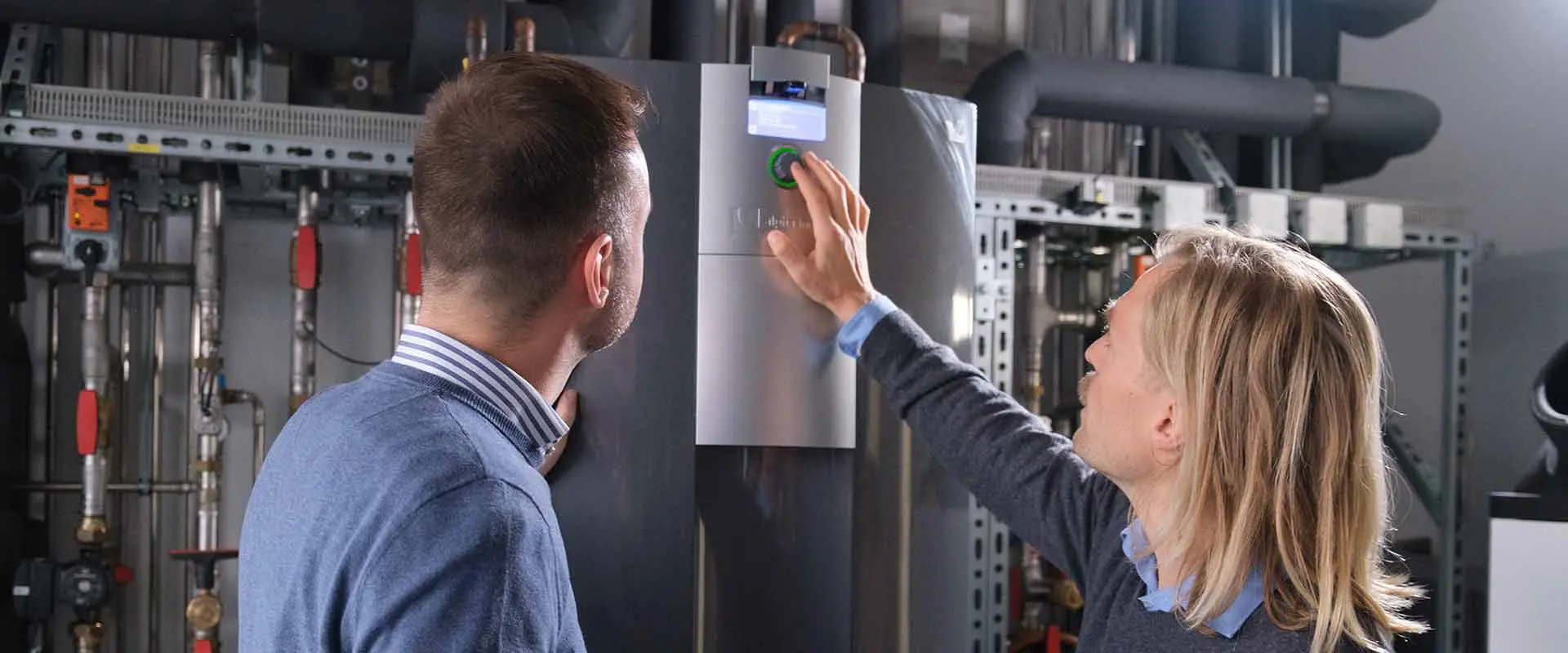
In new buildings, heat pumps are increasingly being integrated into smart home systems. Energy management systems (EMS) can automatically take heating times, electricity prices and weather data into account.
Examples of smart energy applications:
- Automatic adjustment of the flow temperature when the weather changes
- Use of surplus PV for hot water
- Combination with electricity storage and electric car charging
- Remote control via app or voice command
Such intelligent systems increase comfort, reduce costs and make the building grid-ready – an important step towards a ‘smart grid ready’ home.
The heat pump in the attic
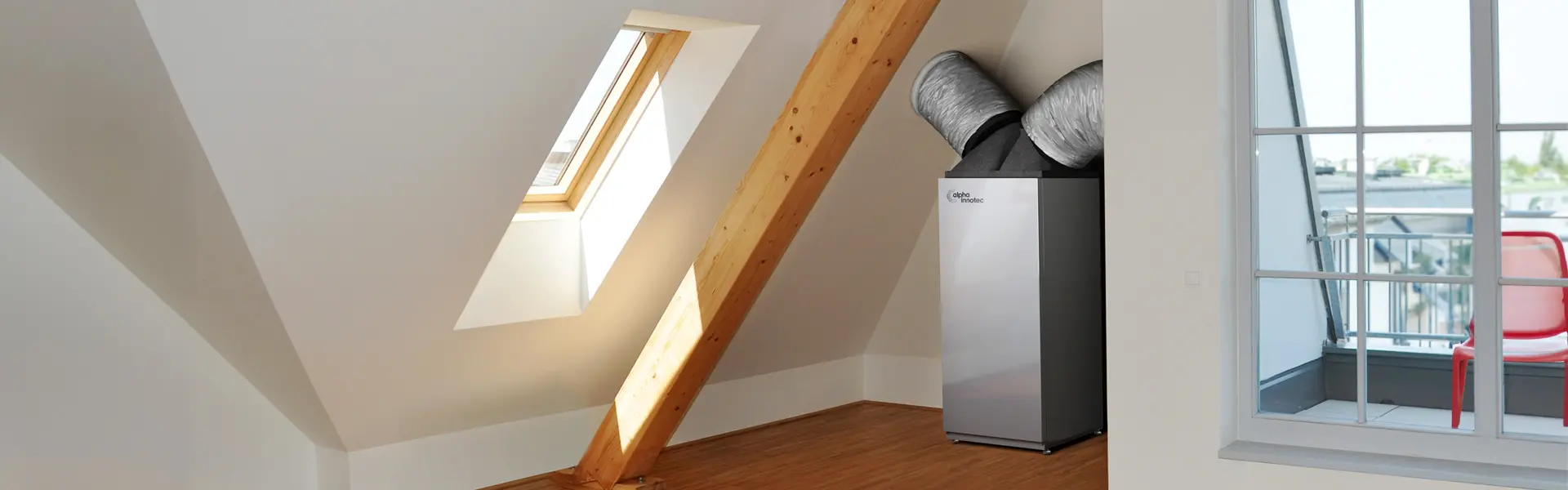
In new urban buildings or apartment blocks, outdoor space is often limited. One solution is to install the heat pump in the attic.
Advantages of roof installation:
- No space required in the garden or courtyard
- Low noise pollution in the living area
- Short pipe runs with centralised technology
Important:
The structure must be able to bear the load and the air supply must not be obstructed. Modern monoblock units are ideal for this purpose as they are compact, lightweight and completely hermetically sealed.
Conclusion
Heat pumps are now standard in new buildings – and for good reason: they are efficient, use renewable energy and meet all legal requirements. Combined with photovoltaics, smart home control and modern cooling functions, they are becoming the integrated energy system of the future.



.webp)




.webp)


_Referenz%20Neustadt%20am%20R%C3%BCbenberge.webp)