Heat pumps for swimming pools
Can you heat a pool with a heat pump?
The short answer is yes—and very efficiently at that. Pool heat pumps are the most modern form of pool heating because they work independently of the weather and are significantly cheaper to operate than electric or gas heaters.
The most important facts in 10 seconds
- Heat pumps use environmental energy and heat the pool efficiently.
- Significantly cheaper to run than electric or gas heaters.
- Works regardless of the weather – even on cooler days.
- Purchase price from approx. $800, operating costs approx. $1–2 per day (depending on pool size and electricity price).
- Combining with photovoltaics reduces costs to almost zero.
Is a heat pump for the pool a good idea?
Yes, heating your pool with a heat pump makes sense for several reasons:
- Longer swimming season: up to 3 months more swimming time.
- Weather-independent: pleasantly warm water even on cool days.
- Efficient: up to 80% less electricity consumption compared to electric heaters.
- Sustainable: climate-friendly, especially in combination with PV.
- Comfort: constant desired temperature without much effort.
“A heat pump is the most efficient and convenient solution for warm pool water – regardless of the weather and fossil fuels.”
Patrick Pohl, Sales Team Leader North/West, alpha innotec Heat Pumps
How does a heat pump work for a pool?
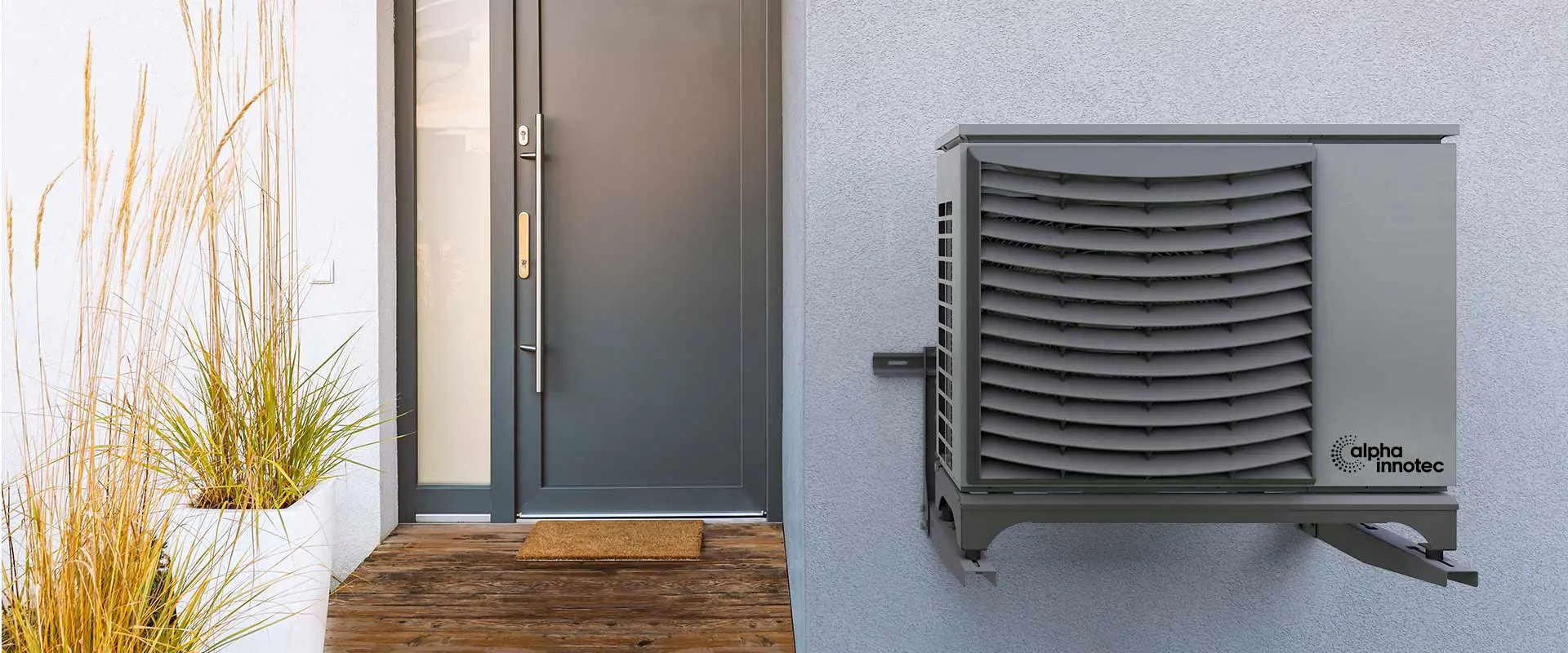
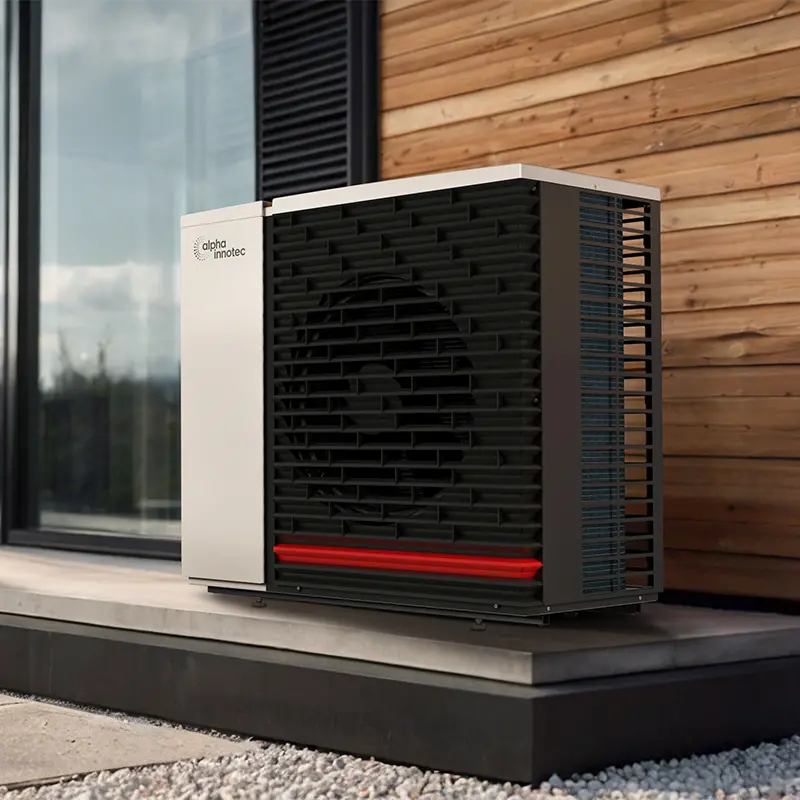
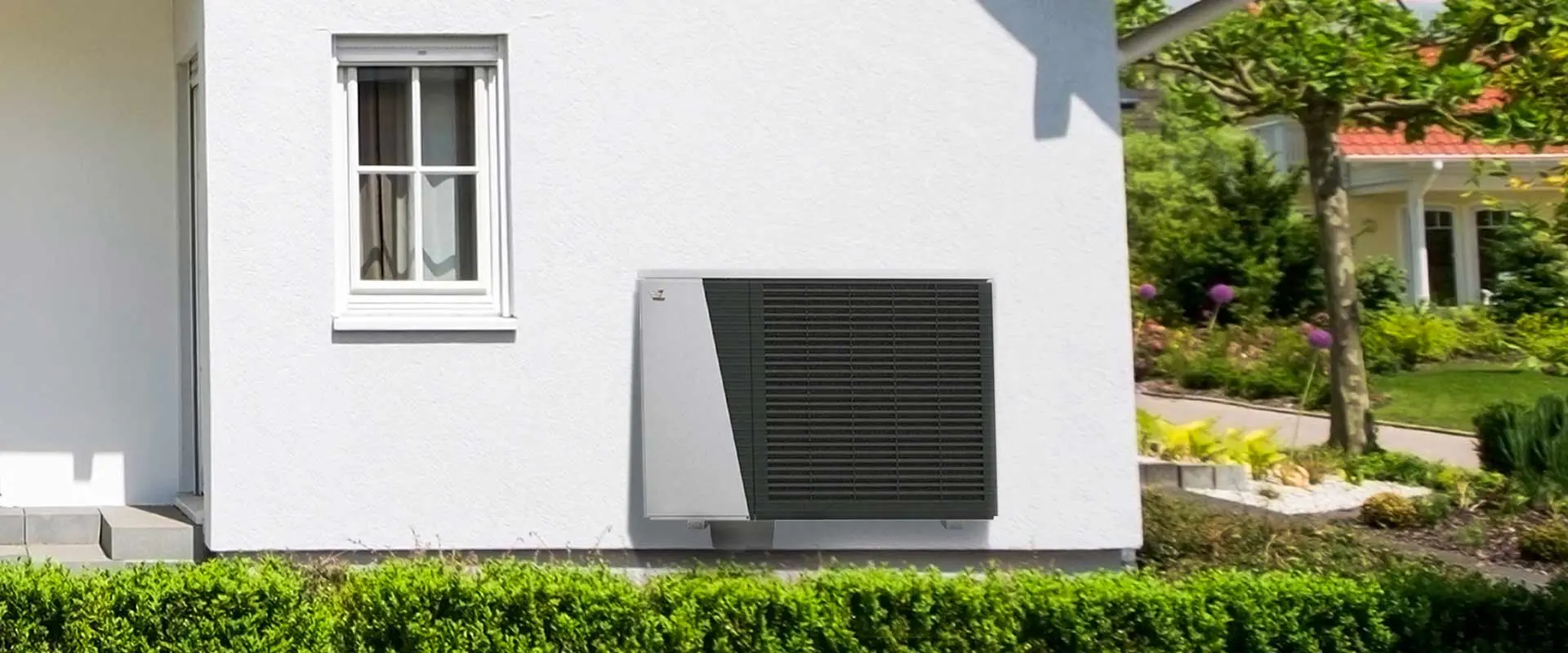
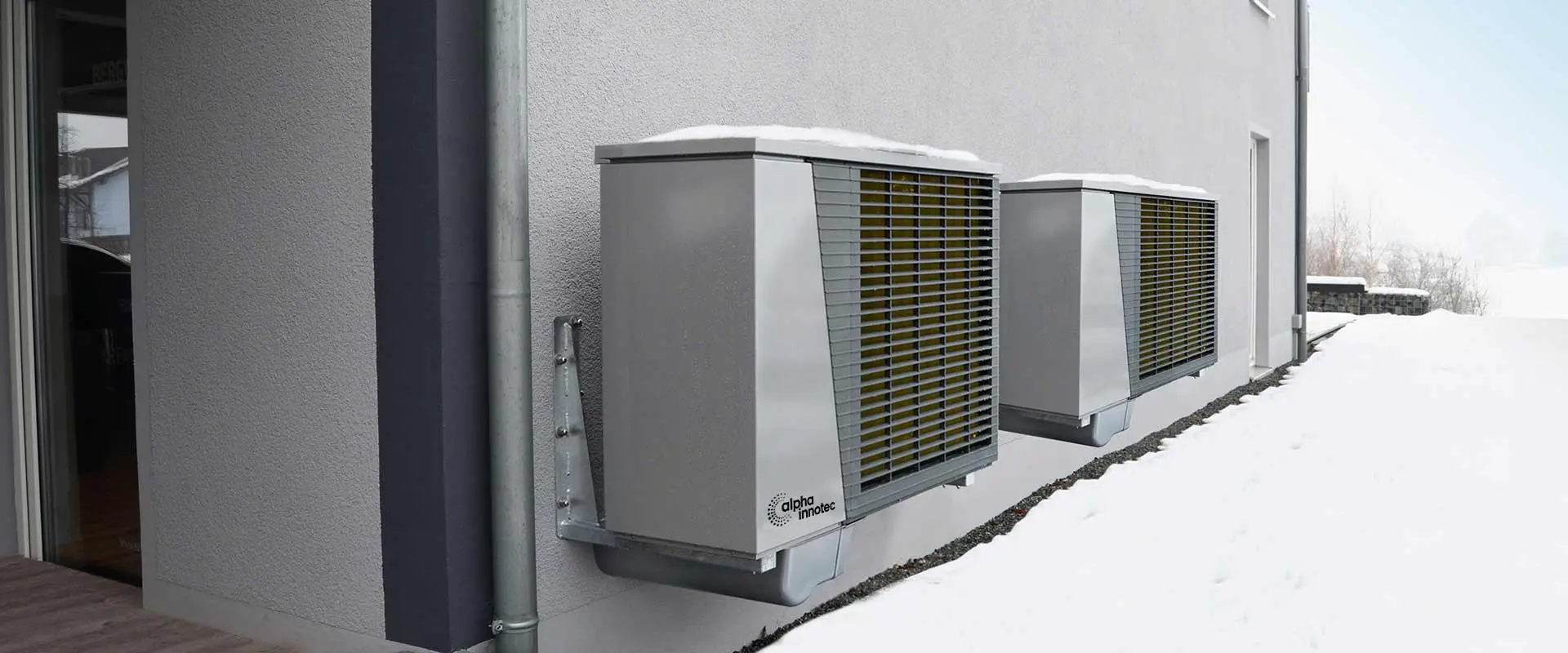
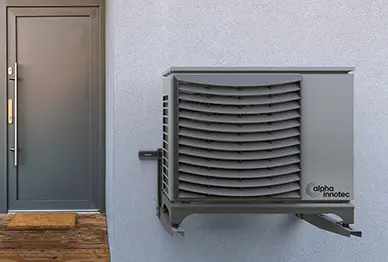
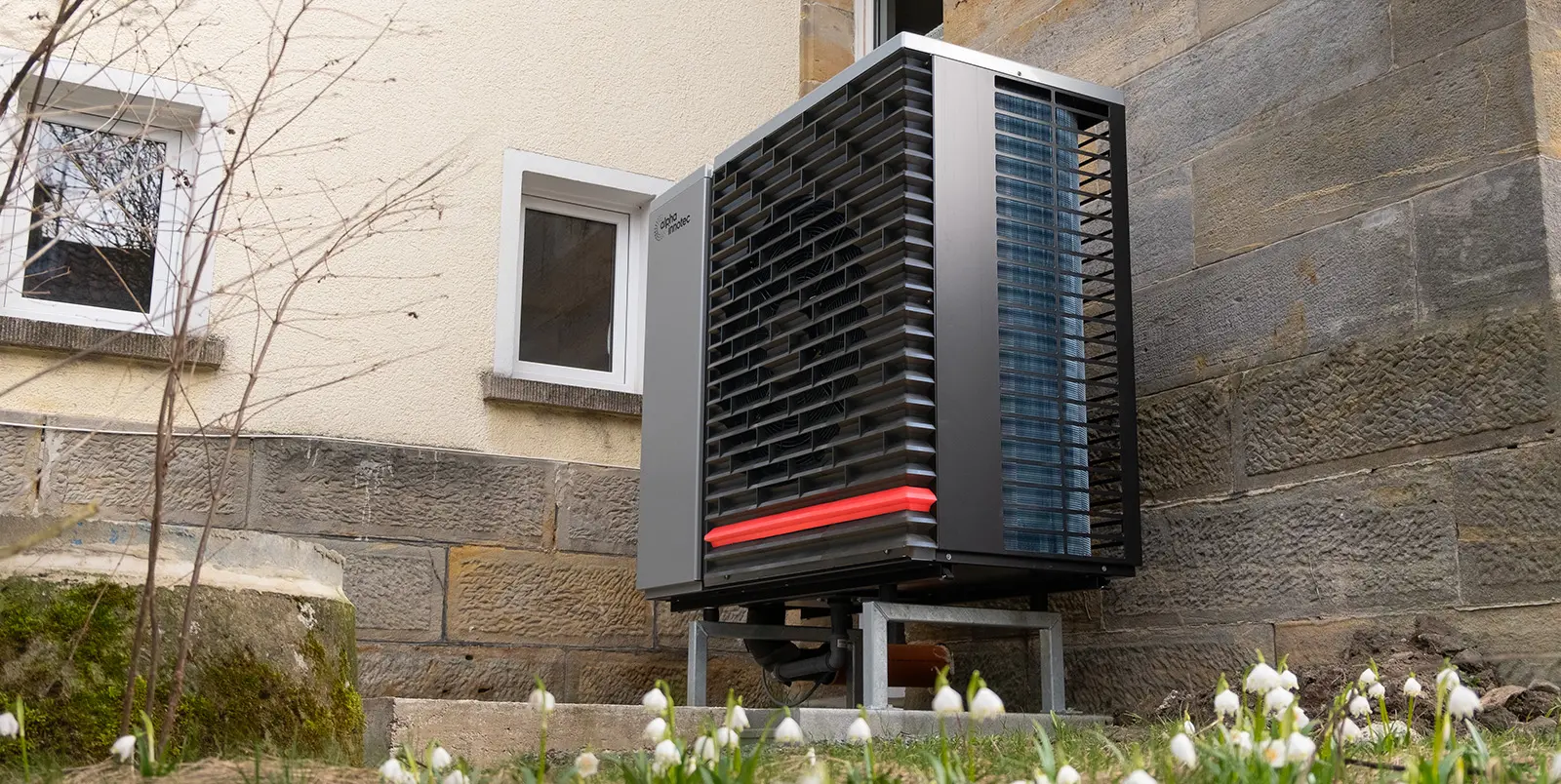
A pool heat pump works on the same principle as a heat pump for the home or a refrigerator, only in reverse. It extracts heat from the ambient air and transfers it to the pool water via a heat exchanger. To do this, the heat pump is integrated into the water circuit of the filter system: as the water flows through the circuit, it passes the heat pump and is heated evenly. The device is usually installed outdoors, in close proximity to the pool technology.
Unlike a classic domestic heat pump, the pool-only version is more compact and specially designed for summer operation and chlorinated or salt water. It ensures that your pool water remains at a constant, comfortable temperature – regardless of whether the sun is shining or not.
Requirements for operating a heat pump for a swimming pool
For a pool heat pump to run efficiently, certain conditions must be met:
- Power connection: 230 V or 400 V, depending on the model.
- Installation area: solid ground, at least 50 cm away from walls.
- Water connection: integration into the filter circuit.
- Pool cover: prevents heat loss and reduces heating costs by up to 70%.
What are the advantages and disadvantages of a heat pump for a swimming pool?
Criterion | Advantage ✅ | Disadvantage ❌ |
Efficiency | Very high efficiency (up to 80% environmental energy) | Dependent on outside temperature |
weather dependency | Works even in cool weather | Limited performance at <10 °C |
operating expenses | Very low (approx. €1–2 per day) | Electricity costs depending on the tariff |
acquisition | Eligible for funding, starting at €800 | Higher investment than solar absorber |
volume | Modern devices are very quiet | Audible fan noise in low-cost models |
Which heat pump is suitable for which pool?
Choosing the right heat pump depends on various factors:
- Pool size: The volume of the pool determines the required heating capacity.
- Location and insulation: A well-insulated pool requires less heating capacity than a freestanding, unprotected pool.
- Duration of use: A more powerful heat pump is required for year-round use.
As a guideline:
- Up to 15 m³ pool volume: 3 to 7 kW heating capacity.
- 15 to 25 m³: 8 to 10 kW.
- 25 to 45 m³: 10 to 20 kW.
Which alpha innotec heat pump is right for your pool?
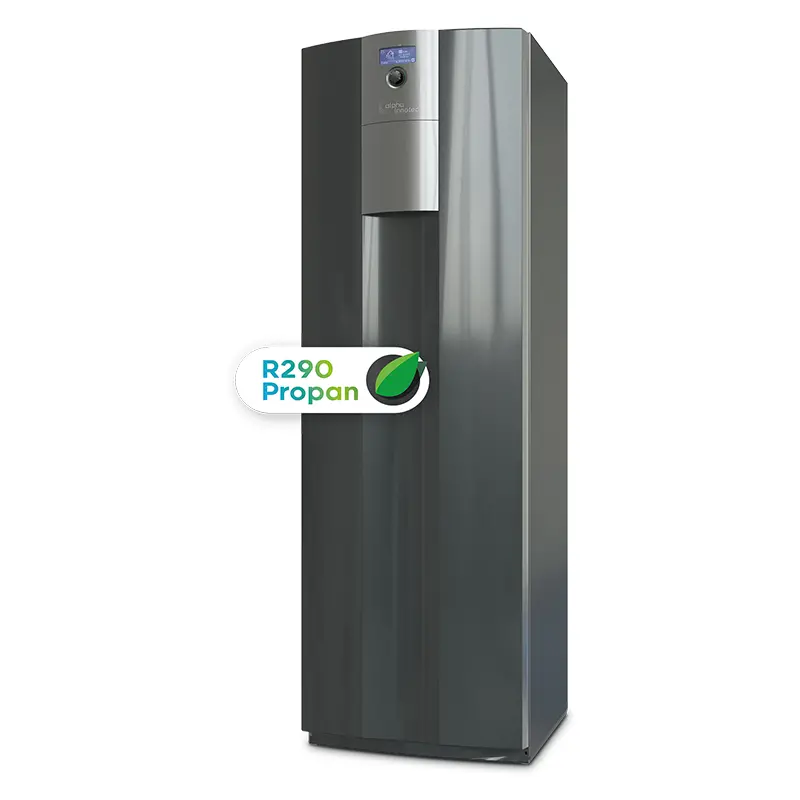
At alpha innotec, we don't offer heat pumps designed solely for pools – and for good reason. Our heat pumps are year-round solutions for your entire home: they efficiently supply your house with heat and hot water – and can also heat your pool.
This means you don't need a separate pool heater; you can simply integrate your pool into your existing heat pump system. You benefit from a uniform, energy-saving solution with state-of-the-art control technology – and enjoy comfortably warm water whenever you want.

Pool heat pump with photovoltaics
Operating a pool heat pump with photovoltaics is particularly efficient. Since the greatest heating demand occurs during the summer months, when the solar system delivers the highest yields, operating costs can be significantly reduced—often to almost zero. With a suitable PV system, pool owners can use their own electricity directly for the heat pump and heat the pool to the desired temperature in a climate-neutral, sustainable, and virtually cost-free manner.
Retrofitting a heat pump in the pool
In most cases, a pool heat pump can be easily retrofitted if a filter system is already in place. Installation is carried out step by step:
- Install a bypass: A branch (bypass) is inserted into the existing filter circuit, through which part of the water is directed through the heat pump.
- Connect the heat pump: The inlet and outlet of the heat pump are connected to the bypass. This allows the water to flow through the heat exchanger, where it is heated and then returned to the pool.
- Connect the power supply: Depending on the model, a 230 V or 400 V connection is required. This should be professionally secured and installed.
- Commissioning: After connecting the water and electricity, the heat pump is started and set to the desired temperature. Many devices offer digital controls, which make operation particularly convenient.
Conclusion
A heat pump for your pool is the most efficient solution for extending the swimming season and enjoying warm water regardless of the weather. It offers low operating costs, sustainable operation, and a high level of comfort.
FAQ
Where should a pool heat pump ideally be located?
The heat pump should be located close to the filter system on a solid surface. Ensure there is sufficient space and good air circulation so that the system can extract heat energy efficiently. This will enable it to operate in an energy-efficient manner and ensure that your swimming pool maintains the desired water temperature reliably.
Can a pool heat pump also be used for cooling?
Yes, modern inverter heat pumps are often reversible and can heat and cool. This keeps the water temperature pleasant even in midsummer.
What water temperature can be achieved with a pool heat pump?
Most pool heaters reach a water temperature of 26 to 30 °C. With a good cover, the heat is retained and the heat pump operates particularly cost-effectively. This turns your garden pool into a swimming pool that you can also use on cooler days.
How long does it take for the pool water to heat up?
That depends on the size and power of the pool. A medium-sized pool often takes two to four days to reach the desired water temperature. A cover significantly reduces the heating time because less heat energy escapes and the heat pump works more efficiently.
How much electricity does a pool heat pump consume?
Eine Wärmepumpe entzieht der Luft Wärmeenergie und arbeitet dadurch besonders stromsparend. Je nach Größe und Modell liegt der Verbrauch bei 2 bis 5 kWh pro Stunde. So bleibt der Betrieb im Vergleich zu anderen Poolheizungen sehr kostengünstig.
How do I prepare my pool heat pump for winter?
To ensure that your heat pump remains reliable, you should completely empty it before winter, disconnect the power supply, and cover the device. This will provide optimum protection, allowing you to use your pool again safely and with peace of mind after the winter break.








_Referenz%20Neustadt%20am%20R%C3%BCbenberge.webp)

.webp)





.webp)